

 简体中文
简体中文 English
 Español
A glass food warmer display is one of the most powerful silent salespeople in any food service environment. Combining warmth, visibility, and a sense of abundance, these purpose-built units transform prepared food into a compelling, appetite-stimulating presentation — all while maintaining safe serving temperatures. Whether you operate a busy bakery, a hotel buffet, or a street-food counter, understanding how these displays work and what to look for is essential to serving both quality and experience.
A glass food warmer display is a commercial or semi-commercial appliance designed to keep pre-cooked or ready-to-serve food at a consistent, food-safe temperature while making it visually accessible to customers. The defining feature is the glass enclosure — typically tempered glass panels on multiple sides — which allows customers a clear, unobstructed view of the food without opening the unit and losing heat.
These units are found across a wide range of settings: fast-food counters, delicatessens, hotel breakfast bars, convenience stores, school canteens, and catered events. Unlike heated holding cabinets that store food in closed, back-of-house units, glass food warmer displays are engineered for front-of-house use, where visual merchandising is as important as temperature retention.
Types of glass food warmer displays
The market offers several distinct formats, each suited to different service models and product types. Understanding the differences helps operators choose the right unit for their specific operation.
Countertop curved glass warmer
Sits directly on a service counter. Curved glass front enhances visual appeal and encourages impulse purchases. Ideal for pastries, pies, sausage rolls, and fried snacks.
Sneeze guard display warmer
Open-top or partial-top design with a glass sneeze guard shield. Common in buffet and cafeteria lines; allows serving staff to access food easily from the back.
Rotating rotisserie display
Incorporates a rotating mechanism for chickens, kebabs, or other whole-roasted proteins. The movement acts as an additional visual draw for passing customers.
Floor-standing display cabinet
Full-height unit with multiple shelves behind glass doors. Suited to high-volume operations requiring large holding capacity without a buffet-style layout.
Pie & pastry warmer
Compact, purpose-built units often with front-opening doors. Designed for individual pastry items; common in bakeries, petrol stations, and corner shops.
Induction warmer with glass top
Uses induction heating beneath a glass surface. Particularly effective for soups, stews, and wet dishes in chafing-dish style buffet presentations.
How glass food warmer displays maintain temperature
The heating technology within a glass food warmer display varies by model, but most commercial units rely on one or a combination of three core mechanisms.
Infrared (radiant) heat
Heat lamps positioned above or around the food radiate infrared energy directly onto the food surface. This is the fastest method for maintaining surface temperature and producing the golden, appetising appearance associated with fried and roasted foods. It is, however, prone to uneven heating and can dry out food if products sit for extended periods.
Forced-air convection
An internal fan circulates warm air around the cabinet interior, ensuring even temperature distribution across all shelves and trays. Convection-based warmers are ideal for wrapped or packaged products and for environments where consistent humidity matters, as they can be paired with a moisture system.
Steam or humid heat
A water reservoir produces steam or moist warm air, which reduces food drying and is particularly well-suited to rice, pasta, vegetables, and other moisture-sensitive items. These units require more frequent cleaning but deliver noticeably better texture retention over longer holding periods.
The safe target temperature range for hot-held food in most jurisdictions is:
Exceeding the upper range consistently leads to moisture loss and texture degradation; falling below the lower threshold creates food safety risks. A quality glass food warmer display maintains this window without manual adjustment.
Key features to evaluate before buying
Industry applications and use cases
Glass food warmer displays are genuinely versatile, and their optimal use varies significantly by sector. The table below maps common business types to appropriate warmer formats and the food products they most effectively hold.
| Business type | Recommended format | Typical products held | Key priority |
|---|---|---|---|
| Bakery / café | Countertop curved glass | Sausage rolls, croissants, filled pastries | Visual appeal, impulse sales |
| Supermarket deli counter | Sneeze guard display | Prepared meals, roasted meats, salads | High volume, easy staff access |
| Hotel breakfast buffet | Multi-shelf floor cabinet | Eggs, bacon, sausages, hash browns | Capacity, consistent temperature |
| Fast-food / takeaway | Infrared countertop | Fried chicken, chips, spring rolls | Speed of service, appearance |
| Food market / street food | Portable countertop warmer | Pies, samosas, wraps | Portability, energy efficiency |
| Hospital / canteen | Humid steam display | Rice, vegetables, pasta, sauces | Moisture retention, safety compliance |
The role of display design in food sales
Food service operators sometimes focus exclusively on the heating performance of a glass food warmer display, overlooking an equally important factor: how the unit influences purchasing behaviour. Research in retail food environments consistently shows that customers are more likely to purchase hot food when it is visibly presented at close proximity, well-lit, and at an angle that makes the food look abundant and appealing.
- Curved glass fronts create a magnifying effect that makes portions appear larger, reducing price sensitivity at the point of decision.
- Interior LED lighting at a warm colour temperature (2700–3000 K) enhances the natural colours of browned, roasted, and fried foods, making them look freshly prepared.
- Tiered shelving at varying heights draws the eye across the full range on offer, increasing the probability of multiple-item purchases.
- Height of the display matters: countertop units positioned at approximately 100–110 cm from the floor align with natural eye contact for most adults, maximising visual engagement without requiring a customer to bend or strain.
- Rotation (in rotisserie models) creates movement, which the human eye instinctively tracks — a powerful passive marketing tool in high-footfall environments.
Cleaning and maintenance best practices
A glass food warmer display that is poorly maintained quickly becomes a liability rather than an asset. Grease residue on glass panels obscures visibility, discolours under heat, and creates food safety concerns. A disciplined cleaning schedule is essential.
Daily cleaning routine
Daily Remove all trays and wipe down interior surfaces while the unit is warm (not hot) using a food-safe degreaser. Clean glass panels with a streak-free glass cleaner. Drain and refill water reservoirs if present. Allow all components to dry fully before reloading.
Weekly deep clean
Weekly Disassemble all removable components including trays, tray runners, and drip pans. Soak in warm soapy water or run through a commercial dishwasher. Inspect heating elements and light fittings for grease accumulation. Check door seals for cracks or brittleness.
Quarterly maintenance checks
Quarterly Verify thermostat accuracy using a calibrated probe thermometer. Inspect electrical connections and power cords for wear. Check that glass panels remain free from stress fractures, especially along the edges where thermal cycling is most intense. Lubricate door hinges if applicable.
Energy consumption and operating costs
A glass food warmer display runs continuously during trading hours, making its energy consumption a meaningful operational cost. Typical wattage ranges from 250 W for a compact countertop pie warmer to over 2,000 W for a large multi-shelf cabinet. Over an 8-hour trading day, even a mid-range 800 W unit consumes 6.4 kWh daily — roughly 2,300 kWh annually.
Operators can manage running costs by selecting units with good insulation (which reduces how frequently the heating element cycles on), ensuring glass door seals are intact (heat loss through degraded seals is significant), and choosing LED rather than incandescent interior lighting, which contributes measurably less heat loss and lower electricity draw.
Some commercial operators run multiple units simultaneously. In these cases, zoning units to different thermostat settings by product type — rather than running all units at the highest common setting — can reduce overall energy use without compromising any individual product's quality.
Frequently asked questions
How long can food safely remain in a glass food warmer display?
Most food safety guidelines recommend a maximum hot-holding time of 2–4 hours, depending on the food type and whether the unit maintains a consistent temperature above 60 °C (140 °F). Moist foods like rice or pasta tolerate longer holds better than fried items, which degrade in texture relatively quickly. Establishing a clear labelling and rotation system helps teams manage holding times without relying on memory.
Can a glass food warmer display cook raw food?
No. Glass food warmer displays are holding equipment, not cooking equipment. They are designed to maintain food that has already been cooked to a safe internal temperature, not to bring raw or undercooked food up to a safe temperature. Placing raw food in a warmer display creates a serious food safety risk and is contrary to food hygiene regulations in virtually all markets.
What causes condensation on the glass panels?
Condensation typically forms when warm, moist air inside the cabinet meets the cooler surface of single-glazed glass. It is more pronounced in high-humidity environments or when holding wet foods. Double-glazed units significantly reduce this issue. Positioning the unit away from cold air conditioning vents also helps. If condensation is persistent, it may also indicate a failed door seal allowing warm interior air to escape and condense on the outer panel surface.
What is the difference between a food warmer display and a heated display case?
The terms are frequently used interchangeably, though some manufacturers distinguish between "food warmer displays" (which emphasise active heat maintenance) and "heated display cases" (which may prioritise presentation with gentler, more ambient warmth). For commercial food safety purposes, only units that maintain food consistently above 60 °C qualify as proper hot-holding equipment. Always verify the operating temperature range of any unit before purchasing for food service use.
Are glass food warmer displays suitable for outdoor or market use?
Some countertop models are designed for portable use and can function effectively at outdoor markets or events, provided they have access to a reliable power supply and are sheltered from wind and rain. Outdoor ambient temperature affects performance — units will work harder in cold weather to maintain internal temperature, increasing energy draw. Always check the manufacturer's IP rating and operating temperature specifications before deploying any electrical food equipment outdoors.
Choosing the right glass food warmer display is ultimately a balance of technical specification, operational context, and commercial intent. The units that deliver the best return are those that hold food safely at the right temperature, present it attractively enough to convert browsers into buyers, and are designed for the daily rigours of commercial food service cleaning and use. Prioritise temperature accuracy, glass clarity, and maintainability above all, and the right model will serve both your food and your bottom line for many years.
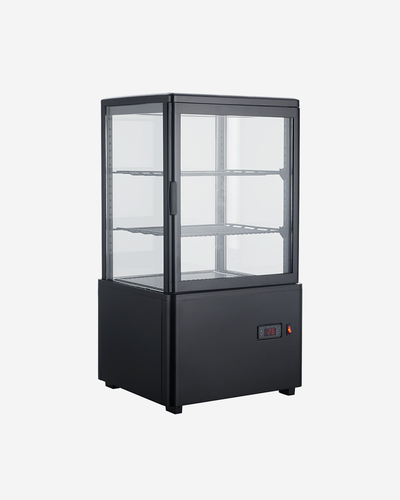
.jpg?imageView2/2/w/500/h/500/format/jp2/q/100 "Four Sides Glasses Display Cooler")
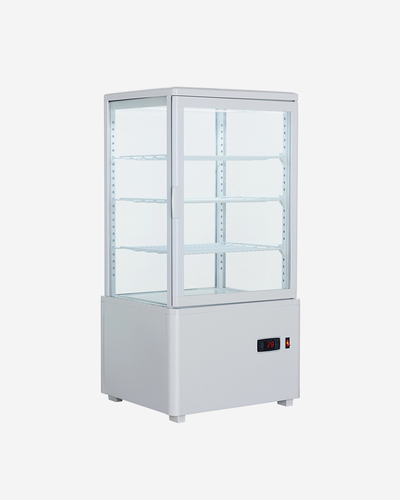
.jpg?imageView2/2/w/500/h/500/format/jp2/q/100 "White 4-Sided Glass Refrigerated Display Case")
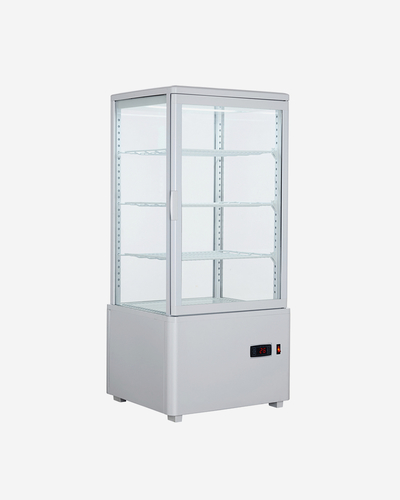
.jpg?imageView2/2/w/500/h/500/format/jp2/q/100 "Refrigerated Display Cake Countertop Four Sides Glasses Display Cooler")
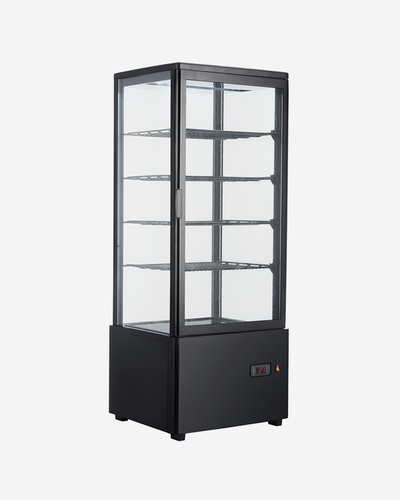
.jpg?imageView2/2/w/500/h/500/format/jp2/q/100 "Four Sides Glasses Display Cooler")
 East Zone, Guanhaiwei Industrial Park, Cixi City, Ningbo, Zhejiang, China
 +86-574-63668678
 +86-574-63668108
