
 简体中文
简体中文 English
 Español
News
Beer Cooler Temperature Guide: Ideal °F and °C Settings for Commercial Coolers
In many commercial settings, the right beer cooler temperature falls between 34 and 38°F (1 to 3°C). That band keeps mainstream lagers crisp, protects every style from freezing damage, and leaves room for the slightly warmer service temperatures that craft beer prefers. The exact setpoint still depends on what you stock and how fast it turns over: a convenience store moving light lagers every day can run colder than a bar holding mixed craft bottles for weeks. In practice, what separates a well-run cooler from a problem one is rarely the number on the thermostat. It is how steadily the cabinet holds that number through a busy service day.
A Recommended Beer Cooler Temperature Range
The commercial beverage industry generally treats 35 to 38°F as its standard operating range, and beer fits comfortably within a slightly wider band of 34 to 38°F (1 to 3°C). Three boundaries explain why. Full-strength beers commonly freeze near 28°F; freezing forces liquid past the seal, splits cans in the worst cases, and leaves a stubborn protein haze even after the bottle thaws. Above roughly 40 to 45°F, flavor dulls, carbonation escapes faster the moment a bottle is opened, and unpasteurized beer ages noticeably quicker. Between those limits, colder is safer for storage, while the recommended serving temperature changes with the style.
Buyers outside the United States usually see the same working range expressed as 1 to 3°C. When one cabinet must carry a mixed inventory, set it near 36 to 38°F and treat it as a storage-and-service compromise: the coldest styles still taste right, and nothing spends long enough above 40°F to stale quickly. The table below shows how serving preferences shift by style while storage stays cold across the board.
| Beer style | Preferred serving range | Practical note |
|---|---|---|
| Mainstream lagers and pilsners | 36 to 40°F (2 to 4°C) | The coldest end preserves the crisp, highly carbonated character buyers expect. |
| Wheat beers and hoppy pale ales or IPAs | 40 to 45°F (4 to 7°C) | A few degrees of warmth opens up hop and ester aromas. |
| Porters and stouts | 45 to 50°F (7 to 10°C) | Over-chilling mutes body and makes dark malts taste harsh. |
| Strong ales and barleywines | 50 to 55°F (10 to 13°C) | Store cold, then let the bottle warm slightly before service. |
Why Temperature Stability Matters More Than the Setpoint
A cabinet that averages 38°F but swings between 30 and 46°F does more damage than one holding a steady 40. Every warming cycle accelerates the oxidation reactions that stale beer, and repeated swings push carbon dioxide out of solution until the beer pours flat. There is a service penalty as well: a can at 36°F opens with controlled foam, while beer that has drifted up to 50°F foams violently the instant it is opened. Recovery time compounds the problem, because a refrigerated display needs roughly six to eight hours to pull room-temperature beer down to serving range. Warm restocking during peak hours therefore quietly undermines even a correct setpoint.
Stability also affects what the customer sees. In humid rooms, a cabinet running colder than the air around it collects condensation on the glass, and wide temperature swings make that film worse. Four-sided glass beer coolers live or die by product visibility, so holding a steady cabinet temperature is a merchandising decision as much as a quality one.
Countertop four-sided glass beer display cooler and beverage chiller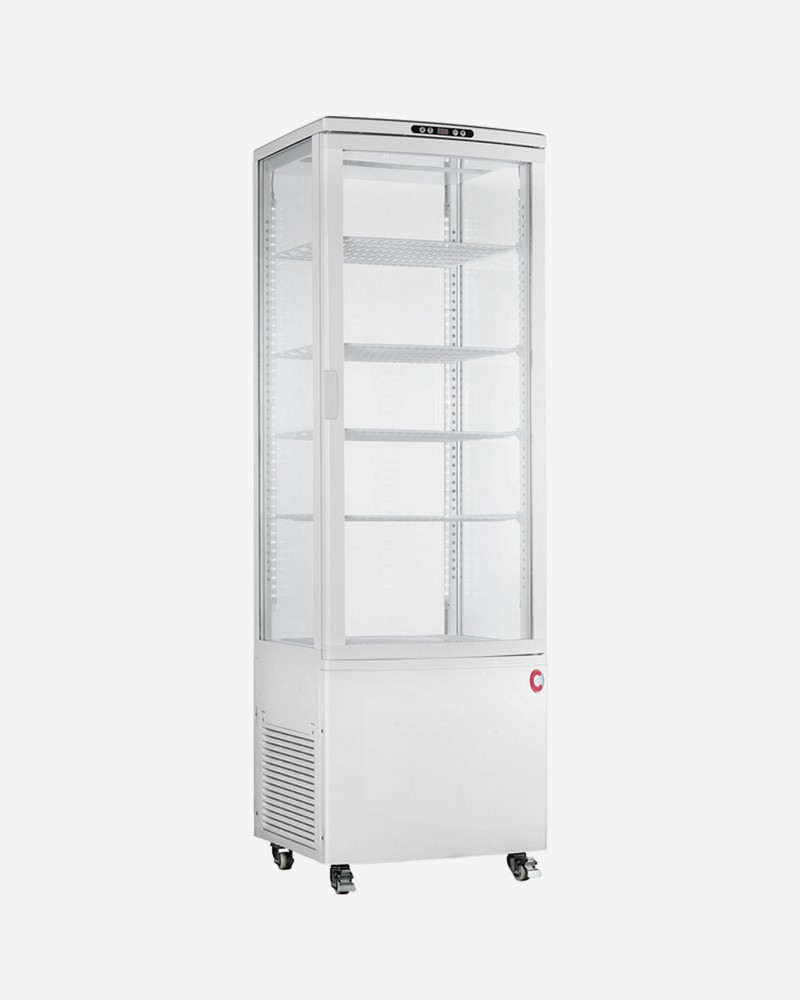 Countertop Four-Sided Glass Beer Display CoolerA countertop chiller with four-sided double glass, LED top light, digital thermostat, ventilated cooling and automatic defrost, keeping bottled beer visible and steadily chilled in humid rooms.View Product →
What Pushes a Beer Cooler Out of Range
Many temperature complaints trace back to a handful of operating conditions rather than a failing compressor. Before assuming a unit is defective, work through the usual suspects:
- Heat sources and placement. A cabinet installed beside ovens, dish machines or in direct afternoon sun fights a losing battle, and a unit pushed flat against the wall loses the airflow its condenser needs.
- Door traffic and cabinet type. An open-front merchandiser spills its cold air layer with every grab, while a closed glass-door unit recovers within minutes.
- Loading habits. Stock stacked over the load line or pressed against internal fans blocks circulation, and a single delivery of warm beer can hold the entire cabinet above range for hours.
- Seasonal ambient shifts. A setting that held 38°F through winter may drift several degrees once summer heat settles in.
- Deferred maintenance. Dust-clogged condenser coils and worn door gaskets stretch compressor run times and widen every swing.
On the seasonal point, our guide to how many degrees vertical display cabinets should be adjusted to in summer walks through the settings worth revisiting before the hot season arrives.
How to Hold the Right Temperature in Daily Operation
Stable beer temperature comes from a short list of habits repeated daily rather than from expensive equipment. Five steps cover a wide range of venues:
- Verify with an independent thermometer. Stand a probe thermometer in a glass of water on a middle shelf, wait a few hours, and compare the reading against the cabinet display; dials and digital readouts can drift several degrees from actual product temperature.
- Restock cold. Chill deliveries before they enter the cabinet, and never load warm cases during peak selling hours.
- Respect the load line. Keep air outlets and return paths clear so cold air reaches every shelf, including the corners.
- Clean the condenser and inspect gaskets monthly. Ten minutes of coil cleaning restores capacity that dust quietly steals.
- Limit door-open time during rushes. Decide what you need before the door swings open, especially on open-front units.
None of these steps takes more than a few minutes, and together they protect both the beer and the compressor working hardest to chill it.
Matching the Cooler to Your Venue
Cabinet design matters as much as the setpoint, because different venues lose cold air at different rates.
Bars and pubs
Back-bar service needs bottles within arm's reach, sightlines from every angle, and a footprint that fits a crowded counter. The countertop four-sided glass beer cooler shown above is built for exactly this role, holding bottles at service temperature while doubling as its own visual sell.
Convenience stores and grocers
Grab-and-go retail prioritizes facing capacity at self-service height. A high upright open merchandiser delivers that volume, but its open front loses cold air constantly, so placement away from entrance drafts and heat sources decides whether it can hold 38°F on a summer afternoon.
High upright refrigerated open merchandiser display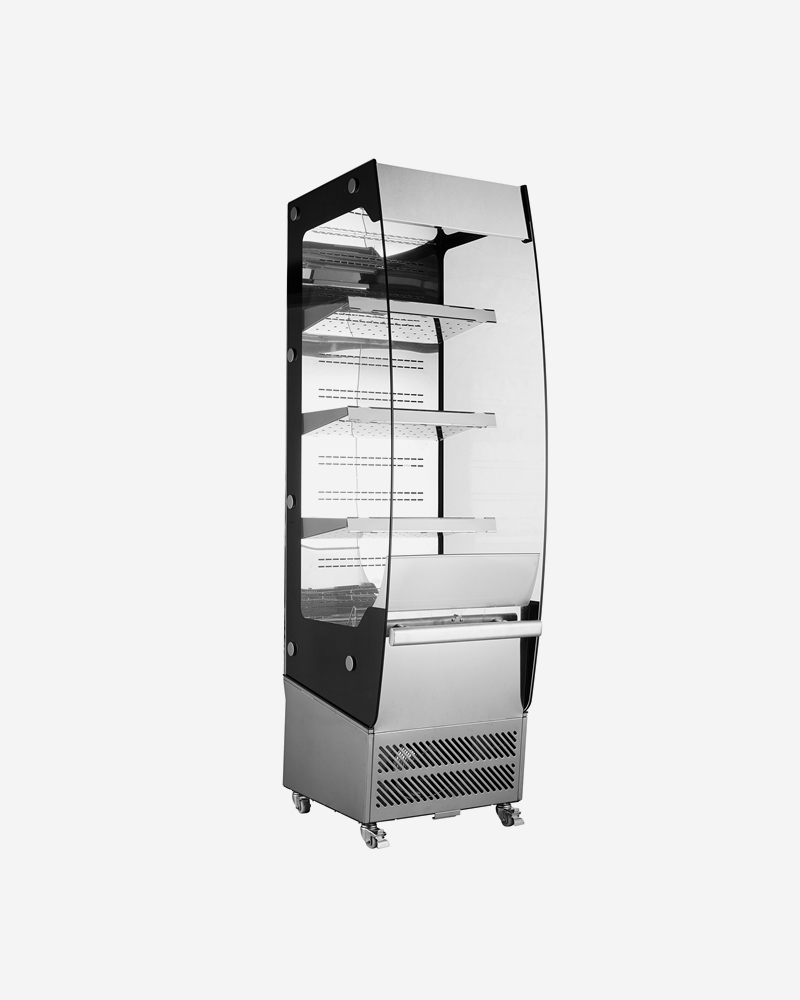 High Upright Refrigerated Open Merchandiser DisplayAn open-front upright merchandiser built for high-visibility grab-and-go drink sales, suited to placement away from drafts so it can hold serving temperature during busy summer hours.View Product →
Cafés and small formats
Shops selling chilled drinks alongside coffee or snacks need serving-temperature bottles and cans without giving up counter space, which is where a compact countertop beverage cooler earns its footprint.
Countertop beverage coolers Countertop Display Beverage CoolerA compact countertop cooler with back sliding glass doors, curved double-layer front glass, LED lighting and digital thermostat, serving chilled drinks where counter space is limited.View Product →
Whichever format you choose, two buying checks protect temperature performance: size the cabinet to your busiest restock rather than your average day, and confirm the certification your market requires before ordering, whether that is ETL for North America or CE for Europe.
The short version: set a mixed-inventory beer cooler to 36 to 38°F, verify that number with an independent thermometer, shield the cabinet from heat loads and heavy door traffic, and restock only with cold product. Style-specific serving temperatures can be handled at the point of sale instead of by resetting the whole cabinet, and when one setpoint must serve both lagers and stouts, err toward 38°F. The coldest styles still taste right, while anything drifting past 45°F costs you flavor and foam control across the board.
If you are comparing cabinet formats for a specific floor plan, the full commercial display cooler catalog gathers countertop, open-front and four-sided glass configurations in one place.
You May Also Like
.jpg?imageView2/2/w/500/h/500/format/jp2/q/100 "Four Sides Glasses Display Cooler")
.jpg?imageView2/2/w/500/h/500/format/jp2/q/100 "White 4-Sided Glass Refrigerated Display Case")
.jpg?imageView2/2/w/500/h/500/format/jp2/q/100 "Refrigerated Display Cake Countertop Four Sides Glasses Display Cooler")
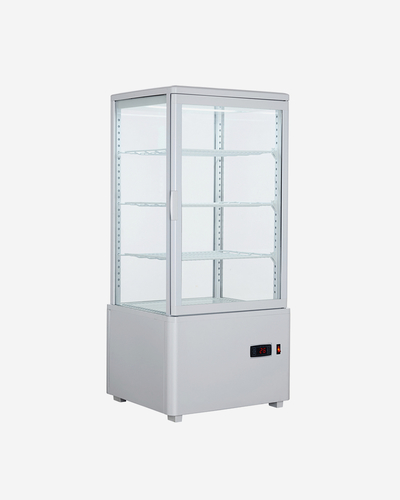
.jpg?imageView2/2/w/500/h/500/format/jp2/q/100 "Four Sides Glasses Display Cooler")
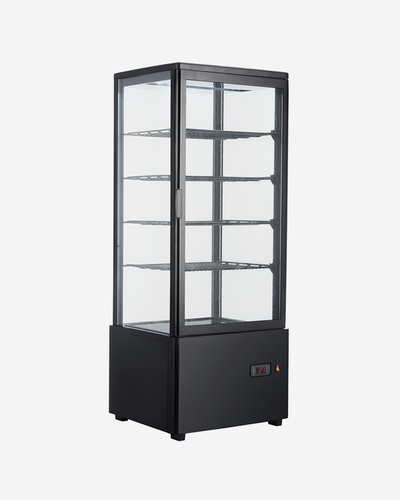

-
- Navigation
- Home
- About Us
- Products
- News
- Contact Us
 East Zone, Guanhaiwei Industrial Park, Cixi City, Ningbo, Zhejiang, China
 +86-574-63668678
 +86-574-63668108
Copyright © Ningbo XiangChi Electrical Co.,Ltd All Rights Reserved.
