
 简体中文
简体中文 English
 Español
News
Manual Defrost vs Frost-Free Freezer: Which Is Better for Your Business?
Picture this: you arrive at your bakery or restaurant early in the morning to open the display freezer. Instead of bright, clean shelves, you are faced with a thick layer of frost that seems to have grown overnight. For commercial operators, the choice between a manual defrost freezer and a frost-free freezer is not just about a feature—it affects temperature stability, food quality, energy bills, and staff time. After comparing both systems in real business settings, the conclusion is clear: neither is universally better. The right choice depends on your specific storage needs, frequency of door openings, maintenance capacity, and budget.
How Manual Defrost and Frost-Free Systems Work
Understanding the underlying mechanics helps you separate marketing claims from practical performance. Both systems use a compressor and refrigerant to remove heat, but the way they handle ice and moisture is fundamentally different.
Manual Defrost: A Direct, Simple Approach
A manual defrost freezer relies on cold air circulating over an evaporator coil. Water vapor in the air condenses and freezes on the coil, creating ice. Over time, ice accumulates on the coil and the interior walls. When the frost thickens, it acts as an insulator, reducing the system's ability to absorb heat. The way to restore efficiency is to turn off the unit, open the door, and manually scrape or melt the ice. In a busy commercial kitchen, this usually means a scheduled downtime during off-peak hours.
Frost-Free: Continuous Defrosting Without Interruption
A frost-free system, also marketed as auto-defrost, adds a heating element, a timer, and a fan. Every few hours, the heater warms the evaporator coil just enough to melt any accumulated ice, and the fan then pushes the cold air back into the storage space. This cycle prevents frost from building on the interior surfaces. It is important to note that "frost-free" does not mean a freezer never gets frost—rather, it means the system manages the frost on its own, at the cost of extra components and a small temperature rise during the defrost cycle.
What Actually Differs in Daily Use
Many of the important differences are not found on a spec sheet. They show up in how your food behaves over weeks, how much you pay each month, and how much time your staff spends maintaining equipment.
Temperature Stability and Food Quality
Manual defrost freezers maintain a very steady temperature because there are no heating cycles. The compressor runs continuously under normal use, and the cold air stays dense and calm. This makes manual defrost models a strong choice for storing sensitive items like ice cream, layered cakes, and fresh seafood. Frost-free systems, on the other hand, experience a temperature spike every time the defrost heater kicks in. Although modern timers try to keep these spikes brief, they are still measurable. The fan in a frost-free unit also promotes air movement, which can accelerate moisture loss on the surface of unprotected foods and contribute to freezer burn. For a commercial operator, this means a frost-free display freezer may be less suitable for long-term ingredient storage, even though it is very convenient for fast-moving products.
Energy Use and Operating Cost
Energy consumption is a common reason businesses lean toward frost-free models, but the truth is more nuanced. A manual defrost freezer with a clean, thin layer of frost uses less energy because the refrigeration system is simpler. Frost-free models consume extra power for the defrost heater and the circulation fan, even when the compressor is idle. However, if a manual defrost freezer is left to accumulate thick ice, its efficiency drops sharply and the compressor works harder, eventually consuming more electricity than a frost-free unit would. The real energy comparison depends on maintenance discipline, not on the label alone.
| Factor | Manual Defrost | Frost-Free |
|---|---|---|
| Temperature stability | More stable, no heating cycles | Fluctuates during defrost cycles |
| Energy efficiency | Lower with regular defrosting | Higher due to heater and fan |
| Food preservation | Better for long-term storage | May cause freezer burn over time |
| Maintenance | Requires manual scraping | Automatic, but more parts to fail |
| Best for | Low-traffic, long-storage needs | High-traffic, fast-turnover settings |
Maintenance and Service Life Considerations
Maintenance is where the two systems demand very different commitments. A manual defrost freezer has fewer moving parts and no heating element, which means fewer components that can break. But it requires a physical routine: someone must empty the unit, remove product, scrape the walls, clean the interior, and restart the freezer. This time cost should not be treated as free labor—it is part of your operating overhead.
A frost-free freezer reduces staff effort, but it adds a defrost heater, fan motor, and control board to the system. Over time, these components can fail, and repairing them costs more than a simple compressor circuit. In commercial environments with heavy door traffic, the automatic defrost can also run more frequently than the manufacturer's default timer, adding stress to the parts. Regardless of which type you choose, regular cleaning, checking gaskets, and ensuring proper airflow are essential. As discussed in our article on commercial freezer life expectancy and maintenance tips, the lifespan of your equipment is largely determined by how consistently you maintain it, not by the defrost type alone.
How to Choose for Your Business Scenario
Rather than asking "which is better?", ask "which fits my operation?" The following factors should guide your decision.
- Door frequency: If customers or staff open the freezer many times per hour, frost-free is the practical choice because it prevents rapid ice build-up.
- Product type: For delicate items such as mousse cakes or fresh sushi, temperature stability is critical; a manual defrost unit can preserve texture and appearance more reliably.
- Staff availability: If you have spare labor in the morning to handle defrosting, manual defrost saves money on upfront purchase costs. If every minute matters, automatic defrost is worth the premium.
- Space and layout: Frost-free systems often have thicker walls and more internal compartments, which can reduce useful volume. Check that the cabinet interior fits your trays and containers.
- Lifecycle cost: Calculate initial price, expected energy use, maintenance parts, and estimated service life. A cheaper manual unit may be more expensive over time if your team does not keep up with the defrost routine.
For many food-service establishments, an automatic defrost display cooler strikes the right balance. It reduces the risk of frost damage to packaged goods, keeps the cabinet looking clean, and allows staff to focus on customers rather than scraping ice. If you want a solution that pairs automatic defrost with a compact, glass-front design for bakery or cake display, a countertop combination may be the right fit.
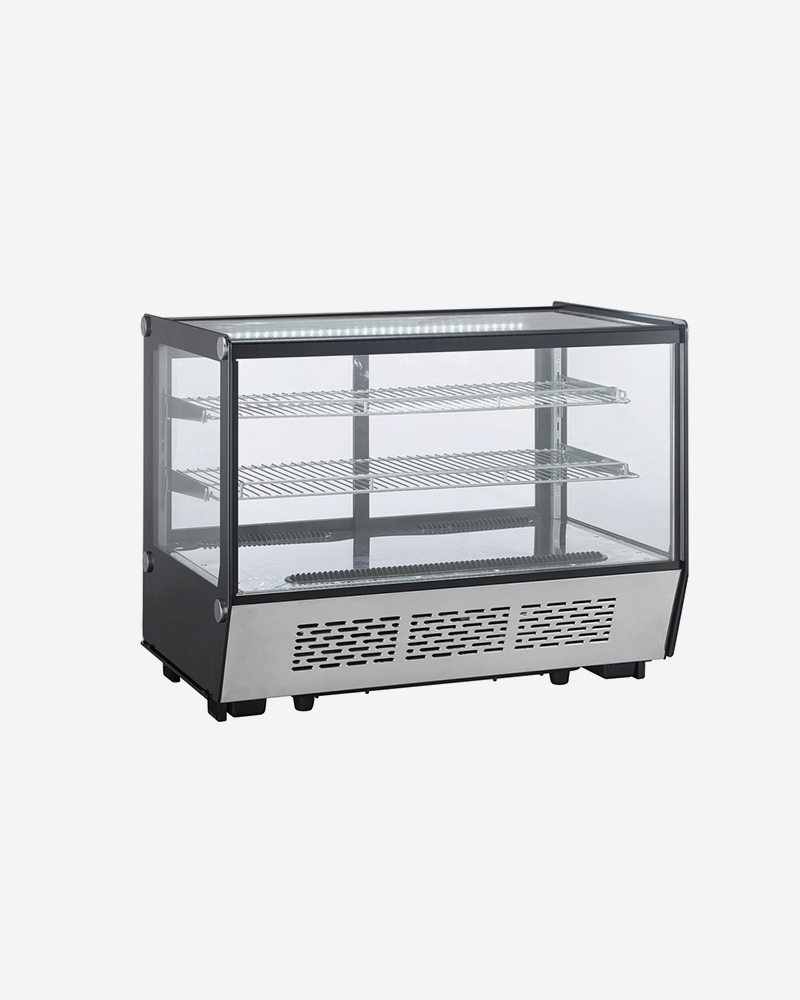 Automatic Defrost Countertop Display Cooler with LED Lighting for CakesThis countertop cooler features automatic defrost, LED lighting, and adjustable shelves, offering a convenient display solution for cakes while reducing maintenance tasks in busy food-service settings.View Product →
Conclusion
Manual defrost freezers are not obsolete. They offer steadier temperatures, simpler mechanics, and lower operating costs when maintained properly. Frost-free freezers are built for convenience, high-volume turnover, and busy environments where a manual defrost schedule creates real bottlenecks. The key is to match the system to your actual workflow.
If your priority is long-term storage stability and you have the staff time to manage defrosting, a manual defrost freezer is a reliable and economical workhorse. If you run a fast-paced commercial kitchen or retail space with frequent door openings, a frost-free freezer keeps operations moving smoothly and prevents product damage from heavy frost. Your decision should also consider the type of food you store, your local energy tariffs, and how much you are willing to invest in a more complex system. When you are ready to evaluate the equipment available, review our commercial display refrigeration lineup to find models that fit your capacity and layout constraints.
You May Also Like
.jpg?imageView2/2/w/500/h/500/format/jp2/q/100 "Four Sides Glasses Display Cooler")
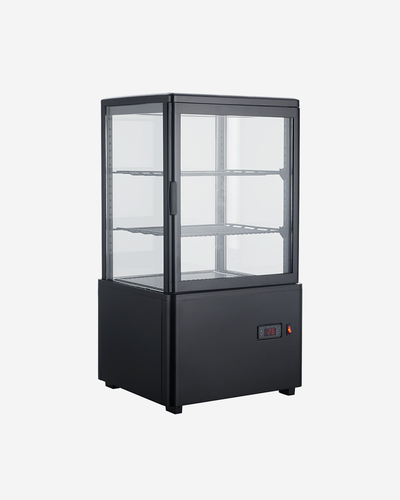
.jpg?imageView2/2/w/500/h/500/format/jp2/q/100 "White 4-Sided Glass Refrigerated Display Case")
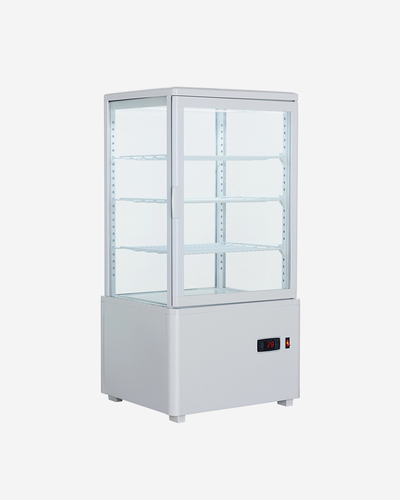
.jpg?imageView2/2/w/500/h/500/format/jp2/q/100 "Refrigerated Display Cake Countertop Four Sides Glasses Display Cooler")
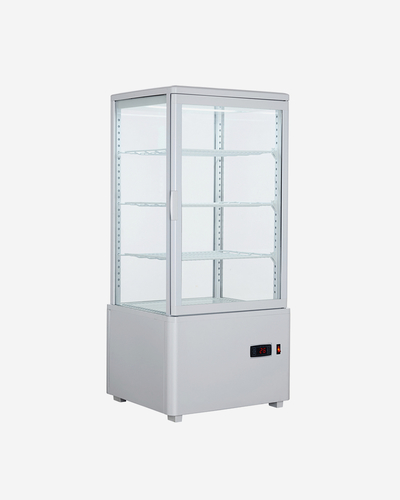
.jpg?imageView2/2/w/500/h/500/format/jp2/q/100 "Four Sides Glasses Display Cooler")

-
- Navigation
- Home
- About Us
- Products
- News
- Contact Us
 East Zone, Guanhaiwei Industrial Park, Cixi City, Ningbo, Zhejiang, China
 +86-574-63668678
 +86-574-63668108
Copyright © Ningbo XiangChi Electrical Co.,Ltd All Rights Reserved.
