
 简体中文
 English
 Español

News
Best Temperature for a Beverage Fridge: A Practical Guide for Perfect Drinks
Walk into a busy café, bottle shop, or convenience store and you can usually tell within a sip whether the beverage fridge is doing its job. Too warm, and a cold lager feels flat; too cold, and a delicate white wine loses its aroma. The best temp for a beverage fridge is not one fixed number for every drink. It is a narrow working range that keeps your mix of bottles and cans at their best, while leaving room for airflow and real-world door openings.
Our team has built display coolers for bakeries, cafés, and retail spaces, and the same rule comes up again and again: airflow first, then temperature. A fridge that is packed too tightly or checked only once a week will drift, even if the dial looks right.
The Short Answer: What Is the Best Temp for a Beverage Fridge?
For most ready-to-drink beverages, aim for 34°F to 40°F (1°C to 4°C). If you need one practical set point, start at 38°F (3°C). That range keeps canned soda, sparkling water, bottled water, and most beer cold without pushing them toward freezing.
Beer is a little more specific. A crisp lager often shows best at 35°F to 38°F (2°C to 3°C), while a craft ale or IPA may taste better served closer to 45°F to 55°F (7°C to 13°C). White wine usually sits around 45°F to 50°F (7°C to 10°C). Red wine prefers 55°F to 65°F (13°C to 18°C), which is warmer than most single-zone beverage fridges should run.
So the honest answer is: set the fridge for the drinks you sell most, then use a second zone or a separate unit for the outliers. If your menu is mostly beer, soda, and water, 38°F is a sensible anchor. If wine makes up a large part of your display, do not force everything into one temperature.
A Quick Temperature Guide by Drink Type
The table below is a useful starting point, not a strict rule. Glassware, carbonation, alcohol level, and customer preference all matter. Taste the drinks at your chosen setting before you settle on it for good.
| Beverage | Ideal serving temp (°F) | Ideal serving temp (°C) | Practical note |
|---|---|---|---|
| Cold lager or pilsner | 35–38°F | 2–3°C | Crisp and carbonated; avoid near-freezing. |
| Craft ale or IPA | 45–55°F | 7–13°C | Warmer serving reveals hops; many operators still hold at 40–45°F. |
| Sparkling water or soda | 36–40°F | 2–4°C | Carbonation stays lively without freezing. |
| White wine | 45–50°F | 7–10°C | Light whites at the lower end; fuller whites slightly warmer. |
| Red wine | 55–65°F | 13–18°C | Usually too warm for a single beverage fridge; use a dual-zone unit. |
Why One Number Never Fits Every Drink
Cold changes how we taste. At very low temperatures, sweetness and aroma become less obvious, while carbonation feels sharper. That is why an ice-cold lager can be refreshing, but an ice-cold IPA can taste muted and harsh. A beverage fridge is a working tool, not a wine cellar, so the goal is to keep the majority of drinks in a stable, drinkable range without freezing the edges of the cabinet.
Display fridges also have to cope with real life: doors opening during service, warm deliveries going in at lunchtime, and room temperatures that climb in summer. When the shop gets busy in July, small thermostat changes matter. This seasonal cabinet adjustment guide is a useful sanity check when the outside temperature starts to affect the case.
How Display Fridges Differ from Home Beverage Centers
A glass-door display cooler is designed to show the product, not hide it. That means more glass surface, more light, and often more heat gain from the room. Open display units are even more exposed because cold air spills out every time a customer reaches in. They can still hold a steady range, but they need a tighter routine and a realistic set point.
If you run a high-volume self-service section, an open display cooler keeps drinks visible and easy to grab, but it also needs a tighter temperature check because cold air spills out. The cabinet should be placed away from direct sunlight, warm aisles, and oven exhaust, and the rear air intake should never be blocked by overstocking.
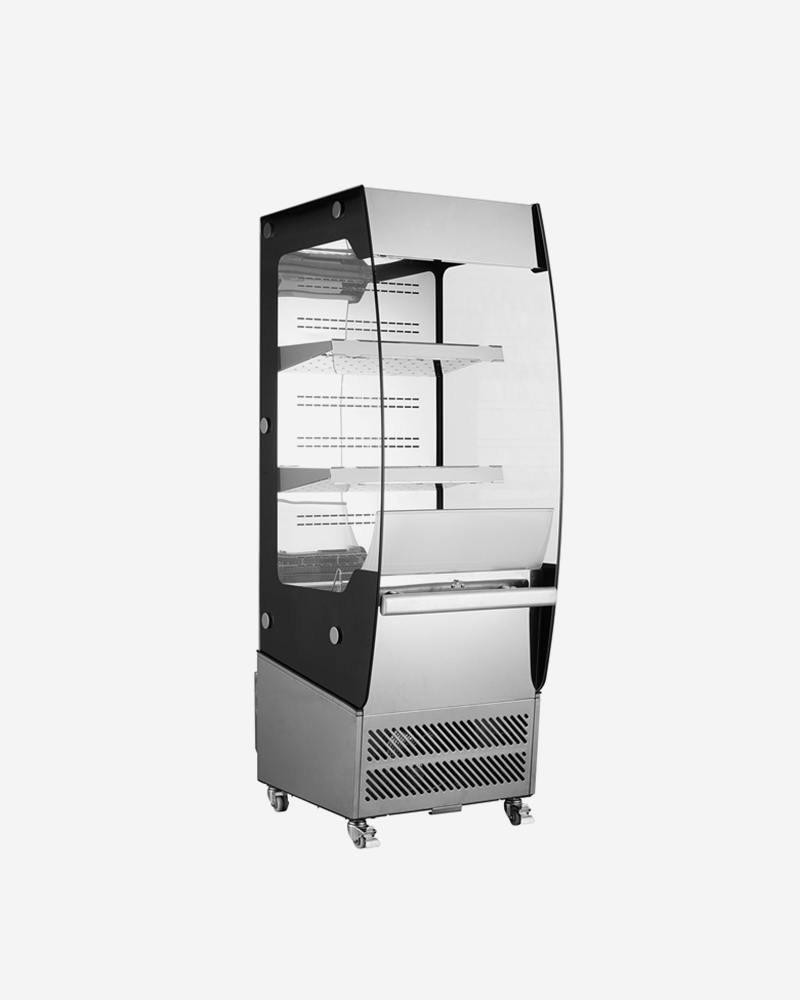 Custom Commercial Open Display Cooler XCS-180LFor high-volume self-service drinks, this 180 L stainless steel open cooler offers a 2–10°C range and customizable design for visible grab-and-go display.View Product →
Setting the Right Temperature Without Guesswork
Start with a baseline of 38°F (3°C), then give the cabinet time to settle. A fridge that has just been loaded with warm stock will read high for several hours. Do not keep turning the dial down; wait, measure, and adjust in small steps.
- Set the thermostat to 38°F (3°C) and let the cabinet run empty or lightly loaded for at least 24 hours.
- Place a calibrated probe thermometer in a sealed bottle of water on the middle shelf. Air temperature can change quickly, but liquid temperature tells you what your customers will actually taste.
- Check the reading at opening, during the busiest hour, and at closing. Write the numbers down.
- Adjust by 1°F at a time, then wait two to four hours before checking again.
- Keep a simple log so you can spot a slow drift before drinks freeze or lose their chill.
Smaller countertop display coolers can be easier to dial in because they hold less stock and sit closer to service. Just remember that a countertop unit near a coffee machine or oven will work harder than one in a shaded corner.
countertop display coolersMatching the Fridge to Your Drink Mix
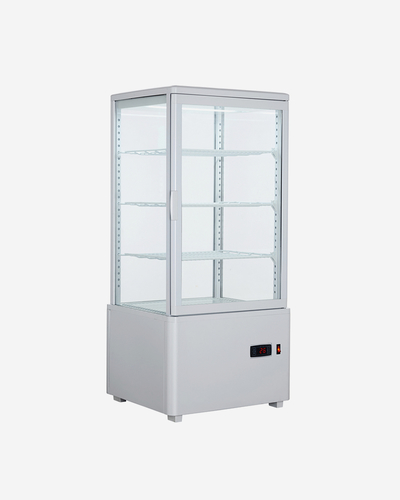
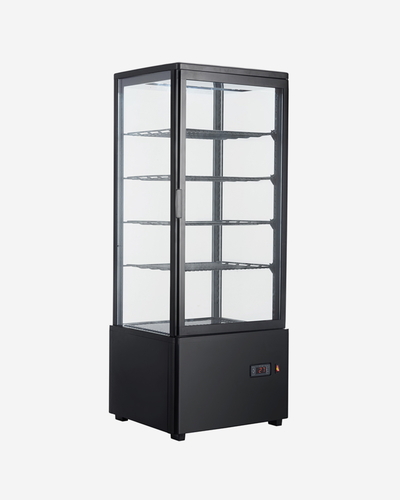
For a bar or bottle shop with a tight footprint, a countertop four-sides glass beer display cooler gives guests a clear view without taking up floor space. Four-sided glass is helpful when customers approach from different angles, and the enclosed case is less exposed than an open unit.
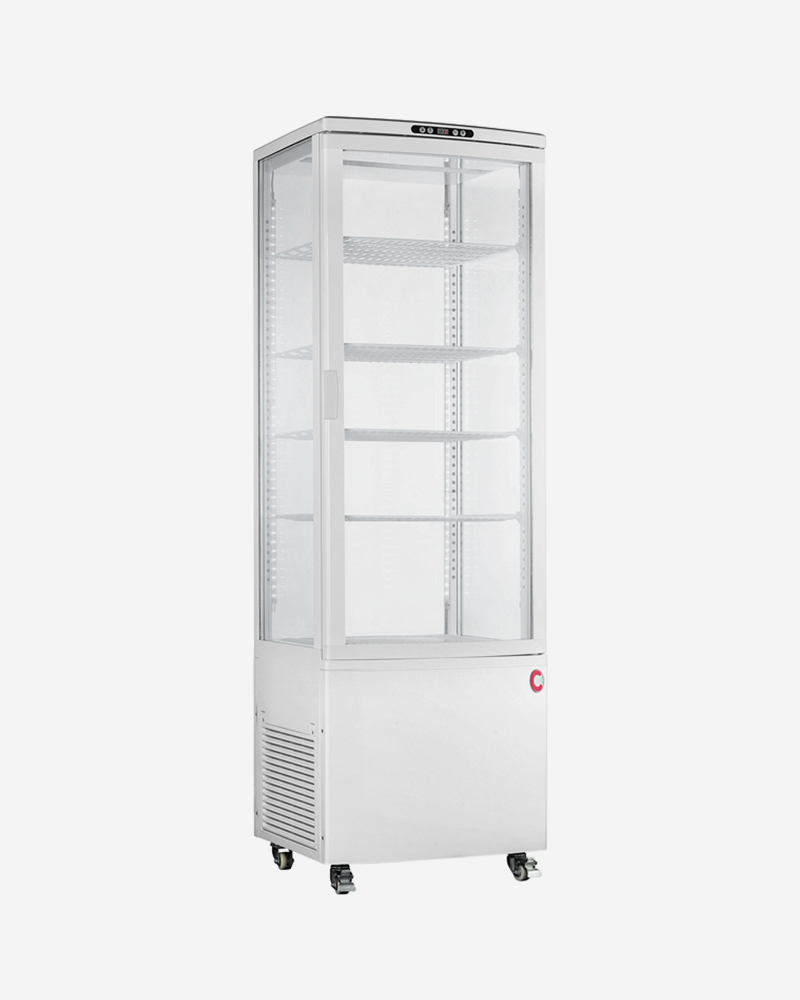 Countertop Four-Sided Glass Beer Display Cooler XC-218LFor tight bar or bottle-shop spaces, this 218 L four-sided glass cooler gives clear beverage views without floor footprint and includes adjustable shelves and castors.View Product →
For cafés that sell canned drinks, sparkling water, and packaged juices, a countertop beverage cooler is a practical starting point. Look for a model that lets you reach the back easily, because a fridge that is awkward to stock often ends up overloaded at the front.
 Countertop Beverage Display Cooler XCW-120ZFor café counters selling canned drinks and juices, this 135 L cooler offers a 2–10°C range, sliding glass doors, and easy-access shelving.View Product →
Common Mistakes That Push Drinks Out of Range
- Blocking the rear vents. Overloading the shelves stops cold air from moving, so the front stays cold while the back turns warm.
- Trusting the dial instead of the drink. A thermostat reads air temperature, not the temperature inside a can or bottle. Use a probe thermometer.
- Loading warm deliveries straight in. A full case of room-temperature cans can raise the cabinet temperature for hours. Chill them in a back room first if you can.
- Opening glass doors constantly during service. Keep the best sellers near the front and train staff to close doors firmly.
- Ignoring defrost cycles and ice build-up. Ice on the evaporator reduces cooling power and makes the compressor work harder.
- Setting the fridge too cold “to be safe.” Near-freezing temperatures can flatten carbonation, freeze cans, and damage delicate wine.
- Using one zone for red and white wine. If wine is a big part of your offer, a dual-zone unit or a separate wine display is worth the space.
A Simple Temperature Routine for Busy Teams
The best temp for a beverage fridge is the one you can hold consistently. A short daily routine is more useful than a perfect number on paper. Check the cabinet at opening, mid-shift, and closing. If the reading is within two degrees of your target, leave it alone. If it has drifted, look for a cause before you touch the thermostat: a blocked vent, a warm delivery, a door left open, or a condenser that needs cleaning.
Once a month, clean the condenser coil and check the door gaskets for tears or gaps. A gasket that no longer seals lets warm, humid air into the case, which means more defrost cycles and less stable temperatures. In our own workshop, we would rather see a simple log with three readings a day than a fancy control panel that nobody checks.
A Final Word: Let the Drinks Tell You
Start at 38°F (3°C), measure the liquid temperature, and taste the results. If your lager is crisp, your soda is lively, and your white wine still has its aroma, you are close to the right range. If cans are forming ice or wine tastes flat, nudge the setting up and give the cabinet time to respond. The best temp for a beverage fridge is ultimately the one that keeps your best-selling drinks at their best, day after day.
You May Also Like





-
- Navigation
- Home
- About Us
- Products
- News
- Contact Us
 East Zone, Guanhaiwei Industrial Park, Cixi City, Ningbo, Zhejiang, China
 +86-574-63668678
 +86-574-63668108

Copyright © Ningbo XiangChi Electrical Co.,Ltd All Rights Reserved.
