
 简体中文
 English
 Español

News
Convenience Store Freezer Guide: Layout, Efficiency, and Everyday Reliability
Walk into a busy convenience store at 7 a.m. and you can usually tell whether the freezer section is working for the store or against it. The ice cream is visible, the frozen snacks are easy to reach, and staff can restock without blocking the coffee queue. A convenience store freezer is a small piece of equipment with a large operational role: it protects product quality, supports impulse purchases, and keeps running through long opening hours. The right choice is rarely the biggest cabinet or the lowest price. It is the format that fits the store’s product mix, floor plan, and service routine.
Start With What the Store Sells, Not Just the Freezer Size
Convenience stores often carry a mixed frozen assortment: ice cream, frozen desserts, frozen snacks, ready meals, bagged ice, and seasonal items. Each category has different turnover and temperature needs. A cabinet that works well for bags of ice may be a poor fit for premium ice cream, because visibility, temperature recovery, and shopper access all matter.
Before comparing models, list the top frozen sellers and note their package sizes. Decide how much stock must be on display and how much can stay in backstock. If frozen is a small add-on, a compact glass-door or countertop unit may be enough. If frozen is a destination category, plan more linear display space and a clear restocking path. The freezer should support the way the store already sells, not force staff to rebuild the aisle around it.
The Main Freezer Formats in a Convenience Store
Most convenience store freezer projects come down to a few familiar formats. The table below compares them in practical terms, without assuming that one design suits every store.
| Format | Best for | What shoppers notice | Operational note |
|---|---|---|---|
| Glass-door upright freezer | Ice cream, frozen meals, premium items | Clear product visibility and easy shelf browsing | Door gaskets, glass fogging, and shelf access need routine checks |
| Open multideck freezer | High-impulse frozen snacks and seasonal items | Fast grab-and-go access with a strong display effect | Cold-air curtains and energy use require close attention |
| Chest or island freezer | Bulk ice, frozen staples, backup stock | Large capacity and a familiar self-service look | Bending and product search can slow the shopper down |
| Combination display cabinet | Stores with mixed chilled and frozen zones | A flexible display that can follow changing promotions | Zoning, defrost cycles, and staff training are essential |
A useful rule is to match the format to the shopping moment. A shopper buying a single ice cream may prefer a glass door at eye level. A shopper grabbing a frozen snack during a fuel stop may respond better to an open front. Bulk buyers and staff restocking often benefit from a chest or island unit that holds more stock with less display pressure.
Closed Doors, Open Fronts, and the Everyday Trade-Offs
Closed glass-door freezers keep cold air inside, which usually makes energy management easier and protects products from warm aisle air. The trade-off is a small barrier: shoppers must open a door, and the glass must stay clean enough to see the product. Open multidecks invite the hand to reach in, but they depend on a stable cold-air curtain and disciplined stocking. Neither format is automatically better. The right answer depends on product value, turnover, store climate, and how much maintenance the team can realistically handle.
For a closer look at how open and closed formats behave in daily retail, our open display coolers category is a useful starting point. It helps frame the practical questions: How wide is the aisle? Can staff see stock from the counter? Will the cabinet be near a door, a coffee station, or direct sunlight?
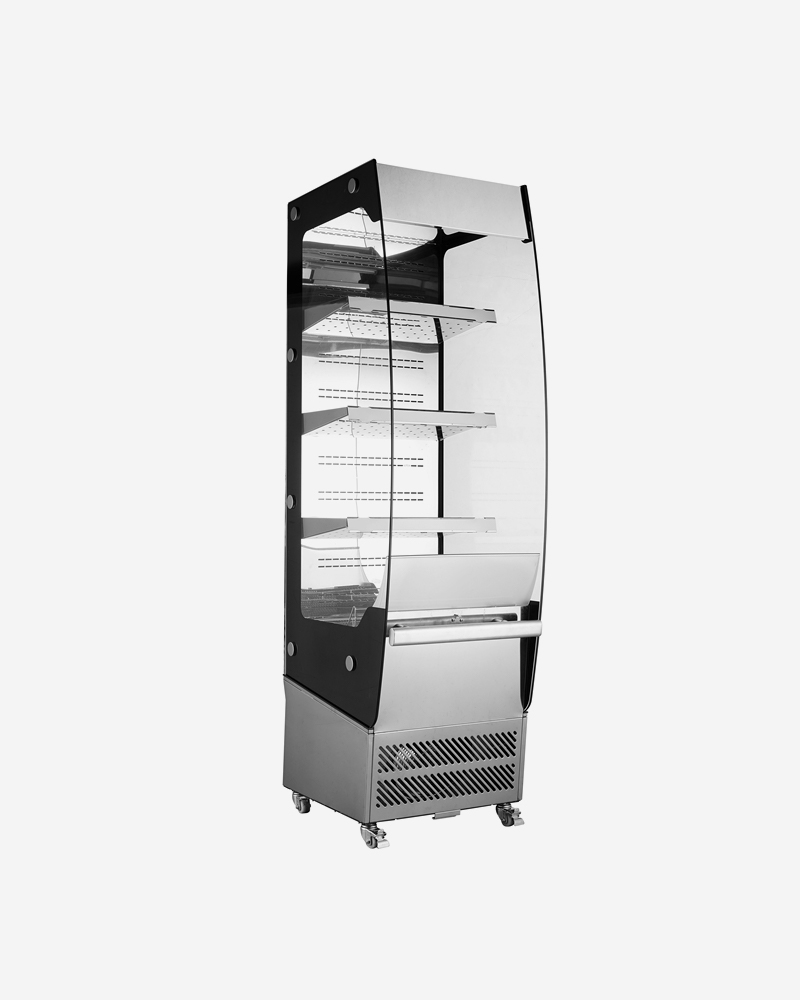 High Upright Refrigerated Open Merchandiser DisplayA 220 L open refrigerated display for commercial layouts, useful when comparing doorless access, shelf visibility, and daily restocking needs.View Product →
If the store is studying an open format for a mixed chilled and frozen zone, our high upright refrigerated open merchandiser display shows how doorless access and shelf visibility are handled in commercial display cases. The same planning questions apply when the cabinet is a freezer: keep the air path clear, avoid overloading the shelves, and make restocking part of the daily routine rather than an afterthought.
Getting the Temperature Zones and Layout Right
Freezer placement is often decided too late, after the shelving and checkout counter are fixed. That is when problems appear: the cabinet blocks a walkway, the door opens into a queue, or the compressor breathes warm air beside a hot-food unit. Give the freezer its own service zone. Leave enough room for the door to open fully, for staff to pull out shelves, and for a technician to reach the rear panel. Keep the condenser area clear of cartons and cleaning supplies.
Group frozen products by shopping mission rather than by supplier. Ice cream, frozen desserts, and frozen snacks can sit together when they support the same impulse purchase. Ready meals and bulk ice may need a different position. Keep a small gap between the freezer and any oven, grill, or direct sunlight. Even a well-built cabinet struggles when the room around it is working against the cold chain.
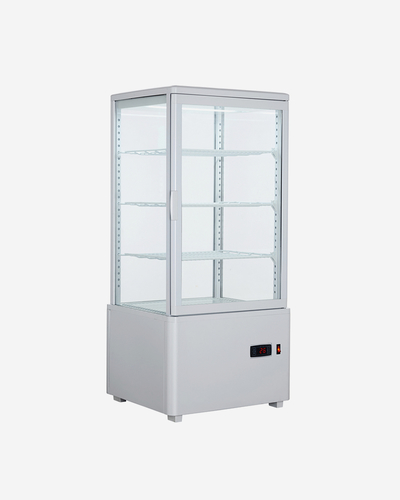
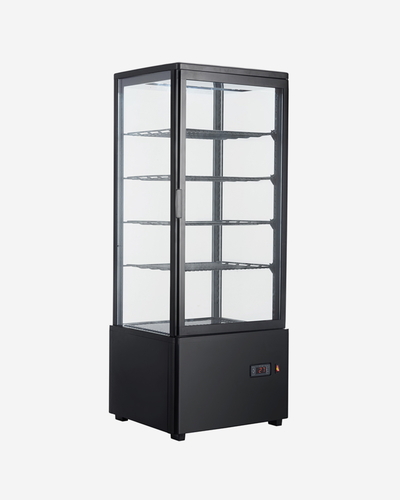
When the cabinet is going onto a front-of-house retail floor, glass on more than one side can help staff and shoppers see stock from different angles. Our four-sided glass refrigerated standing display cooler is an example of that display-first approach, and the same sightline questions apply when you specify a glass-door freezer.
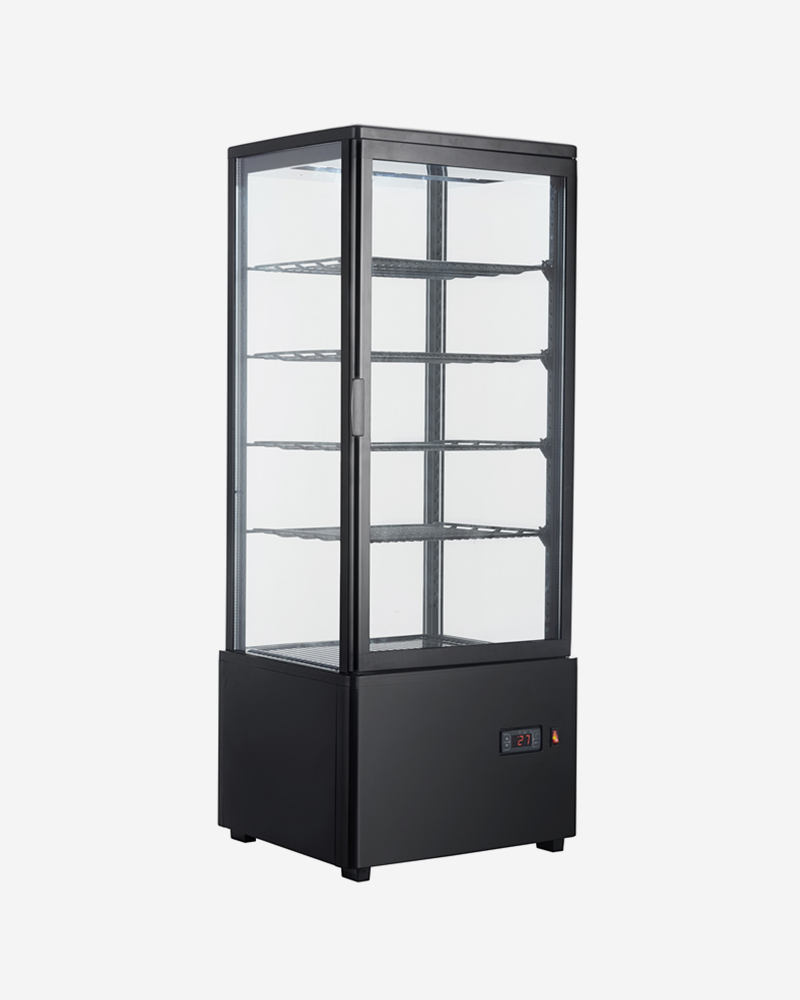 Custom Four-Sided Glass Refrigerated Display CoolerA 98 L standing cooler with four-sided double glass, suited to front-of-house displays where visibility from multiple angles matters.View Product →
Energy Use: The Cost That Keeps Running
A freezer’s purchase price is only one part of its cost. The bigger number is often the electricity and service time it consumes over several years. Use these practical checks to keep energy use under control:
- Choose a cabinet size that matches real sales, not the busiest weekend of the year.
- Use night curtains or covers on open displays where the store layout allows.
- Keep door gaskets clean and replace them when they no longer seal properly.
- Do not block evaporator fans, return-air grilles, or condenser coils with stock.
- Follow the manufacturer’s defrost schedule and check for ice build-up.
- Use LED lighting where fitted, and switch off display lights when the store is closed if the cabinet allows it.
Temperature discipline matters as much as equipment choice. A freezer that is opened constantly during a promotion may recover more slowly than one stocked in a calm, organized way. Staff should know which products belong in which zone, and they should avoid filling a cabinet so tightly that cold air cannot move.
Daily Care That Protects Both Food and Uptime
Most freezer failures do not begin with a dramatic breakdown. They begin with a gasket that no longer seals, a coil that has not been cleaned, or a defrost cycle that has been ignored. A short daily check takes less time than an emergency call-out. Record the temperature at the start and end of the shift, look for frost or water where it should not be, and listen for unusual compressor noise. Clean the door frames and glass with products that are safe for food display areas.
Weekly tasks can include checking the air vents, inspecting door seals, and confirming that the defrost drain is clear. Monthly cleaning of accessible condenser coils, where the design allows it, helps the cabinet reject heat efficiently. If the store uses an open multideck, pay attention to the air curtain and avoid stacking products above the load line. For more detailed maintenance points, see our guide to commercial freezer life expectancy and maintenance tips.
A Simple Buying Checklist for Store Owners
Use this checklist when comparing convenience store freezer options. It keeps the conversation practical and makes it easier to compare quotes from different suppliers.
- Measure the doorway, aisle, and service clearance before choosing a cabinet width.
- List the frozen categories and the temperature range each one needs.
- Decide whether the store needs a closed glass door, an open front, or a combination.
- Check the expected ambient room temperature and whether the cabinet is rated for it.
- Ask for energy information, defrost details, and recommended cleaning access.
- Confirm that shelves, door gaskets, and lamps can be replaced locally or through the supplier.
- Plan the restocking route so staff are not opening the freezer during peak checkout times.
- Review the warranty and service response time, not only the purchase price.
Where a Manufacturer Fits In
At Ningbo Xiangchi Electrical, we have been building commercial display cabinets since 2007 for bakeries, cafes, sushi counters, and retail food displays. A convenience store freezer project is different from a cake showcase, but the questions are familiar: Will the cabinet fit the aisle? Can staff clean it? Does the glass stay clear? Are parts and service realistic? We work with store owners and equipment partners who need practical display refrigeration, and we are happy to compare formats once the store layout and product mix are clear.
You May Also Like





-
- Navigation
- Home
- About Us
- Products
- News
- Contact Us
 East Zone, Guanhaiwei Industrial Park, Cixi City, Ningbo, Zhejiang, China
 +86-574-63668678
 +86-574-63668108

Copyright © Ningbo XiangChi Electrical Co.,Ltd All Rights Reserved.
