
 简体中文
 English
 Español

News
Beverage Refrigerator Temperature: The Complete Guide to Setting It Right
For a café owner, bar manager, or convenience store operator, a beverage refrigerator is one of the most hardworking pieces of equipment in the business. It runs around the clock, keeps drinks at the temperature customers expect, and directly affects how those drinks taste. Yet the beverage refrigerator temperature is one of the most routinely overlooked settings in food service. Set it too warm and carbonation fades, flavors flatten, and products can fall outside food safety guidelines. Set it too cold and delicate beverages lose their aroma and mouthfeel. The good news is that finding the right setting is not complicated once you understand a few basic principles.
The Ideal Beverage Refrigerator Temperature Range
Most commercial beverage coolers are designed to hold temperatures somewhere between 33°F and 50°F. In practice, we recommend setting a single-zone unit around 38°F when it will hold a mixed load of sodas, sparkling water, juice, and beer. That setting keeps carbonated drinks lively without over-chilling the items that are more sensitive to cold.
For more specialized loads, the range shifts. A dedicated beer cooler can run slightly colder, while a wine display unit needs a warmer and more stable zone. Instead of chasing a single universal number, think about what is actually going into your unit. The table below provides a practical starting point.
Recommended Temperatures by Beverage Type
| Beverage Type | Temperature °F | Temperature °C |
|---|---|---|
| Carbonated soft drinks | 35–45 | 1.5–7 |
| Sparkling water | 37–40 | 3–4.5 |
| Beer (standard lagers) | 34–38 | 1–3.5 |
| Beer (ales and crafts) | 38–45 | 3.5–7 |
| White wine | 45–50 | 7–10 |
| Red wine | 50–60 | 10–15.5 |
| Juice and dairy drinks | 37–40 | 3–4.5 |
The temperature ranges above are starting points, not rules. In a busy commercial environment, the door gets opened frequently and the interior temperature fluctuates for a short time after each opening. A well-built unit recovers quickly, but the set point should respect real-world use. Container type also matters: glass transfers cold more slowly than cans, so bottles may take a little longer to reach serving temperature.
Beer deserves special attention because style changes the target. Standard lagers are best at 34°F to 38°F, while many ales and stouts develop their character in the 38°F to 45°F range. A dedicated beer display cooler with even airflow keeps those temperatures stable across the whole cabinet, with no warm spots near the door or along the top shelf.
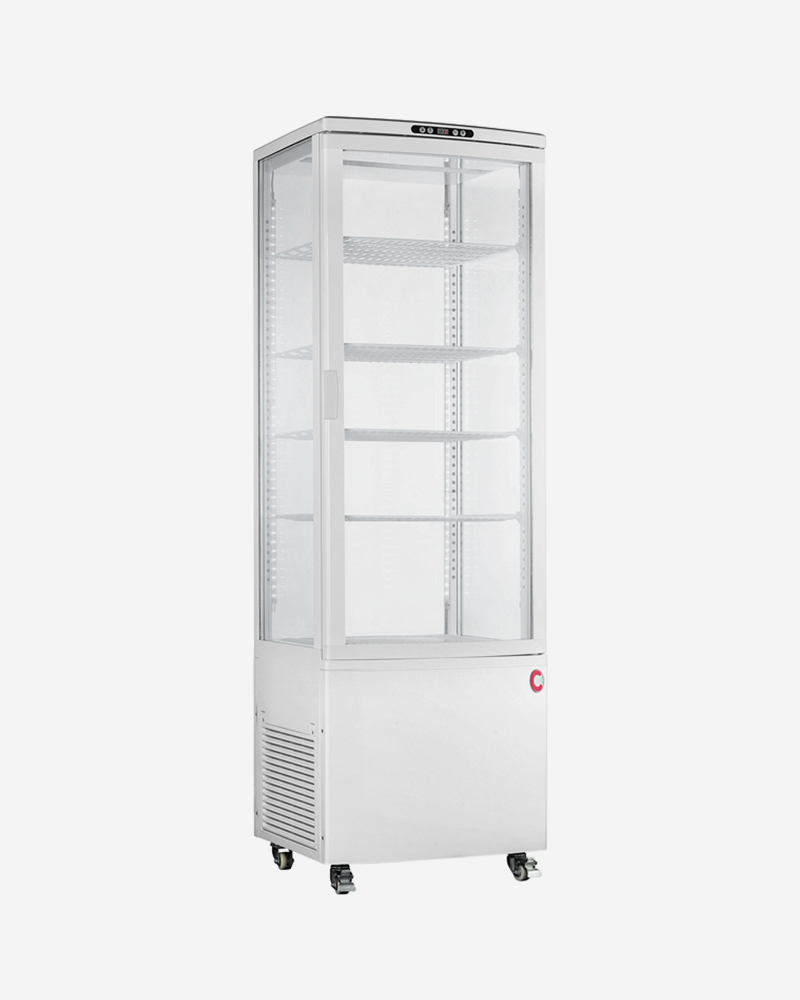 Four-Sided Glass Countertop Beer Display Cooler for Stable Lagers and AlesThis XC-218L countertop cooler holds 218 liters and chills between 2-10°C, making it a suitable match for the style-specific beer temperature ranges discussed above.View Product →
Why the Correct Beverage Refrigerator Temperature Matters
Carbonation and freshness
Carbonated drinks lose their fizz more quickly at warmer temperatures because gas escapes from the liquid faster. Holding soda or sparkling water at 35°F to 45°F slows that process and keeps the product lively at the point of sale. Most retailers aim for the lower half of that range, which preserves carbonation even when the door is being opened all day long.
Flavor and aroma
Cold suppresses sweetness, which is why a warm soda can taste syrupy and a warm white wine can feel flabby. A moderate serving temperature, around 45°F to 50°F for white wine, keeps acidity, fruit, and sweetness in balance. Red wine needs an even warmer zone, around 50°F to 60°F, so its aromatics can open up without the wine feeling warm in the glass.
Food safety in retail settings
In many markets, food safety rules require perishable items such as fresh juice, milk-based drinks, and certain pasteurized beverages to be stored below 40°F. A beverage refrigerator used in a café or store must hold that temperature consistently, especially during busy periods when the door stays open longer and warm air enters the cabinet.
Beverage Cooler vs. Regular Refrigerator
It is easy to assume a standard refrigerator can replace a beverage cooler, but the two are designed differently. A kitchen refrigerator is built to hold a wide variety of food at roughly 37°F to 40°F, with shelves, crisper drawers, and compartmentalized air paths. A beverage cooler, by contrast, is usually a glass-fronted or glass-sided display unit engineered for bottles, cans, and cartons, with airflow that reaches every shelf.
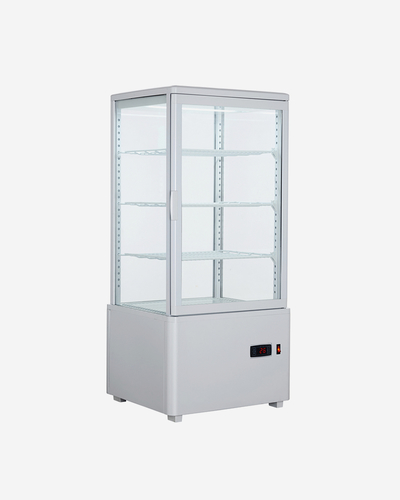
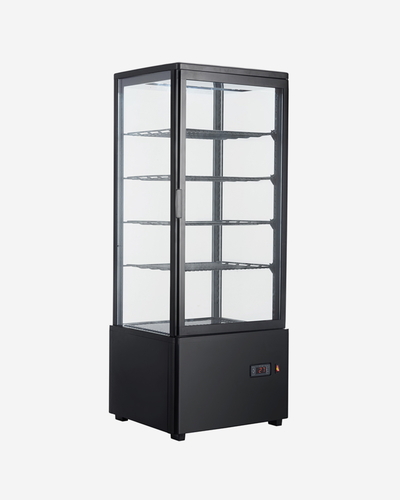
The practical differences show up quickly in a retail setting. A beverage cooler offers a wider temperature adjustment range, better temperature recovery after the door opens, and lighting that makes products look appealing. Because it is a display unit, consistent air distribution becomes essential, otherwise cold air sinks and the bottom shelves run colder than the top. For smaller counters and service points, a countertop beverage cooler provides the same control in a compact footprint while keeping drinks visible and within easy reach.
 Compact Countertop Beverage Cooler with Reliable Temperature ControlWith a 135-liter capacity and digital thermostat, this unit fits small counters while offering the even airflow and recovery needed to keep drinks evenly chilled.View Product →
Factors That Affect Beverage Refrigerator Temperature
Even a properly calibrated cooler can drift from its set point. Over the years, we have seen the same handful of issues come up repeatedly in the field:
- Overloading the cabinet, which blocks airflow and creates hot spots around the drinks.
- Frequent or prolonged door openings, which let warm air in faster than the compressor can recover.
- Placing the unit next to an oven, in direct sunlight, or in a poorly ventilated alcove.
- Dirty condenser coils, which reduce cooling efficiency and raise the internal temperature.
- A blocked ventilation grille, which starves the compressor of the air it needs to shed heat.
- A temperature probe that has shifted out of position or become covered in dust.
How to Set and Adjust Your Beverage Refrigerator Temperature
Setting a new cooler is straightforward, but it takes patience. Resist the urge to keep adjusting the dial every few hours. The cabinet needs time to stabilize. A simple routine works best:
- Run the empty cooler for two to three hours so the interior reaches its base temperature.
- Load the beverages with a little space between products, leaving the air vents uncovered.
- Close the door and let the unit run for a full 24 hours without interrupting it.
- Place a separate thermometer on the middle shelf and read it after the door has been closed for a while.
- Adjust the control panel in small steps, then wait another 24 hours before judging the result.
- Repeat until the reading matches the target for your beverage mix.
Understanding how commercial refrigeration works makes this process much easier. Once you know the roles of the compressor, condenser, evaporator, and air circulation in a display cabinet, you will also be better prepared to spot a developing problem before it affects your products. Learn more about how commercial refrigeration works.
Common Temperature Problems and What to Do
When a beverage refrigerator is not holding the right temperature, there is usually a recognizable cause. If the unit is running but drinks are not cold enough, check the condenser coils and the door gasket first. A dirty coil or a worn gasket can undermine the performance of an otherwise healthy cooler. Next, confirm that the ventilation grilles are clear and that the cabinet is not overstocked, since blocked airflow prevents cold air from reaching every product.
If the temperature reads too cold, the set point may simply be lower than intended, but it could also be a probe issue. A displaced or damaged temperature sensor can make the compressor run longer than needed, driving the cabinet below the target. Comparing the built-in display with an independent thermometer on the middle shelf is the quickest way to confirm whether the cooler really is as cold as it says.
Keeping Temperatures Consistent with Simple Maintenance
Consistent beverage refrigerator temperature is rarely achieved by setting the dial once and forgetting about it. Regular maintenance keeps the unit performing at the temperature you set. Coils and seals are the areas that degrade first, so a simple monthly routine goes a long way. Clean the condenser coils, inspect the door gasket for cracks or gaps, keep the interior vents clear, and wipe down shelves so air can move freely between products.
Monitoring the temperature is equally important. A reading on the control panel is helpful, but an independent thermometer placed in the warmest part of the cabinet gives a truer picture. If the cooler uses an auto-defrost cycle, confirm it is functioning properly, since ice build-up on the evaporator is one of the most common hidden causes of temperature drift. The long-term payoff of this kind of routine is straightforward: steadier temperatures, less spoilage, lower energy consumption, and fewer repair calls. See why regular commercial refrigeration maintenance pays off.
Final Thoughts on Beverage Refrigerator Temperature
Get the beverage refrigerator temperature right and the rest of the operation follows. Products stay fresh, customers find drinks at the temperature they expect, and spoilage losses drop. For most mixed loads, 38°F is a dependable starting point, and a separate thermometer tells you whether the set point matches reality. From there, small adjustments and simple maintenance keep the cooler accurate for years.
For high-volume retail environments where customers grab drinks continuously, an open display cooler can be the practical choice. It keeps products accessible, encourages self-service, and is engineered to hold a steady temperature even with constant traffic in front of the cabinet.
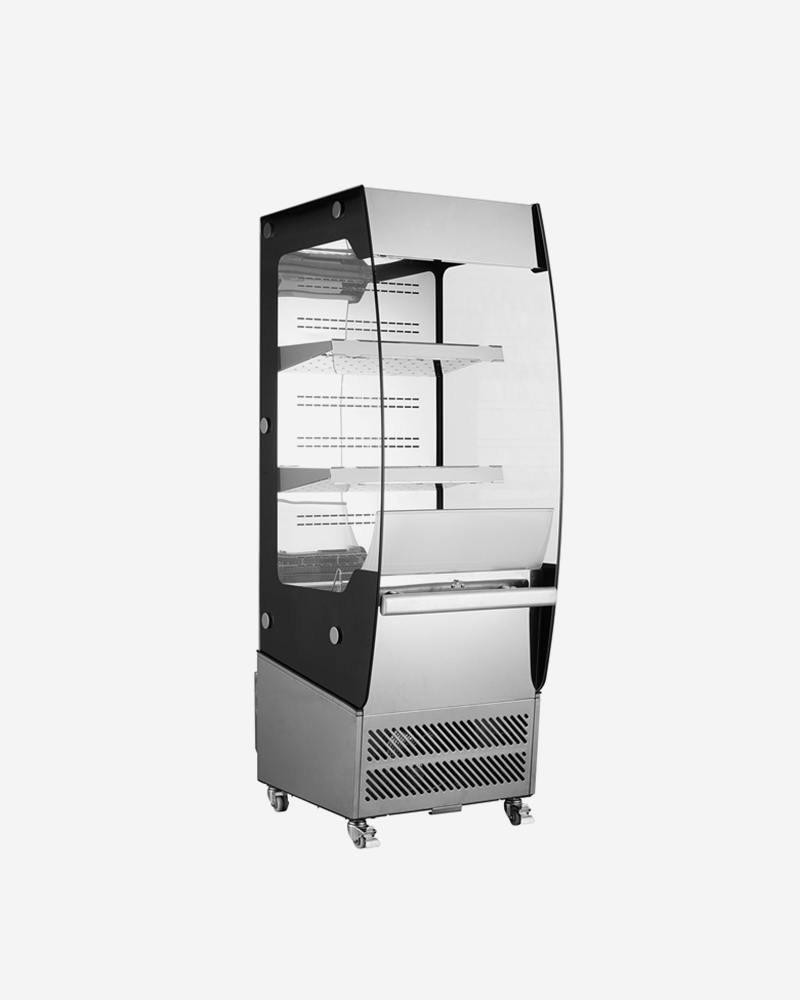 Stainless Steel Open Display Cooler for High-Traffic RetailEngineered for continuous access, this 180-liter open cooler maintains steady temperatures despite frequent openings, supporting the self-service needs described in the text.View Product →
You May Also Like





-
- Navigation
- Home
- About Us
- Products
- News
- Contact Us
 East Zone, Guanhaiwei Industrial Park, Cixi City, Ningbo, Zhejiang, China
 +86-574-63668678
 +86-574-63668108

Copyright © Ningbo XiangChi Electrical Co.,Ltd All Rights Reserved.
