
 简体中文
 English
 Español

News
Chest vs Upright Freezer: A Practical Buying Guide for Commercial Kitchens
Every few weeks someone asks us the same question: chest or upright freezer? It usually comes from a bakery owner whose back room is already packed, a convenience store manager whose staff lose ten minutes hunting for a tub of ice cream, or a caterer whose freezer door opens twenty times a day. There is no single right answer, because the two designs solve different problems. Here is how we walk customers through the trade-offs before they buy.
The Short Answer: Chest vs Upright Freezer at a Glance
If you only have a minute, this is the summary. A chest freezer wins on energy efficiency, cold-air retention and cost per litre of storage. An upright freezer wins on access, visibility, organisation and floor space. Plenty of food businesses end up with one of each, using the chest for bulk backstock and the upright for whatever gets touched during service.
| Factor | Chest freezer | Upright freezer |
|---|---|---|
| Door style | Top-opening lid | Front-opening door |
| Cold air retention | Strong; cold air stays inside | Weaker; cold air spills out on opening |
| Energy use per litre | Generally lower | Generally higher with frequent access |
| Visibility of stock | Low; contents sit in layers | High; shelves at eye level |
| Stock rotation | Harder; baskets help | Easy; labelled shelves support FIFO |
| Floor space | Large footprint plus lid clearance | Small footprint; uses vertical space |
| Defrost | Usually manual | Often frost-free |
| Best suited to | Bulk backstock and long storage | Daily service and retail display |
Why the Two Shapes Behave So Differently
Cold air is heavier than warm air, and that one fact explains most of the difference. In a chest freezer the lid opens from the top, so the cold air simply stays where it is and the cabinet barely notices a slow lid lift. In an upright, every door opening pours cold air onto the floor and lets warm, humid room air take its place. The compressor then has to run longer to pull the cabinet back down to temperature.
Defrosting is the second big difference. Most chest freezers are manual-defrost models, so frost gradually builds on the inner walls. Once that layer passes roughly a quarter of an inch it starts acting like insulation between the evaporator and your food, and the compressor runs longer for the same result. Plan on defrosting once or twice a year, with somewhere to park the contents while you work. Upright freezers are often frost-free, which is convenient, but the drier air inside can pull moisture out of anything left unwrapped.
Space, Workflow and the People Who Use It
Floor Space Versus Vertical Space
A chest freezer is horizontal. It wants a large rectangle of floor and enough clearance above the lid to open it fully, which is a real constraint in a narrow back room. On the plus side, the lid doubles as an extra packing surface. An upright is tall and narrow, so it slots into a run of shelving or a gap beside a prep table without eating your working area.
Loading, Rotation and Stock Control
The practical test is rotation. In a chest freezer, older items sink to the bottom and staff dig for what they need, which usually means the oldest stock is found last. Baskets and labels help, but it takes discipline. An upright freezer makes first-in-first-out almost automatic: shelves sit at eye level, labels stay visible, and a new delivery goes behind the older stock. If your team changes shifts often, that difference matters more than a small saving on the electricity bill.
Energy Use and Long-Term Running Costs
A chest freezer normally uses less electricity for the same storage volume, mainly because it loses less cold air. The gap narrows, though, depending on how the equipment is actually used. A tidy upright that is opened for five seconds costs less to run than a chest freezer whose lid is propped open while three people search for something.
- How long the lid or door stays open during a busy shift.
- How full the cabinet is, and whether air can still circulate around the evaporator.
- Room temperature, sunlight and heat radiating from cooking equipment nearby.
- Door gaskets and hinges that no longer seal or close properly.
- Frost thickness on manual-defrost models.
When a Glass-Door Upright Earns Its Place
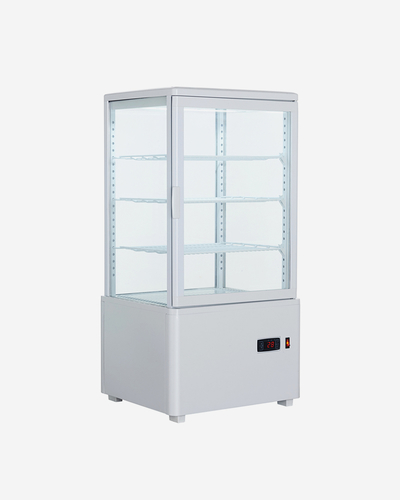
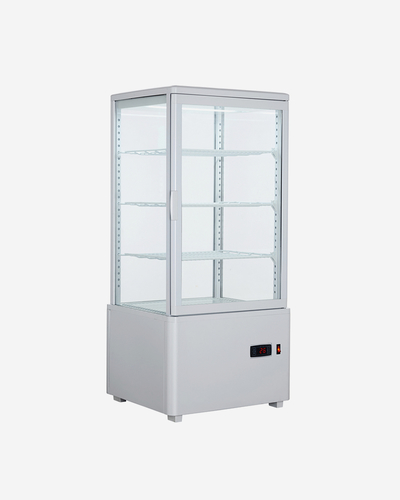
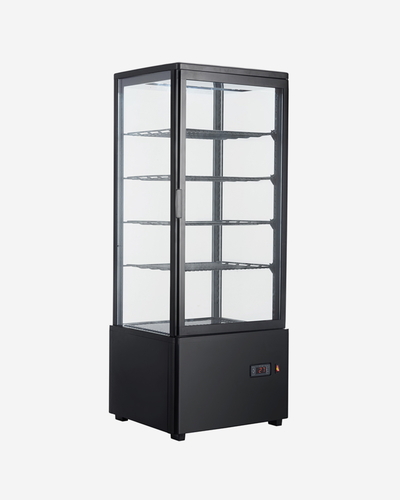
For any business that sells from the freezer, the question is not really chest versus upright, because a chest freezer cannot display anything. A glass-door upright lets customers see the product without opening anything, which keeps warm air out and turns storage into merchandising. That is the thinking behind the standing display coolers we build: four-sided glass so product is visible from several angles, with shelving that can be rearranged as your range changes.
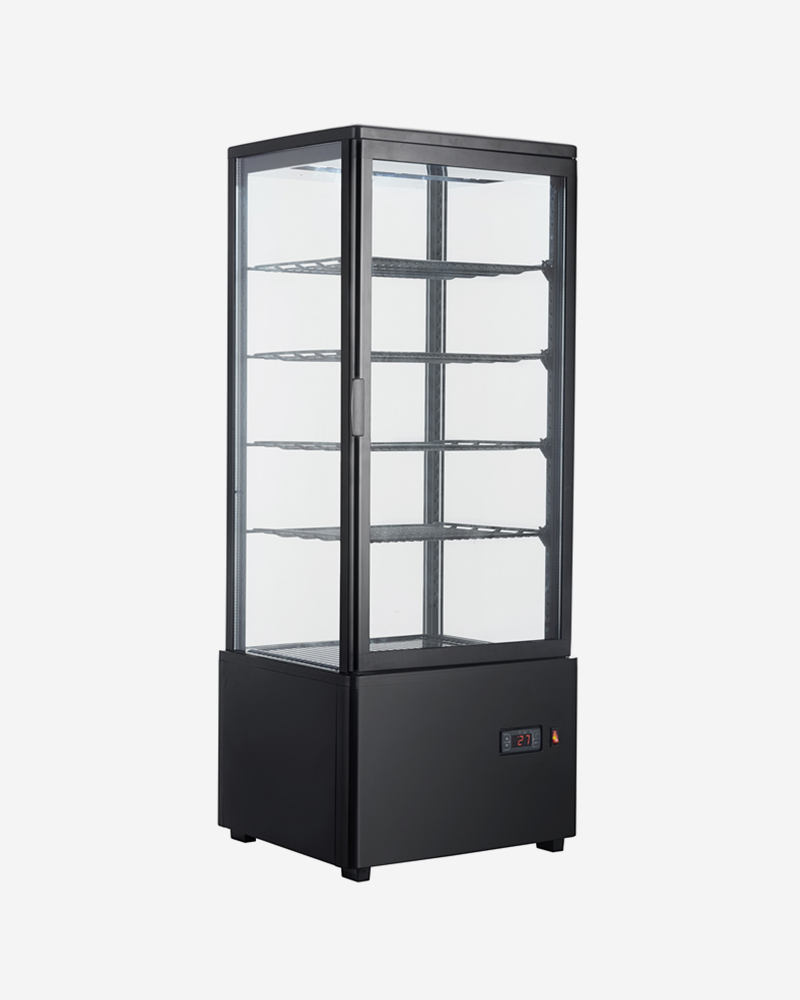 XC-98L Four-Sided Glass Refrigerated Standing Display CoolerA 98 L four-sided double-glass display cooler with 2–10 °C range, adjustable shelves and LED light, suited to visible closed merchandising.View Product →
The same tension between visibility and running cost shows up in open versus closed display refrigeration, and the right answer depends on how often shoppers reach in.
Matching the Type of Freezer to Your Business
Bakeries and pastry kitchens
Cakes and pastries need steady temperature, and cream products often need humidity so surfaces do not dry out and crack. A fan-cooled cabinet with steam humidification keeps the front-of-house display looking fresh through a full trading day, while a chest freezer in the back handles bulk dough, frozen bases and seasonal stock.
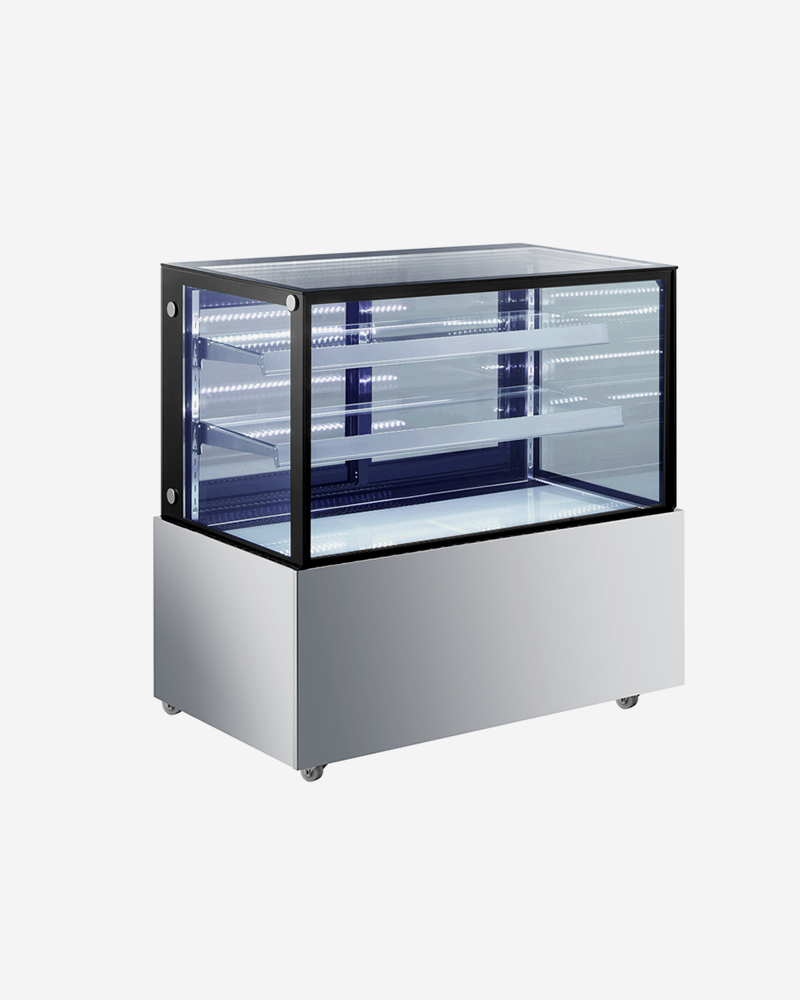 Commercial Fan-Cooled Refrigerated Cake Display Cabinet with Steam HumidificationCustomizable cake display cabinet using fan cooling and steam humidification to help keep front-of-house pastries fresh during trading hours.View Product →
Catering and small kitchens
When volume is high but access is steady, a chest freezer is hard to beat: it holds temperature, it holds a lot, and it costs the least per litre. The usual mistake is buying one that is too small, then stacking it so full that nothing can be found. Leave some headroom and use baskets.
Cafés and small shops
Where space is tight, a compact upright in the back room plus a small countertop unit at the front covers both jobs without giving up floor area.
When the Cabinet Should Be a Display, Not a Chest
Front-of-house changes the answer completely. If customers serve themselves, a chest freezer is useless and a solid-door upright is only slightly better. Open merchandisers and glass-door uprights keep products visible and reachable, which is why convenience stores, drinks retailers and delis rely on them for bottles, dairy, sandwiches and ice cream.
The trade-off is that open cabinets let cold air escape continuously, so they suit locations where the refrigeration runs in a controlled indoor environment and the sales volume justifies the extra load.
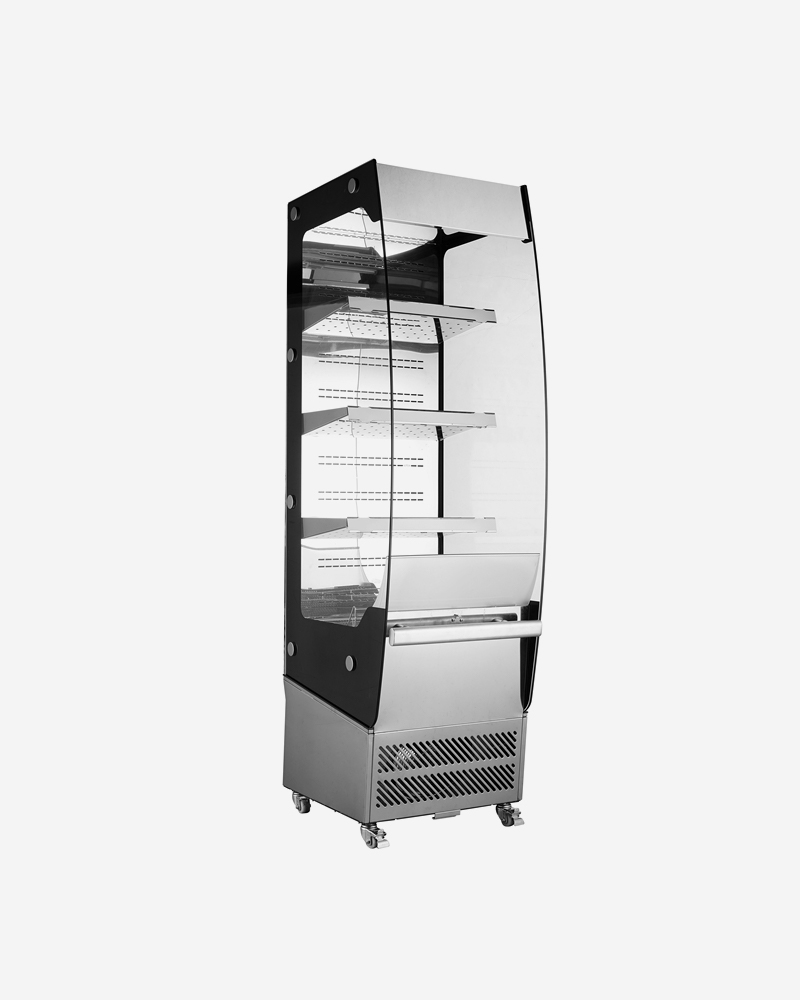 XCS-220L High Upright Refrigerated Open Merchandiser DisplayA 220 L open display cooler with 2–10 °C range and R290, intended for controlled indoor locations where steady shopper access justifies its load.View Product →
Maintenance Habits That Add Years to a Freezer
- Check door gaskets every few months; a seal that fails to grip quietly adds to the electricity bill.
- Keep condenser coils and the space behind the cabinet clean and clear.
- Defrost manual models before frost reaches about a quarter of an inch.
- Keep the cabinet reasonably full, but never block the air outlets.
- Set the temperature and leave it alone; constant adjustment helps nobody.
- Write dates on everything and rotate stock with every delivery.
A Short Decision Checklist
- Measure the space, including the swing of a door or the lift of a lid.
- List what you store, in what volume, and how often it is touched.
- Decide whether customers need to see the product before buying.
- Compare energy labels for cabinets of similar usable volume, not similar price.
- Think about your shift pattern and how much training stock rotation needs.
- Build defrosting and cleaning into the weekly schedule before installation day.
If you are still weighing chest against upright for a particular site, tell us what you store, how much room you have and who opens the door. We have been building commercial refrigeration display cabinets in Ningbo since 2007, and we are always happy to talk through a layout before you commit. You can browse the full commercial display refrigeration range on our site.
You May Also Like





-
- Navigation
- Home
- About Us
- Products
- News
- Contact Us
 East Zone, Guanhaiwei Industrial Park, Cixi City, Ningbo, Zhejiang, China
 +86-574-63668678
 +86-574-63668108

Copyright © Ningbo XiangChi Electrical Co.,Ltd All Rights Reserved.
