
 简体中文
简体中文 English
 Español
News
What Temperature Should a Beer Fridge Be? Ideal Beer Settings by Style
Beer is one of those drinks where a couple of degrees either way changes everything you taste. Ask ten bar owners what temperature their beer fridge runs at and you will get ten different answers, usually somewhere between "as cold as it goes" and "whatever the dial said when we moved in." Both keep beer drinkable. Neither gets the best out of what you are pouring.
We build commercial display coolers, so we spend a lot of time watching how temperature behaves inside glass-front cabinets: how far it drifts when the door opens during a busy hour, how much difference there is between the top shelf and the bottom one. Here is the practical answer, plus the details that decide whether your setting is actually the right one.
The Short Answer: Somewhere Between 35°F and 45°F
For most beer, a fridge set between 35°F and 45°F (2°C to 7°C) covers nearly every situation. If you want one number to dial in and forget about, 38°F (3°C) is a sensible default. It keeps light lagers crisp and refreshing without flattening everything else on the shelf.
Where you land inside that window depends on the styles you pour most often and on whether the cabinet also holds food. The table below is the starting point we give customers who ask how to set up a new cabinet.
| Beer style | Fridge storage setting | Best serving temperature | What the range protects |
|---|---|---|---|
| Light lager, pilsner | 34-38°F (1-3°C) | 38-42°F (3-6°C) | Crisp carbonation, clean finish |
| Pale ale, IPA | 38-42°F (3-6°C) | 44-50°F (7-10°C) | Hop aroma and bitterness balance |
| Wheat beer, saison | 40-44°F (4-7°C) | 45-50°F (7-10°C) | Yeast character and spice notes |
| Amber and brown ale | 44-48°F (7-9°C) | 50-55°F (10-13°C) | Malt sweetness, bread and toffee notes |
| Stout, porter | 48-52°F (9-11°C) | 50-57°F (10-14°C) | Roast, cocoa and body |
| Belgian strong ale, barleywine | 50-55°F (10-13°C) | 55-60°F (13-16°C) | Esters, dried fruit, alcohol warmth |
Notice that even the coldest line in that table sits above freezing, and even the warmest stays comfortably inside a normal refrigerator range. Beer does not need to be near-frozen to be good.
Why Temperature Changes What You Taste
Cold does two things to beer at the same time. It slows the release of volatile aroma compounds, and it dulls your perception of sweetness. Serve a rich amber ale at 34°F and you will mostly taste carbonation; serve the same beer at 52°F and the malt returns. Serve a light lager at 55°F and it turns flabby and dull.
Carbonation behaves the same way. Colder liquid holds dissolved CO2 more tightly, so a very cold beer pours with a tighter head and stays lively in the glass. Warm beer releases that gas quickly, which is why a bottle that sat on a sunny loading dock foams over the moment it is opened. The goal is not the coldest possible beer, but the temperature where the style tastes the way it was designed to taste.
Storage Temperature and Serving Temperature Are Not the Same Thing
This is the distinction most people miss. The setting on the cabinet is a storage temperature, and it should sit slightly colder than the temperature you want in the glass. A beer poured at 45°F warms two or three degrees within a minute or two of leaving the fridge, simply from the glass and the room.
So if you want ales served at 48-50°F, store them around 44-46°F and let the pour do the rest. If you want lagers at 40°F, store them at 36-38°F. That removes the temptation to run the whole cabinet at one extreme.
For self-service displays, where a customer takes a bottle and drinks it right away, the gap closes. In that case it makes sense to hold the cabinet closer to true serving temperature and keep the coldest zone for the styles that benefit from it.
Matching the Setting to the Beer You Actually Sell
Lagers, pilsners and light beers
These want to be genuinely cold. 34-38°F keeps them sharp, and there is very little aroma to lose. If lagers make up most of your volume, running the cabinet at 36°F is not a compromise, it is the correct choice.
IPAs, pale ales and hop-forward beers
Hops need a little warmth to speak. Store IPAs at 38-42°F and serve them around 45-48°F. Too cold and the aroma slips into the background; too warm and the bitterness turns harsh.
Stouts, porters and strong ales
Roasted malt and higher alcohol both read better at 48-55°F. A warmer shelf, or a cabinet with a second temperature zone, is the simplest way to give these beers what they need without moving the rest of your stock.
How Cold Is Too Cold, and When Is It Too Warm?
Water freezes at 32°F, but beer does not. Alcohol lowers the freezing point, so a typical 5% beer starts forming ice around 27-28°F (about -2°C), and a strong 9% beer can go a degree or two lower. Nothing is ruined at 33°F, but flavor is lost to the cold, and long spells near freezing can push proteins and hop oils out of solution, leaving haze and a flatter taste.
At the other end, storage above 45°F shortens shelf life. Warm beer stales faster, and if the same cabinet holds food, food safety rules apply: perishables need to stay at or below 40°F. When beer and food share a fridge, 36-38°F satisfies both.
Setting Up a Beer Fridge Behind the Bar
A glass-door cabinet is not perfectly uniform inside. Air moves from the evaporator across the shelves, so the rack closest to the fan runs a degree or two colder than the top of the cabinet, and the front edge is always the warmest spot. Work with that instead of fighting it: lagers and pilsners on the coldest shelf, ales in the middle, stouts and strong ales higher up.
Leave air space between bottles. An overloaded cabinet blocks the return air path, the compressor runs longer, and the temperature at the front of the shelves climbs even while the thermostat reads fine. Rotation matters too, so keep first in, first out, and never load warm stock straight from a delivery into a cabinet that is already at temperature.
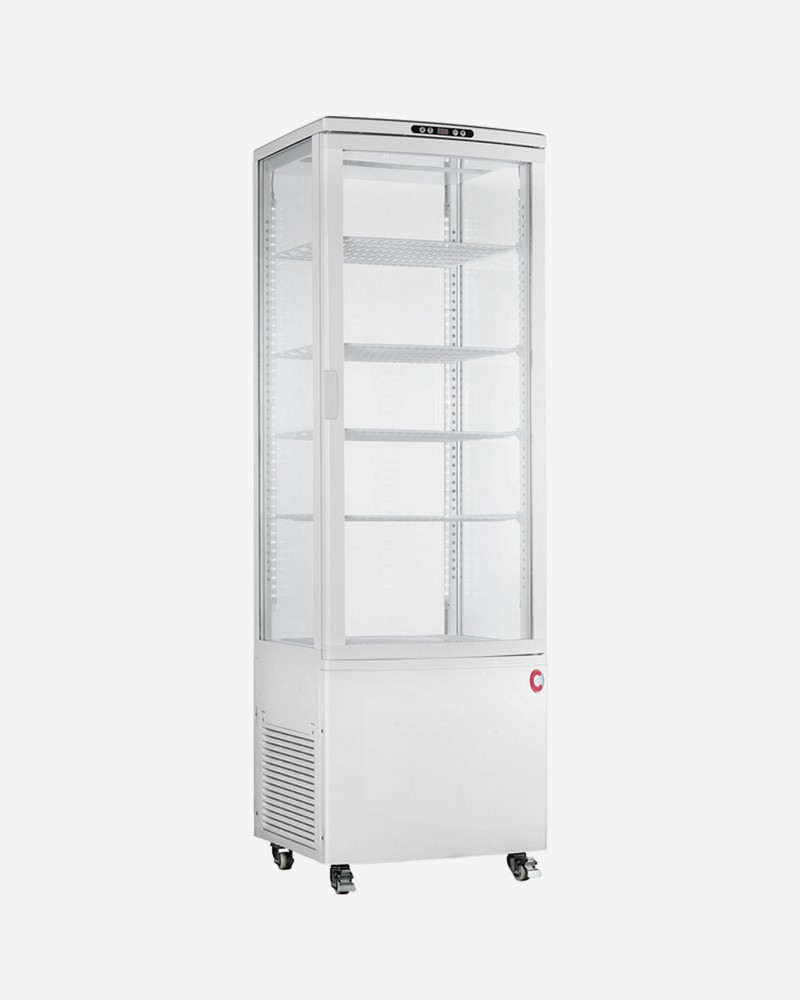 XC-218L Countertop Four-Sided Glass Beer Display CoolerThis 218 L four-sided glass cooler offers ventilated cooling, digital thermostat, and adjustable shelves, suited to beer display where airflow and stock rotation matter.View Product →
What Changes When You Sell Beer From a Display
In a shop or taproom, the beer is usually visible rather than sealed behind a solid door, and that changes the physics. Open display coolers hold a curtain of cold air across the front instead of a closed barrier, so the front row of bottles sits a degree or two warmer than the back. Setting the cabinet at 36-38°F compensates for that and keeps fast-moving stock at a genuine serving temperature.
The choice between open and closed refrigeration is mostly about how the beer is bought. Shoppers grabbing a single bottle on impulse respond to open shelving; shoppers buying a pack for later are just as happy behind glass, and a closed cabinet holds temperature with far less compressor work. Many shops run both.
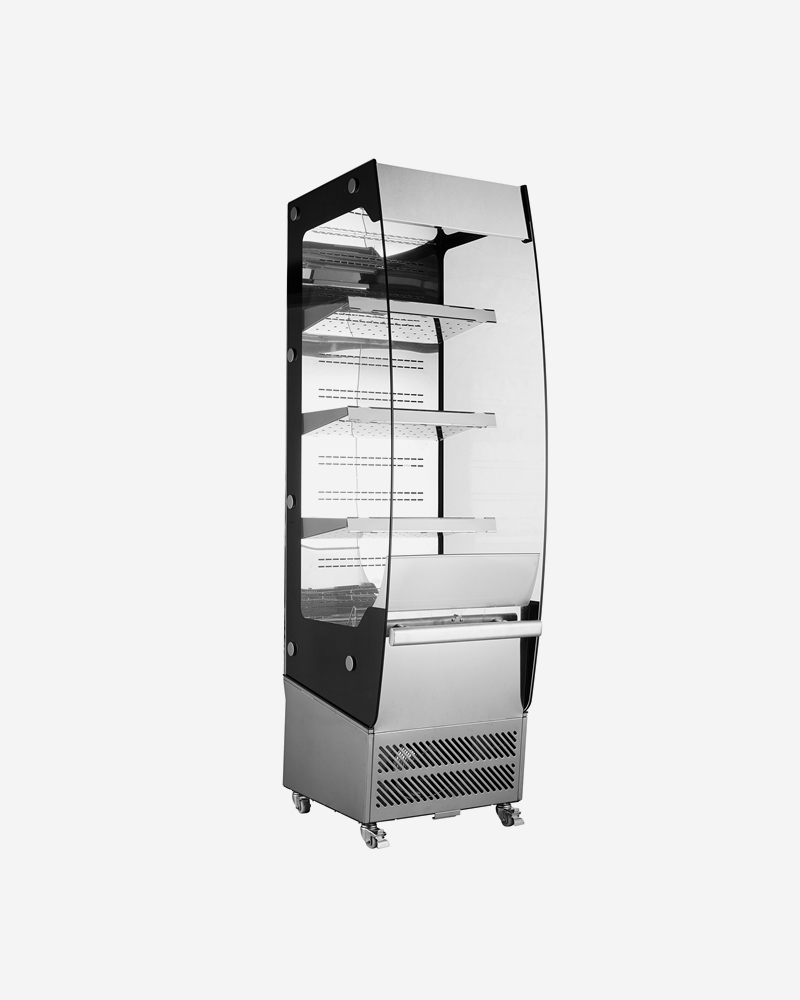 XCS-350 Custom High Upright Refrigerated Open MerchandiserA customizable 220 L open merchandiser for commercial display, suited to impulse single-bottle purchases where shoppers need visible, accessible refrigeration.View Product →
Whatever format you choose, check the real product temperature with a thermometer sitting in a bottle of water on the middle shelf, not the dial on the front panel. Dials drift, and a cabinet reading 38°F on its display can be running several degrees warmer at the point where the beer actually sits.
Everyday Habits That Keep the Temperature Where You Set It
Most temperature complaints we hear are not thermostat failures. They come from small habits that slowly push conditions out of range:
- Keep stock to roughly two-thirds of the cabinet volume so cold air can circulate.
- Never block the evaporator or the return air vents with boxes or signage.
- Check product temperature weekly, ideally at opening and again during peak hours.
- Close doors firmly, and fit night curtains or covers on open units after service.
- Clean condenser coils every few months; dust forces longer compressor cycles and warmer cabinets.
- Expect seasonal drift. Adjusting cabinet temperatures for summer is normal, not a sign that something is broken.
Common Questions About Beer Fridge Temperatures
Is 38°F too cold for craft beer?
For storage, no. For serving, it depends on the style. A 38°F cabinet is a good home for lagers, pilsners and wheat beers, and a reasonable place for IPAs if you let them sit in the glass for a few minutes. Darker and stronger beers taste better on a warmer shelf.
Can beer and food share the same fridge?
Yes, as long as the cabinet holds 40°F or below. Set it at 36-38°F, keep raw food covered and beneath ready-to-eat items, and accept that your stouts will be poured colder than ideal.
How long can beer stay in the fridge?
Cold storage slows staling rather than stopping it. Most beers hold their character for three to six months in a fridge, but hop-forward styles fade noticeably within eight to twelve weeks, so rotate accordingly.
If there is one habit worth adopting this week, it is this: put an inexpensive thermometer in a bottle of water on the middle shelf and read it at the start and end of a busy day. That single number tells you more about your beer fridge than any dial ever will.
We have been manufacturing commercial display coolers in Ningbo since 2007, and we are always glad to talk through temperature settings, shelf layout and the right cabinet format for your space. For environments where hygiene and frequent cleaning matter most, stainless steel framed cabinets tend to hold up best over the years.
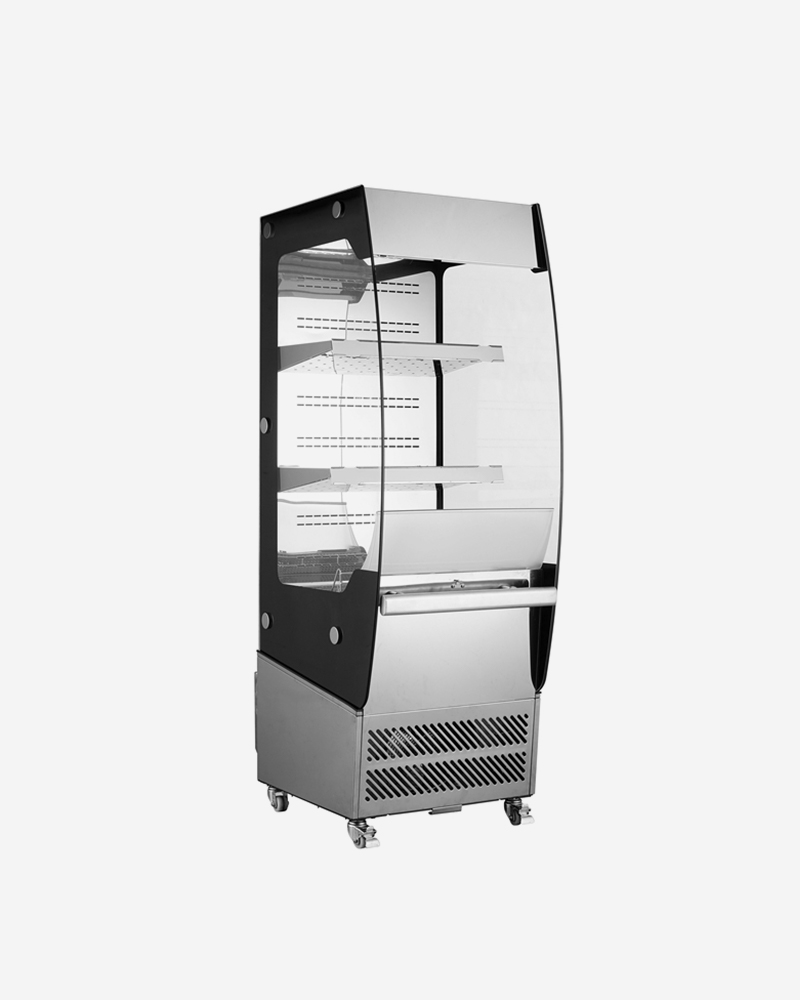 XCS-180L Custom Stainless Steel Open Display CoolerA 180 L stainless steel cooler with 2–10 °C range and OEM/ODM support, listed for CE, GS, CCC, CB, RoHS, and ETL, for hygiene-focused retail.View Product →
You May Also Like
.jpg?imageView2/2/w/500/h/500/format/jp2/q/100 "Four Sides Glasses Display Cooler")
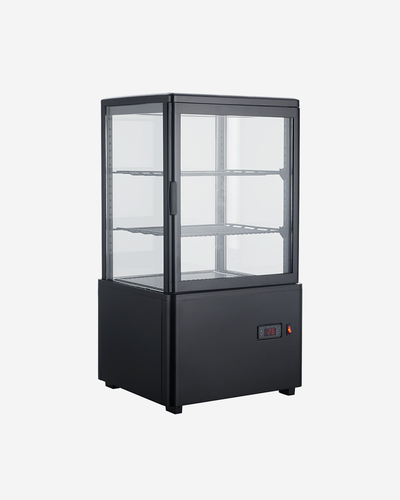
.jpg?imageView2/2/w/500/h/500/format/jp2/q/100 "White 4-Sided Glass Refrigerated Display Case")
.jpg?imageView2/2/w/500/h/500/format/jp2/q/100 "Refrigerated Display Cake Countertop Four Sides Glasses Display Cooler")
.jpg?imageView2/2/w/500/h/500/format/jp2/q/100 "Four Sides Glasses Display Cooler")

-
- Navigation
- Home
- About Us
- Products
- News
- Contact Us
 East Zone, Guanhaiwei Industrial Park, Cixi City, Ningbo, Zhejiang, China
 +86-574-63668678
 +86-574-63668108
Copyright © Ningbo XiangChi Electrical Co.,Ltd All Rights Reserved.
