
 简体中文
简体中文 English
 Español
News
The Right Temp for Beverage Fridge: Ideal Settings for Every Drink You Sell
Walk into almost any cafe, convenience store, bar, or bakery counter and you will spot the same quiet workhorse: a glass-door beverage fridge humming in the corner. Customers rarely think about what happens inside it, but as a manufacturer of commercial display refrigeration since 2007, we can tell you that few details influence how your drinks taste, look, and sell like the temperature you set.
So what is the right temp for a beverage fridge? For most commercial settings, the sweet spot is 35 to 38°F (roughly 2 to 3°C). That range keeps bottled and canned drinks properly chilled without freezing them, holds perishable beverages safely below the 40°F threshold, and avoids burning electricity on cooling nobody needs. In the rest of this guide, we break the answer down drink by drink, look at what throws the reading off, and share the habits we see successful shop owners use every day.
The Right Temp for a Beverage Fridge, Drink by Drink
Not every drink wants the same treatment. A lager that tastes crisp at 36°F comes across as dull and overly cold at 50°F, while a red wine served that cold loses most of its aroma. If your cabinet carries a mixed selection, set it for the products that make up most of your sales and keep these ranges in mind:
| Beverage | Recommended Range | Why It Matters |
|---|---|---|
| Beer and lager | 34-38°F / 1-3°C | Delivers a crisp, refreshing taste and stable carbonation |
| Soft drinks and sparkling water | 35-40°F / 1.5-4°C | Keeps bubbles lively without flattening the flavor |
| Juice and dairy-based drinks | 36-40°F / 2-4°C | Stays below the 40°F food-safety line for perishables |
| White wine | 45-50°F / 7-10°C | Preserves fruit aromas and bright acidity |
| Red wine | 50-60°F / 10-15°C | Allows tannins and aromatics to open up properly |
Soft drinks, sparkling water, and juice generally shine between 35 and 40°F. Beer prefers to sit slightly colder, around 34 to 38°F, which is why many bar owners set their units just under the middle of the range. Wine is the outlier: whites like 45 to 50°F and reds 50 to 60°F, so a dual-zone cabinet is worth considering if wine makes up a meaningful share of your menu.
Why Temperature Matters More in a Business Than at Home
A home beverage fridge that drifts a few degrees is a minor annoyance. In a shop, the same drift shows up on your bottom line. Cold is part of the product: when a customer grabs a bottle from a display cooler, they expect it to be genuinely cold, not merely cool. Drinks served at the right temperature sell better, encourage repeat visits, and turn a counter-side fridge into a quiet salesperson.
There is a safety side as well. Dairy-based drinks, fresh juices, and many ready-to-drink products need to stay below 40°F. A cabinet that cannot hold that line invites spoilage, waste, and disappointed customers. Running a cooler far colder than necessary has its own cost, too: the compressor works overtime, energy bills climb, and the equipment ages faster than it should.
What Affects the Temperature Inside Your Beverage Fridge
The number on the thermostat is a target, not a guarantee. Several everyday factors decide what your drinks actually experience:
- Door traffic. Every opening lets warm air rush in. A fridge beside a busy checkout will cycle far more often than one in a quiet corner.
- Ambient room temperature. A cabinet holding steady in an air-conditioned cafe can drift noticeably in a hot kiosk or during a summer heatwave.
- Stocking habits. Loading room-temperature product raises the whole cabinet's reading and forces long recovery times.
- Placement. Direct sunlight, nearby ovens, or a tight gap against a wall all make the compressor work harder.
- Defrost cycles and airflow. Ice buildup on the evaporator or shelves pressed against internal vents block cold air from circulating evenly.
Seasonal change deserves special attention. As the weather warms up, a setting that felt perfect in March can leave drinks lukewarm by July. We explain the logic behind these adjustments in our guide to how many degrees vertical display cabinets should be adjusted to in summer, and the same reasoning applies to any beverage cooler on your floor.
Simple Habits That Keep the Reading Steady
After years of building and testing display coolers, we have noticed that the shops with the most consistent results follow a handful of simple routines:
- Verify the real temperature with a separate appliance thermometer placed in a glass of water at mid-shelf level.
- Adjust the thermostat in small steps and give the cabinet several hours to stabilize before judging the result.
- Stock pre-chilled product wherever possible, especially during your busiest season.
- Leave space around internal fans and avoid overloading shelves so air can move freely.
- Check door gaskets regularly and keep condenser coils clean as part of routine maintenance.
- Log the reading once a day; a slow drift is far easier to correct than a sudden failure.
None of these tasks takes more than a few minutes, and together they protect both product quality and the service life of your equipment.
Choosing a Beverage Cooler Built to Hold Its Temperature
Thermostat accuracy is only as good as the cabinet around it. When we design and test our coolers at our factory in Ningbo, we focus on the details that keep a set point stable in daily commercial use: efficient compressor cooling, even air circulation across every shelf, automatic defrost, and glazing and insulation that limit heat gain from a busy shop floor.
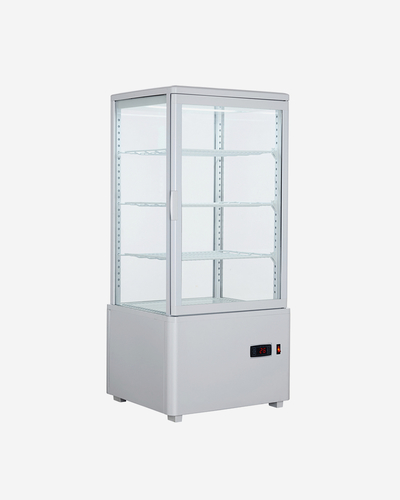
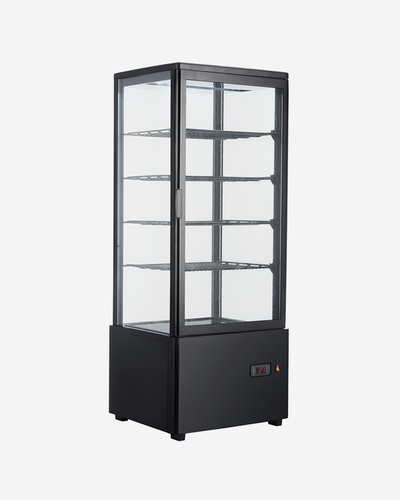
Visibility matters just as much in the drinks category, because a chilled bottle only sells when a customer can see it. Four-sided glass construction puts your product on display from every angle while the cabinet quietly maintains its set point, and countertop models place chilled drinks right at the point of sale. For high-traffic bars and convenience stores, an upright open merchandiser offers the capacity to keep a full lineup cold through constant restocking.
 Countertop Display Cooler with Sliding Glass DoorsDesigned for countertop placement, this compact cooler keeps chilled drinks right at the point of sale, with LED lighting, a digital thermostat, and curved tempered glass to attract impulse purchases.View Product →
 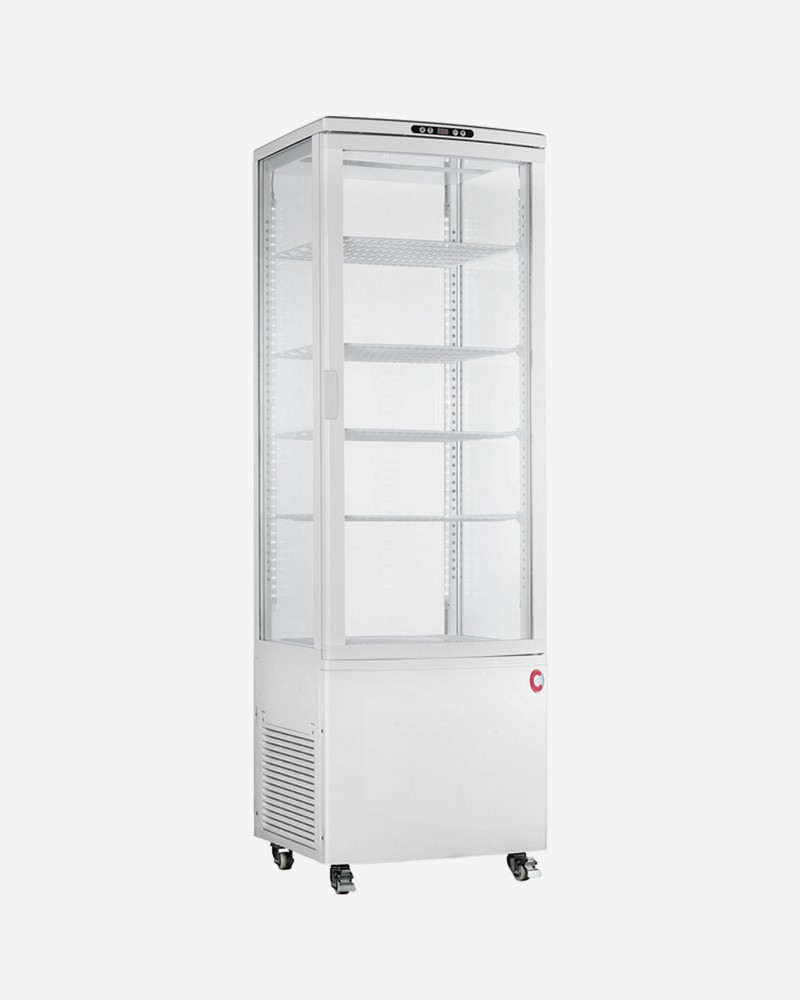 Four-Sided Glass Beverage Display Cooler on CastorsFour-sided double glazing puts bottled drinks on display from every angle, while ventilated cooling, automatic defrost, and adjustable shelves keep a full beverage lineup cold and visible.View Product →
 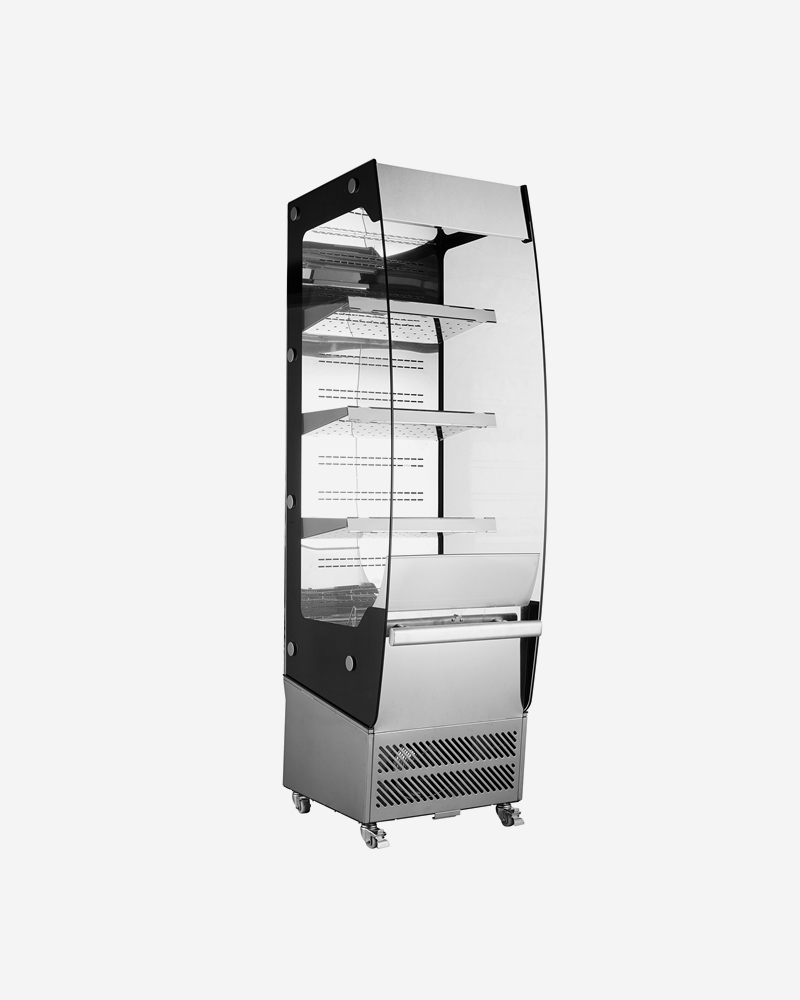 High Upright Refrigerated Open MerchandiserFor high-traffic bars and convenience stores, this tall open merchandiser offers the capacity to keep a full drink lineup cold through constant restocking and easy customer access.View Product →
Whichever format you choose, ask the supplier for the tested cabinet temperature range and the thermostat control type before you buy. A unit specified for 35 to 38°F will hold that setting far more reliably than a general-purpose fridge pushed to its limit.
The Bottom Line
Getting the temperature right is one of the cheapest improvements you can make to your beverage business. Set most units between 35 and 38°F, respect the specific needs of wine and dairy drinks, account for door traffic and seasonal heat, and confirm the real reading with a thermometer rather than trusting the dial alone. If you are planning new equipment for a cafe, bar, bakery, or retail space, we would be glad to help you match the right cabinet to your products and your floor plan. Feel free to browse our full product catalog or reach out to our team for advice drawn from more than a decade of commercial refrigeration manufacturing.
You May Also Like
.jpg?imageView2/2/w/500/h/500/format/jp2/q/100 "Four Sides Glasses Display Cooler")
.jpg?imageView2/2/w/500/h/500/format/jp2/q/100 "White 4-Sided Glass Refrigerated Display Case")
.jpg?imageView2/2/w/500/h/500/format/jp2/q/100 "Refrigerated Display Cake Countertop Four Sides Glasses Display Cooler")
.jpg?imageView2/2/w/500/h/500/format/jp2/q/100 "Four Sides Glasses Display Cooler")

-
- Navigation
- Home
- About Us
- Products
- News
- Contact Us
 East Zone, Guanhaiwei Industrial Park, Cixi City, Ningbo, Zhejiang, China
 +86-574-63668678
 +86-574-63668108
Copyright © Ningbo XiangChi Electrical Co.,Ltd All Rights Reserved.
