
 简体中文
简体中文 English
 Español
News
What Temperature for a Beverage Fridge? Complete Guide for Retail & Food Service
Getting the temperature right in a beverage fridge is one of those small details that makes a big difference in a cafe, convenience store, or restaurant. Set it too warm and drinks taste flat; set it too cold and you waste electricity and risk burst cans of soda. At Sankool, a commercial display cooler manufacturer with production experience dating back to 2007, we have helped food-service operators around the world answer exactly this question. Here is what we have learned about the ideal temperature for a beverage fridge.
What Temperature Should a Beverage Fridge Be Set At?
The short answer is that most beverage coolers perform best between 35°F and 40°F (1.7°C to 4.4°C). Within that band, the ideal setting depends on what you are stocking. Sparkling water and soda taste crisper at 36–38°F, while beer is usually served at 38–45°F depending on style. If you run a single-zone unit and need one compromise setting, 38°F (3.3°C) is the number we recommend to most customers.
Here is a quick reference table based on industry practices and our field experience with commercial display fridges:
| Beverage Type | Ideal Temperature | Notes |
|---|---|---|
| Soda and sparkling water | 36–38°F (2–3°C) | Keeps carbonation crisp; avoid freezing |
| Beer (standard lagers) | 38–45°F (3–7°C) | Craft ales can be served slightly warmer |
| White wine and rosé | 45–50°F (7–10°C) | Chilled but not icy |
| Red wine | 50–60°F (10–15°C) | Store at cellar temperature |
| Juice and dairy drinks | 35–40°F (2–4°C) | Must stay below 40°F for food safety |
| Bottled water | 36–42°F (2–6°C) | Best enjoyed below 40°F |
These ranges balance refreshment, food safety, and equipment efficiency. Even bottled water, which many people think needs no special handling, tastes noticeably better when served from a fridge held below 40°F.
Why Getting the Right Temperature Matters
Temperature affects far more than flavor. It shapes food safety, product loss, energy consumption, and customer satisfaction.
Taste and Product Quality
Carbonated drinks lose their fizz noticeably above 45°F, because carbon dioxide becomes less soluble as liquid warms. Wine oxidizes faster when stored too warm, and beer develops stale, papery off-flavors after long periods of warm storage. The opposite extreme is just as problematic: a can of soda sitting at or below 32°F can freeze, bulge, and burst inside the cabinet.
Food Safety and Compliance
Ready-to-drink beverages should be stored below 40°F (4.4°C) to stay within health-code expectations in most markets. This applies to juice, milk-based drinks, kombucha, and any beverage containing perishable ingredients. For those products, the 40°F threshold is not a quality preference; it is a food safety requirement that commercial operators must take seriously.
Energy Efficiency and Equipment Life
Every degree lower than necessary increases the workload on your compressor. A beverage fridge set to 33°F runs longer and harder than one set to 38°F, consuming more electricity and wearing out components faster. Running your cooler at the correct temperature for what you actually sell is one of the simplest ways to cut operating costs.
Factors That Affect Beverage Fridge Temperature
A thermostat dial can be misleading. Even a well-manufactured cooler can show a set point that does not match what is happening inside the cabinet. The most common factors that push the internal temperature away from your target are:
- Ambient room temperature: a cooler placed in direct sunlight or beside a hot oven has to work much harder to hold its set point.
- Loading density: overpacking blocks the airflow that keeps every shelf at an even temperature.
- Door openings: frequent or prolonged openings let cold air spill out and warm, humid air rush in.
- Thermostat accuracy: inexpensive units can drift by several degrees from their dial setting.
- Coil and filter cleanliness: dusty condenser coils reduce heat exchange and lower cooling capacity.
Understanding these variables helps you diagnose problems early. If your beverage fridge temperature creeps upward, the first thing we ask customers is whether the condenser coils have been cleaned in the last three months.
How to Set and Maintain the Ideal Beverage Fridge Temperature
Setting the temperature correctly is simple, but it requires a little patience. Follow this sequence and you will avoid the most common mistakes:
- Place a reliable thermometer inside the cabinet near the middle shelf; never trust the dial alone.
- Set the thermostat to the midpoint of your target range. For most operators, that is 38°F (3.3°C).
- Close the door and wait 24 hours without opening it so the temperature can stabilize completely.
- Read the thermometer and adjust the thermostat in small one-degree steps.
- Wait another 12 hours and re-check, repeating until the reading holds steady.
- Monitor for a week under normal business conditions to confirm consistency.
After setup, routine maintenance keeps the temperature right. Condenser coils should be cleaned every three months, door gaskets wiped regularly, and the evaporator fan inspected for noise or obstruction. If your beverage fridge temperature still drifts after cleaning, you may be dealing with a refrigerant leak or a failing compressor. We explain the essentials of keeping display coolers running well in our step-by-step display cooler maintenance guide.
Choosing a Beverage Fridge That Holds the Right Temperature
The best temperature settings in the world mean nothing if the equipment cannot hold them steadily. When selecting a beverage fridge for commercial use, we recommend paying attention to four things:
- Insulated glass: fully insulated transparent panels, including four-sided glass designs, reduce heat gain while keeping products visible.
- Forced-air fan circulation: active airflow keeps temperature even across every shelf instead of leaving warm spots.
- Automatic defrost: prevents ice buildup that would otherwise insulate the evaporator coil and reduce cooling output.
- A correctly sized compressor: an undersized unit runs continuously, while an oversized one short-cycles and struggles to hold a stable temperature.
For small counters, coffee shops, and checkout areas, a countertop beverage cooler offers a compact footprint with stable temperatures and easy access. One popular unit in our range keeps bottles and cans between 35°F and 40°F without taking up floor space:
 Countertop Beverage Display Cooler with Curved Glass and Digital ThermostatThis compact countertop unit keeps bottles and cans at 35-40°F, with curved double-layer glass, LED lighting, and adjustable shelves, making it ideal for checkout areas and small counters.View Product →
For bars, bottle shops, and delis that want customers to see the label on every bottle from any angle, a four-sided glass display cooler works beautifully. This beer and beverage chiller configuration keeps glass visible on all sides while maintaining a consistent 35–40°F interior even in warm ambient conditions:
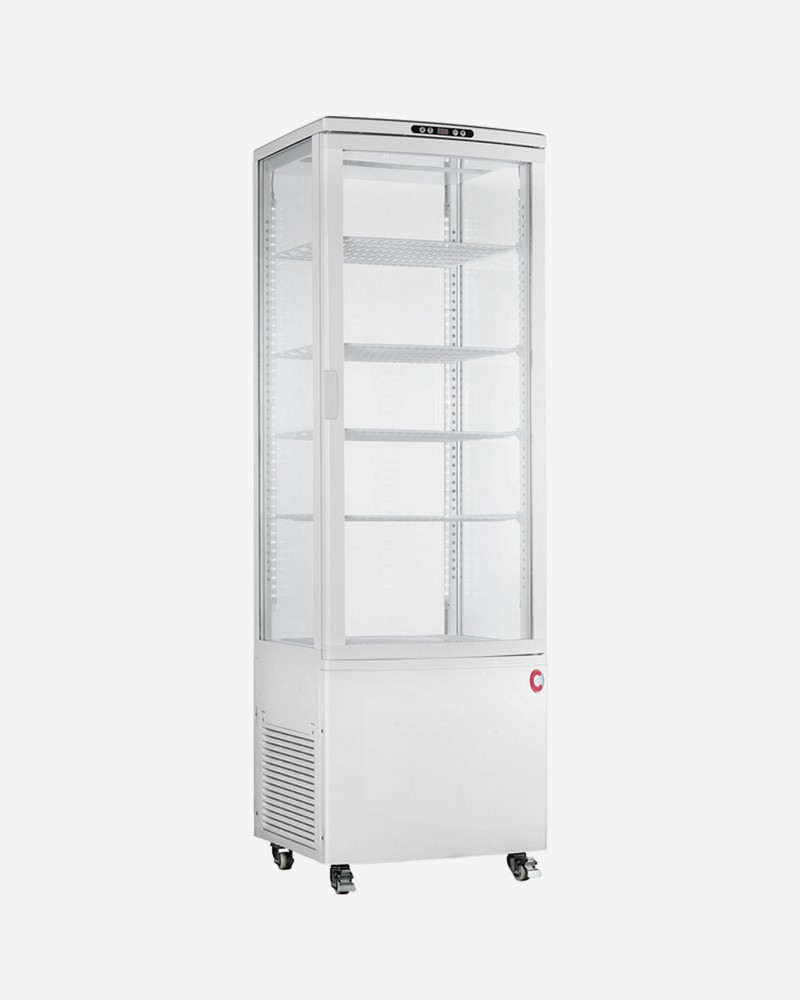 Four-Sided Glass Beer Display Chiller with Castors for Bars and Bottle ShopsDesigned for visibility from every angle, this four-sided double-glass cooler maintains a consistent 35-40°F interior despite warm surroundings, featuring caster wheels and adjustable shelves for easy placement and rearrangement.View Product →
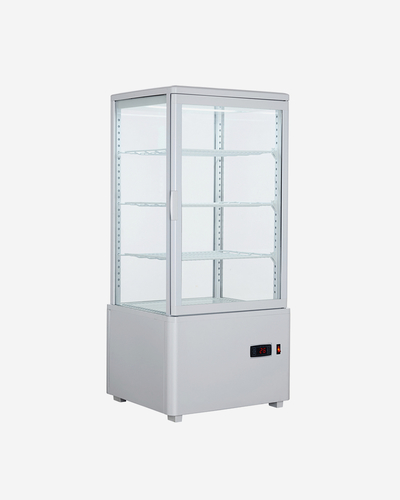
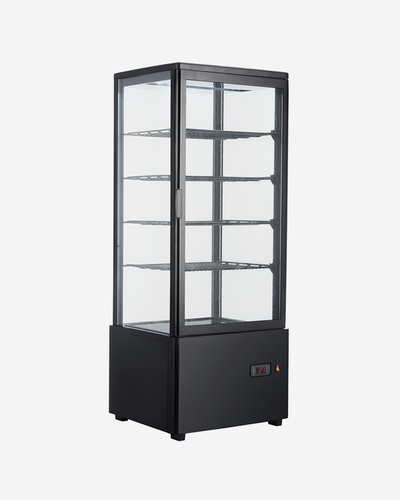
For convenience stores and supermarkets with higher turnover, an upright standing display cooler offers more capacity and easier restocking. This four-sided glass standing display cooler is designed to keep every shelf at the same temperature even when shoppers open the doors frequently:
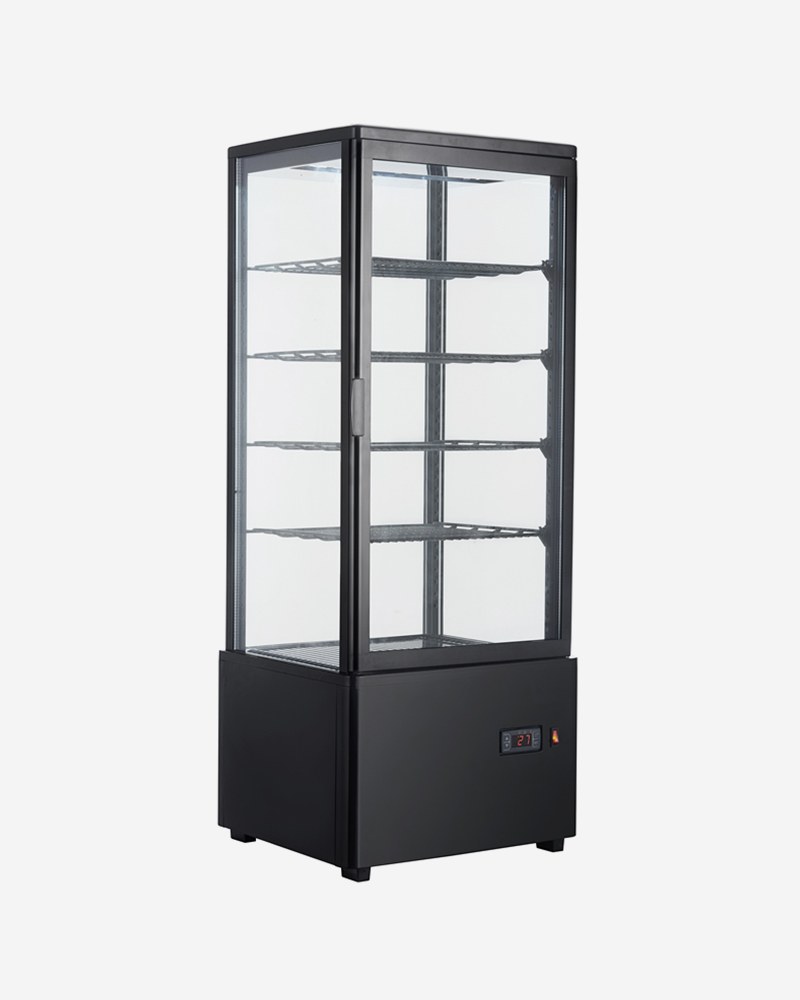 Upright Four-Sided Glass Refrigerated Display Cooler for High-Traffic StoresThis standing display cooler offers greater capacity and consistent shelf temperatures even with frequent door openings, including an anti-fog system and separated power controls, suited for supermarkets and convenience stores.View Product →
Choosing the right type of cooler reduces strain on the refrigeration system, which makes it easier to maintain the correct beverage fridge temperature and keeps energy bills lower. If you want to explore all available sizes and glass configurations, browse our commercial display coolers.
The ideal temperature for a beverage fridge comes down to a simple rule: keep it between 35°F and 40°F, aim for 38°F for mixed loads, and never let perishable drinks sit above 40°F. From there, consistent maintenance and properly sized equipment do the heavy lifting. If you are shopping for a beverage display cooler and have questions about temperature control, capacity, or custom branding, the Sankool team is happy to help you find the right fit.
You May Also Like
.jpg?imageView2/2/w/500/h/500/format/jp2/q/100 "Four Sides Glasses Display Cooler")
.jpg?imageView2/2/w/500/h/500/format/jp2/q/100 "White 4-Sided Glass Refrigerated Display Case")
.jpg?imageView2/2/w/500/h/500/format/jp2/q/100 "Refrigerated Display Cake Countertop Four Sides Glasses Display Cooler")
.jpg?imageView2/2/w/500/h/500/format/jp2/q/100 "Four Sides Glasses Display Cooler")

-
- Navigation
- Home
- About Us
- Products
- News
- Contact Us
 East Zone, Guanhaiwei Industrial Park, Cixi City, Ningbo, Zhejiang, China
 +86-574-63668678
 +86-574-63668108
Copyright © Ningbo XiangChi Electrical Co.,Ltd All Rights Reserved.
