
 简体中文
简体中文 English
 Español
News
What Is a Cold Counter Display Unit and How Does It Impact Food Safety, Product Presentation, and Sales Performance?
A cold counter display unit is a refrigerated countertop or floor-standing cabinet used in food retail and food service environments to present chilled products — from sliced meats and cheeses to patisserie, sushi, and prepared salads — at the correct serving temperature while keeping them fully visible to customers.
For any business that sells chilled food over a counter, the cold counter display unit is arguably the single most important piece of equipment on the shop floor. It sits at the intersection of food safety, product presentation, energy efficiency, and customer experience — and choosing the wrong unit can cost a business dearly in spoiled stock, failed inspections, and lost sales. This guide covers every dimension of the decision, from unit types and temperature classifications to sizing, servicing, and procurement considerations.
What Is a Cold Counter Display Unit?
A cold counter display unit is a mechanically refrigerated enclosure with a transparent front — typically glass — that allows customers to view chilled merchandise without disturbing the temperature-controlled environment inside. The unit maintains its interior within a defined temperature range using a refrigeration circuit comprising a compressor, condenser, evaporator, and expansion device, supported by fans, thermostats, and in many cases electronic controls with digital displays.
The "counter" element is significant: these units are designed to sit on a sales counter or be integrated into a counter run, so that a server stands behind the unit and customers approach from the front. This distinguishes cold counter displays from standalone refrigerated island cabinets or upright multi-deck units, which customers interact with directly and self-serve from.
Cold counter display units are defined by three operating principles: temperature precision, visual accessibility, and service workflow. Every design decision — the angle of the glass, the depth of the product zone, the location of the condensing unit — flows from these three requirements.
A cold counter display unit does not merely store food — it sells it. Every square centimetre of its glass face is a sales surface, and the temperature it holds is a food safety commitment.
Types of Cold Counter Display Units
The category encompasses a wide range of products designed for different food types, service styles, and business environments. Understanding the main types is the first step in identifying the right unit for a specific application.
Serve-Over Display Counters
The classic deli-style unit. A full-length refrigerated cabinet with angled front glass, accessible from the rear by serving staff. Products are displayed on tiered shelving or a sloping bed, typically illuminated by internal LED lighting. Available in straight, curved, and angled configurations to suit different counter layouts.
Patisserie Display Units
Specifically designed for bakery goods, cakes, and desserts requiring refrigeration. These units typically feature flat or minimally angled glass, fine-pitch internal shelving, and more precise humidity control to prevent confectionery from drying out or condensing. Lighting is carefully engineered to flatter colours and textures.
Sushi and Fish Display Counters
Operated at lower temperatures (typically +1°C to +4°C) with higher air circulation than standard deli counters. The product bed is often a refrigerated flat deck rather than tiered shelving, and units may include ice display sections alongside mechanically chilled zones. Hygienic stainless steel construction is standard.
Meat and Butchery Counters
Designed for raw meat display at +1°C to +4°C. These units are built for intensive use and easy cleaning, with removable product beds, deep drainage channels, and construction materials resistant to blood and fat contamination. Some models include an enhanced air curtain system to manage the temperature impact of repeated opening.
Island-Style Cold Display Counters
Freestanding units with refrigerated display on all four sides, allowing customer access from multiple angles. Common in supermarkets and food halls where the counter is positioned as a focal point in an open-plan retail area. Often used for premium or specialist product ranges.
Refrigerated Display Cases with Hinged Lids
Compact countertop units with a hinged or sliding glass lid, popular in smaller delis, farm shops, and café environments. Lower capital cost than full floor-standing counters and easier to reposition, though with a smaller product capacity. Available in single-temperature or split-zone configurations.
Temperature Ranges and Food Safety Classifications
Temperature management is the defining technical requirement of any cold counter display unit, and it is also the dimension most directly linked to legal compliance and food safety. In the United Kingdom and across the European Union, chilled food must be maintained at or below +8°C, though best practice for most high-risk products targets a maximum of +5°C at the product surface.
| Product Category | Recommended Display Temp | Regulatory Maximum | Typical Unit Type |
|---|---|---|---|
| Cooked meats, pâté, terrines | +2°C to +5°C | +8°C (UK/EU) | Serve-over deli counter |
| Raw meat and poultry | +1°C to +4°C | +8°C (UK/EU) | Meat and butchery counter |
| Fresh fish and sushi | +1°C to +3°C | +8°C (UK/EU) | Sushi / fish display counter |
| Hard cheeses | +4°C to +8°C | +8°C (UK/EU) | Serve-over or patisserie counter |
| Soft cheeses and fresh dairy | +2°C to +5°C | +8°C (UK/EU) | Serve-over deli counter |
| Pastries and cream cakes | +2°C to +6°C | +8°C (UK/EU) | Patisserie display unit |
| Prepared salads and antipasti | +3°C to +6°C | +8°C (UK/EU) | Serve-over or island counter |
It is important to understand that the temperature specifications quoted by manufacturers refer to the air temperature within the refrigerated zone under laboratory-standardised test conditions. Product surface temperatures — which are what EHOs and food safety officers measure during inspections — may differ from cabinet air temperature depending on product density, loading levels, ambient store temperature, and the frequency with which the unit is accessed. A unit specified to hold +5°C air temperature may struggle to maintain that figure at the product surface when ambient temperature rises above 25°C, or when product loading is excessive.
Key Buying Considerations
Condensing Unit Location
Cold counter display units are available with either integral (self-contained) or remote condensing units. Integral units house the compressor and condenser within the cabinet itself — typically in a plinth at the base or a housing at the rear. Remote units pipe refrigerant to a condensing unit located elsewhere: in a plant room, on a roof, or in a back-of-house area. Integral units are simpler to install and more portable, but they generate heat into the sales area, add mechanical noise, and are harder to service without disrupting the trading floor. Remote systems are preferred for larger installations, higher ambient temperature environments, and businesses concerned about noise and heat output on the shop floor.
Glass Configuration
The front glass of a cold counter display unit is a critical design element affecting both visibility and thermal performance. Curved glass provides a more elegant aesthetic and is common in premium patisserie and deli environments, but it is more expensive to replace and harder to clean than flat glass. Straight glass offers a cleaner, more contemporary look and is the more practical choice for high-throughput environments. Heated glass — in which a low-voltage current runs through the glass panel to prevent condensation on the exterior — is strongly advisable in environments where humidity is high or where ambient temperature fluctuations are significant.
Air Curtain vs. Open-Front Design
Many serve-over display counters use a forced-air curtain — a continuous flow of chilled air from the top of the unit — to form a thermal barrier across the open serving front, maintaining temperature without requiring a physical door or lid. This design provides the fastest service access but is more sensitive to draughts and ambient temperature extremes than a closed-front design. In environments with powerful air conditioning, ceiling fans, or frequent door openings, an air curtain unit may struggle to maintain consistent product temperatures. In such cases, a glazed or sliding lid design provides better thermal stability at the cost of slightly slower service access.
Always request a site survey from your refrigeration supplier before specifying a cold counter display unit. The ambient temperature and humidity profile of the intended location, the distance to drains and power supplies, and the ceiling height above the unit all materially affect which unit type will perform reliably in your specific environment.
Benefits of a Quality Cold Counter Display Unit
Sizing and Capacity Guidelines
Selecting the correct counter length and depth for a given business is a function of three variables: the number of product lines to be displayed simultaneously, the quantity of each product held in the display at peak time, and the physical dimensions of the serving area available. Under-sizing a display counter forces staff to restock constantly, disrupts service, and means products at the back of the queue are never seen by customers. Over-sizing wastes floor space, capital, and energy while creating the impression of sparse, underfilled shelves — an effect that actively suppresses sales.
| Business Type | Recommended Counter Length | Typical Product Lines | Key Consideration |
|---|---|---|---|
| Small café / coffee shop | 0.6 m – 1.2 m | 8–15 | Compact footprint; countertop model often sufficient |
| Independent deli | 1.5 m – 2.5 m | 20–40 | Multi-temperature zones; rear access depth |
| Butcher / fishmonger | 2.0 m – 4.0 m | 15–30 | Stainless construction; drainage; low temperature capability |
| Patisserie / bakery | 1.5 m – 3.0 m | 20–50 | Humidity control; lighting quality; curved glass aesthetics |
| Hotel / restaurant buffet | 2.0 m – 5.0 m | 30–60 | Island or multi-sided access; volume throughput capability |
| Supermarket deli counter | 4.0 m – 8.0+ m | 50–100+ | Remote condensing; integration with store refrigeration; high-cycle doors |
Energy Efficiency and Running Costs
Cold counter display units run continuously — 8, 12, or 24 hours a day depending on the business — and energy costs over a unit's operational life typically dwarf the initial purchase price. A poorly specified unit, or one operated without attention to energy efficiency, can add thousands of pounds to annual energy bills.
Energy Classifications
In the European Union and the UK, commercial refrigeration equipment is subject to the Ecodesign Regulations, which set minimum energy efficiency requirements for units placed on the market. When comparing units, the Daily Energy Consumption (DEC) figure — expressed in kWh per 24 hours — is the most useful single metric. This figure is measured under standardised test conditions and allows direct comparison between models of the same category and temperature class.
Factors Affecting Running Costs
LED lighting, electronically commutated (EC) fan motors, and variable-speed compressors all contribute significantly to energy efficiency compared with older fluorescent, shaded-pole motor, and fixed-speed compressor technologies. Night blinds — insulating roller blinds that can be pulled down across the front of the counter when the business is closed — can reduce overnight energy consumption by 20–40% on open-front units. Anti-condensation heating on the front glass, while necessary in many environments, does consume additional energy and should be specified only where genuinely required rather than as a default.
| Technology | Energy Impact | Additional Cost | Recommended? |
|---|---|---|---|
| LED internal lighting | 50–70% saving vs fluorescent | Low (now standard) | Always |
| EC fan motors | 30–50% saving vs shaded pole | Low–Medium | Always |
| Night blinds | 20–40% overnight saving | Low | Always |
| Variable-speed compressor | 15–25% total saving | Medium | Recommended |
| Anti-condensation glass heat | Increases consumption | Low (running cost) | Where needed |
| Remote condensing unit | Reduces in-store heat load | High (installation) | Larger sites |
Installation, Maintenance, and Compliance
Installation of a cold counter display unit should always be carried out by a qualified refrigeration engineer holding the appropriate F-Gas certification (UK/EU). Refrigerant handling is regulated, and improper installation or charging can result in unit underperformance, refrigerant leakage, and legal liability. The installation process should include a full commissioning report, confirmation of operating temperatures across all zones, and handover documentation covering maintenance requirements.
Routine Maintenance Schedule
-
Daily — Temperature Logging Air temperature within the display zone should be checked and logged at the beginning and end of each trading day. Digital temperature loggers with alarm functions are strongly advisable and are increasingly expected by environmental health officers during inspections.
-
Daily — Interior Cleaning Product trays, shelving, and internal surfaces should be cleaned daily with food-safe sanitising solutions. Organic residues are a primary vector for bacterial contamination and will also produce odours that affect product palatability.
-
Weekly — Condenser Coil Inspection On integral units, the condenser coil (typically accessed via a removable grille at the rear or base) should be inspected weekly for dust and debris accumulation. A clogged condenser forces the compressor to work harder, increasing energy consumption and reducing refrigeration capacity.
-
Monthly — Evaporator and Fan Check Inspect evaporator coils for ice build-up, which may indicate a defrost cycle fault or door seal failure. Check fan blades for cleanliness and confirm that air flow is even across the product zone. Restricted air circulation is a common cause of warm spots and temperature non-compliance.
-
Annually — Full Service by Qualified Engineer An annual service by a certified refrigeration engineer should include refrigerant pressure checks, electrical safety inspection, door seal replacement if worn, condenser deep-clean, thermostat calibration, and a full temperature audit with written report. F-Gas regulations also require leak checks on systems above defined refrigerant charge thresholds.
Under UK Food Hygiene Regulations (Food Safety and Hygiene (England) Regulations 2013 and equivalent devolved legislation), operators are required to demonstrate that chilled food is stored at the correct temperature. Temperature logs from your cold counter display unit form part of this due diligence evidence. Gaps in temperature records are treated seriously by enforcement officers and can result in improvement notices even where no actual temperature breach occurred.
Leading Brands and What to Look For
The cold counter display unit market is served by a mix of major European refrigeration manufacturers and specialist counter fabricators. Key names in the UK and European markets include Morreti Forni, Jordão, Carrier (Bonnet Névé), ISA, Framec, and Coreco — each with particular strengths across different unit types and market segments. For bespoke or unusually sized installations, a number of UK-based refrigeration contractors fabricate custom counter units to specification.
When evaluating brands and models, the following criteria should be weighted alongside price: the availability and cost of spare parts, the manufacturer's warranty terms (particularly the compressor warranty, which should be a minimum of two years), the lead time for replacement glass panels, and whether the supplier provides commissioning support and post-installation technical backup in your region. A unit that is €500 cheaper from a brand with no UK service network may prove considerably more expensive over its operational life than a well-supported alternative.
Frequently Asked Questions
What is the difference between a cold counter display unit and a refrigerated display case?
The terms are often used interchangeably, but "cold counter display unit" typically implies a serve-over format — a cabinet designed for counter installation with rear staff access and a glass front facing customers. A "refrigerated display case" is a broader term that can include self-service units, upright multi-deck chillers, and island cabinets where customers access products directly without staff intermediary. If you are purchasing for a deli, fishmonger, or butchery counter, you are almost certainly looking for a serve-over cold counter display unit.
What ambient temperature can a cold counter display unit operate in?
Most cold counter display units are rated for operation in ambient temperatures between +16°C and +25°C (Climate Class 3). Units rated for Climate Class 4 (+16°C to +30°C) or Climate Class 5 (+16°C to +40°C) are available and should be specified for environments that regularly reach or exceed 25°C — such as outdoor markets, marquees, shops without air conditioning, and facilities in warmer climates. Operating a standard Climate Class 3 unit in a persistently warm environment will result in elevated product temperatures and significantly reduced compressor lifespan.
How often should the refrigerant be recharged in a cold counter display unit?
A correctly installed and maintained refrigeration system should not require refrigerant recharging under normal circumstances — the system is sealed and refrigerant does not deplete with use. If a unit requires repeated refrigerant top-ups, this indicates a leak in the system, which must be located and repaired rather than simply compensated for by adding more refrigerant. Under UK and EU F-Gas regulations, persistent leakage from a refrigeration system requires documented leak detection, repair, and reporting.
Can a cold counter display unit be used outdoors or in a marquee?
Standard cold counter display units are designed for indoor use and are not weatherproof. Outdoor or semi-outdoor deployment requires units specifically designed for the purpose, with weatherproof enclosures, condensing units rated for outdoor ambient temperatures, and consideration of power supply weatherproofing. Temporary structures such as marquees create particularly challenging operating conditions due to high ambient temperatures, solar heat gain, and humidity fluctuations — always discuss intended location with your refrigeration supplier before purchase.
What refrigerant is used in modern cold counter display units?
The majority of cold counter display units sold in the UK and EU today use HFC refrigerants such as R404A and R452A, or the increasingly common natural refrigerants R290 (propane) and R744 (CO₂). R404A, once the industry standard for medium-temperature commercial refrigeration, is being phased down under F-Gas regulations due to its high global warming potential. R290 (propane) is now widely used in smaller integral units due to its excellent thermodynamic performance and very low GWP, though it requires careful installation due to its flammability. Ask your supplier which refrigerant a unit uses and confirm that your installation engineer is certified to handle that refrigerant.
How long does a cold counter display unit typically last?
A well-specified, well-maintained cold counter display unit should provide a service life of 10 to 15 years. Compressors are typically the first major component to require replacement, usually at 8 to 12 years of age depending on operating conditions and maintenance quality. Units subjected to high ambient temperatures, poor cleaning regimes, or overloading will deteriorate faster. Many operators choose to refurbish rather than replace at the end of a compressor's life — repainting, re-lighting with LED, and fitting a new compressor and controls can extend a structurally sound cabinet's life by a further 5 to 8 years at a fraction of replacement cost.
Choosing the Right Cold Counter Display Unit
A cold counter display unit is one of the highest-impact investments a food retail or food service business makes. It shapes the customer's first impression, determines the range and volume of product that can be sold, governs compliance with food safety law, and runs continuously for thousands of hours every year. Getting the specification right — unit type, temperature class, ambient rating, glass configuration, condensing arrangement, and energy features — is worth the time investment at the outset.
Work with a refrigeration specialist who will conduct a proper site survey, provide performance data under conditions representative of your actual trading environment, and offer documented commissioning and ongoing service support. The cheapest unit on the market rarely represents the lowest total cost of ownership over a decade of trading — and in a category where the refrigeration system is also a food safety system, performance reliability is not negotiable.
You May Also Like
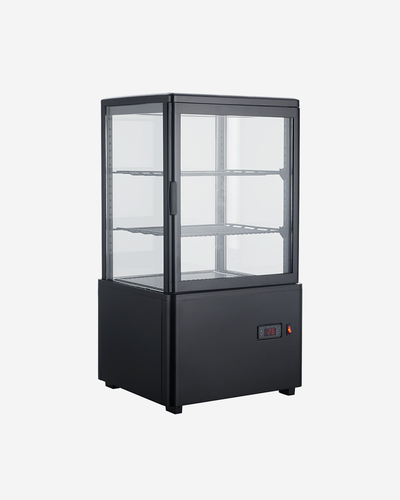
.jpg?imageView2/2/w/500/h/500/format/jp2/q/100 "Four Sides Glasses Display Cooler")
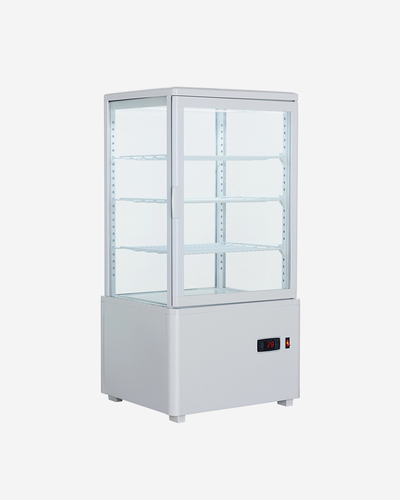
.jpg?imageView2/2/w/500/h/500/format/jp2/q/100 "White 4-Sided Glass Refrigerated Display Case")
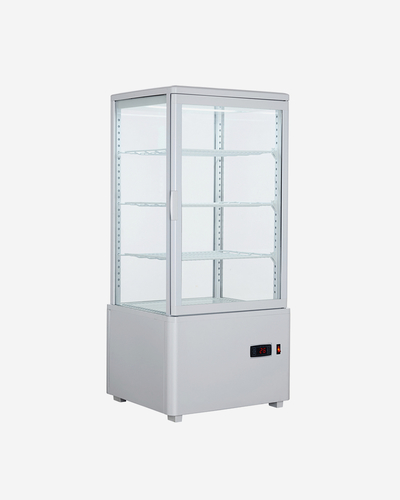
.jpg?imageView2/2/w/500/h/500/format/jp2/q/100 "Refrigerated Display Cake Countertop Four Sides Glasses Display Cooler")
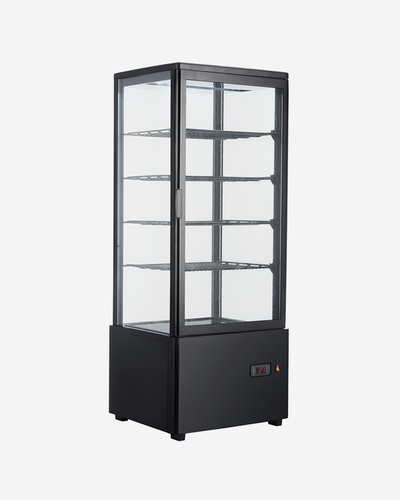
.jpg?imageView2/2/w/500/h/500/format/jp2/q/100 "Four Sides Glasses Display Cooler")

-
- Navigation
- Home
- About Us
- Products
- News
- Contact Us
 East Zone, Guanhaiwei Industrial Park, Cixi City, Ningbo, Zhejiang, China
 +86-574-63668678
 +86-574-63668108
Copyright © Ningbo XiangChi Electrical Co.,Ltd All Rights Reserved.
