
 简体中文
简体中文 English
 Español
News
What Is a Countertop Merchandiser Refrigerator?
A countertop merchandiser refrigerator is one of the most powerful yet underutilized tools in retail and foodservice. Positioned directly at the point of sale, these compact cooling units drive impulse purchases, preserve product freshness, and reinforce brand presence — all within a fraction of a square meter.
What Is a Countertop Merchandiser Refrigerator?
A countertop merchandiser refrigerator is a compact, glass-fronted refrigerated display unit designed to sit on countertops, checkout surfaces, or service bars. Unlike full-size commercial reach-in coolers, these units are engineered for visibility and impulse sales — their transparent doors and interior lighting ensure that products are always on display, enticing customers at the moment of purchase.
These units typically hold beverages, grab-and-go snacks, pre-packaged desserts, dairy products, and fresh produce. You'll find them in convenience stores, coffee shops, hotel lobbies, pharmacies, bakeries, and quick-service restaurants. Their defining characteristic is the seamless blend of refrigeration performance and retail merchandising aesthetics.
Industry Definition
According to commercial refrigeration standards, a countertop merchandiser refers to any self-contained refrigerating appliance with a display volume typically between 40–150 liters, designed to be placed on a horizontal surface and operate at temperatures between 0°C and 10°C (32°F–50°F) for chilled product display.
Key Features to Look For
Not all countertop merchandiser refrigerators are created equal. The right unit for your business depends on a careful evaluation of several technical and commercial features.
Curved or Flat Glass Door
Curved glass doors offer panoramic product visibility and a premium retail look. Flat glass doors are easier to clean and more budget-friendly.
LED Interior Lighting
High-CRI LED strips illuminate products without generating excessive heat, preserving food quality while enhancing visual appeal.
Precise Temperature Control
Digital thermostats with ±1°C accuracy maintain consistent cooling for perishables, from beverages to fresh sandwiches.
Low-Noise Compressor
Quality units operate below 42 dB — quieter than a library — making them ideal for café counters and hotel reception desks.
Auto-Defrost System
Automatic defrost cycles prevent frost buildup without manual intervention, reducing maintenance time and labor costs.Energy Efficiency Rating
Look for units with Energy Star certification or an A+ energy class — they consume up to 40% less power than standard models.
Types of Countertop Merchandiser Refrigerators
The market offers several distinct configurations, each suited to different merchandising needs. Understanding the differences helps you select a unit that maximizes both sales potential and operational efficiency.
| Type | Capacity | Best For | Temperature Range |
|---|---|---|---|
| Single-Door Upright | 40–80 L | Cafés, small convenience stores | 2°C – 8°C |
| Double-Door Upright | 80–150 L | Delis, hotel lobbies, pharmacies | 2°C – 10°C |
| Curved Glass Display | 50–120 L | Pastry shops, premium retail | 4°C – 12°C |
| Bottle Cooler / Beverage | 60–100 L | Bars, gas stations, QSR counters | 0°C – 6°C |
| Multideck Open Front | 30–60 L | Impulse zones, checkout counters | 3°C – 8°C |
| Floral / Specialty Display | 40–90 L | Florists, gourmet food boutiques | 4°C – 14°C |
The Business Case: Why Countertop Placement Matters
Retail psychology consistently confirms that product placement at eye level and within arm's reach dramatically increases conversion. A well-positioned countertop merchandiser refrigerator leverages this principle at its peak effectiveness — directly beside the cash register or service point, where customers are already pausing and making decisions.
are unplanned impulse buys
chilled vs. ambient items
from cold beverage add-ons
Beyond impulse sales, a countertop merchandiser signals freshness and quality to customers. A visibly cold, well-lit display of beverages or snacks communicates that an establishment takes product care seriously — a subtle but powerful brand cue in competitive retail and foodservice environments.
Energy Efficiency and Operating Costs
One of the most common concerns operators have about countertop refrigeration is its continuous energy consumption. Modern units, however, have undergone significant efficiency improvements. The latest generation of countertop merchandiser refrigerators incorporates hydrocarbon refrigerants (R-290 or R-600a), variable-speed compressors, and foam-injected cabinet insulation to minimize energy use.
A typical Energy Star-certified countertop unit of 80 liters consumes between 0.5–0.9 kWh per day, which — at European average electricity prices — translates to approximately €40–70 per year in operating costs. Over a 5-year lifespan, investing in an energy-efficient model can save several hundred euros compared to a standard-efficiency alternative.
Place your countertop merchandiser refrigerator away from direct sunlight, heat vents, or cooking equipment. Heat exposure forces the compressor to work harder, increasing energy consumption by up to 25% and shortening the unit's lifespan.
Ensure a minimum clearance of 10 cm on all ventilation sides to allow proper airflow around the condenser coil.
Top Brands and What Sets Them Apart
The countertop merchandiser refrigerator market is served by a range of manufacturers spanning different price tiers and specializations. Understanding the competitive landscape helps buyers make more informed procurement decisions.
Commercial-Grade Manufacturers
Brands such as True Manufacturing, Turbo Air, and Beverage-Air dominate the North American commercial market with units built for high-traffic foodservice environments. These units feature stainless steel interiors, forced-air cooling systems, and NEMA-rated electrical components.
European and Mid-Market Options
In Europe, manufacturers like Tefcold, Framec, and Isa** offer elegant curved-glass display coolers popular in bakery and deli settings. These units tend to emphasize aesthetic design alongside functional refrigeration, often featuring powder-coated frames and customizable LED color temperatures.
Budget and Small-Business Segment
For small businesses and startups, brands such as Smad, Kool-It, and Haier Commercial offer entry-level countertop merchandisers at competitive price points, typically sacrificing build longevity for initial affordability.
Installation and Placement Best Practices
Even the highest-quality countertop merchandiser refrigerator will underperform if poorly positioned or incorrectly installed. Adhering to a set of proven placement principles ensures optimal refrigeration performance and maximizes retail impact.
- Eye-level product alignment: Position the most profitable or highest-margin products at natural eye level (approximately 160–170 cm from the floor for standing customers).
- Proximity to payment point: Units placed within 90 cm of a POS terminal consistently outperform those located further away in the same store footprint.
- Stable, level surface: Ensure the countertop can support the unit's loaded weight (typically 20–50 kg for full units). Uneven surfaces can cause compressor oil migration and premature failure.
- Electrical proximity: Avoid using extension cords. Countertop refrigerators should connect directly to a dedicated outlet rated for the unit's amperage requirements to prevent voltage drop and tripped breakers.
- Temperature monitoring: In HACCP-regulated environments, pair the unit with a calibrated external thermometer and log temperatures twice daily to meet food safety compliance standards.
- Seasonal product rotation: Adjust the product mix quarterly — cold brew and iced teas in summer, warm-friendly items and juices in winter — to align stock with seasonal demand shifts.
Maintenance Schedule for Longevity
A countertop merchandiser refrigerator is a capital investment. A structured maintenance routine significantly extends its operational life, maintains energy efficiency, and protects product integrity.
| Frequency | Maintenance Task | Responsible Party |
|---|---|---|
| Daily | Wipe interior shelves, check door seal integrity, verify temperature display | Staff |
| Weekly | Clean glass door (inside and out), rotate stock, check defrost drain | Staff / Manager |
| Monthly | Clean condenser coils with brush or compressed air, inspect gaskets for cracks | Manager / Technician |
| Quarterly | Deep clean evaporator fan area, inspect refrigerant connections, recalibrate thermostat | Qualified Technician |
| Annually | Full service inspection, refrigerant level check, compressor performance assessment | Certified Engineer |
Neglecting condenser coil cleaning is the single most common cause of premature compressor failure in countertop units. Dust and grease accumulation on condenser fins forces the compressor to run longer cycles, raises internal operating temperatures, and accelerates component wear. A quarterly cleaning routine can add years to a unit's operational life.
Regulatory Compliance and Food Safety
Operators in the EU, UK, and US markets must ensure their countertop merchandiser refrigerator meets applicable food safety and electrical safety standards. In Europe, compliance with EN 441 (commercial refrigerating appliances), the CE marking requirements, and local health authority HACCP frameworks is mandatory for food business operators.
In the United States, units must carry NSF/ANSI 7 certification (commercial refrigerators and freezers), confirming that internal materials are food-safe, the unit maintains required temperature ranges under defined load conditions, and the design permits adequate cleaning. Additionally, UL or ETL listing confirms electrical safety compliance.
If operating in an EU member state, verify that any countertop merchandiser refrigerator sold after January 2022 complies with the EU Ecodesign Regulation (EU) 2019/2024 for professional refrigerated storage cabinets. Non-compliant units may not be legally placed on the market.
How to Choose the Right Unit for Your Business
Selecting the ideal countertop merchandiser refrigerator requires a structured evaluation of your business's specific operational context. The following framework provides a practical decision path.
Step 1: Define Your Product Range
Are you primarily chilling beverages (0–5°C), fresh sandwiches and dairy (2–7°C), or specialty items like floral arrangements or wine (8–14°C)? Temperature range determines the refrigeration system specification — not all units perform equally across different temperature zones.
Step 2: Estimate Throughput Volume
High-turnover environments (50+ unit sales per day per SKU) require units with rapid pull-down recovery — the ability to return to set temperature quickly after door openings. Look for units specifying a recovery time of under 8 minutes after a 30-second door-open event.
Step 3: Evaluate Available Counter Space
Measure your available footprint precisely. Countertop merchandisers range from compact units as small as 30 cm wide to larger displays exceeding 70 cm. Always allow the manufacturer's recommended clearance for ventilation — typically 10–15 cm on each ventilated side.
Step 4: Calculate TCO (Total Cost of Ownership)
The purchase price is only one component of total cost. Factor in annual energy consumption, expected maintenance costs, and the unit's warranty coverage. A premium unit at twice the upfront cost can deliver lower TCO over 5 years if it consumes 35% less energy and requires fewer service interventions.
Final Thoughts: An Investment That Works While You Do
A countertop merchandiser refrigerator is far more than a cooling appliance — it is an active sales tool, a freshness signal, and a piece of your brand's customer-facing identity. Positioned intelligently, maintained consistently, and stocked strategically, these compact units deliver measurable returns day after day.
Whether you're outfitting a boutique coffee bar, a hotel lobby convenience corner, or a high-volume convenience store checkout zone, the right countertop merchandiser pays for itself through incremental sales uplift, reduced product waste, and the intangible but real value of a polished, professional presentation at the moment that matters most: when a customer is ready to buy.
Invest in quality, plan your placement with intention, and commit to a maintenance routine — and your countertop merchandiser refrigerator will reward that investment for years to come.
You May Also Like
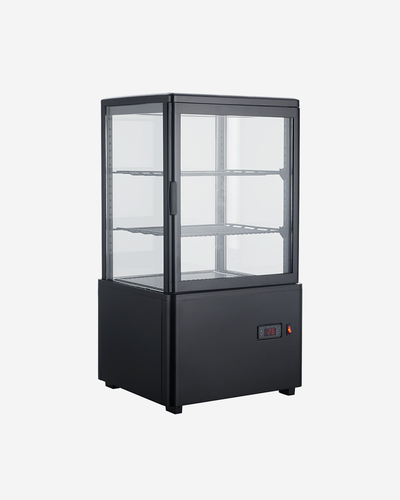
.jpg?imageView2/2/w/500/h/500/format/jp2/q/100 "Four Sides Glasses Display Cooler")
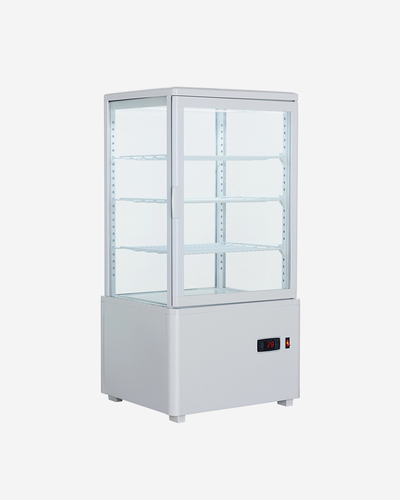
.jpg?imageView2/2/w/500/h/500/format/jp2/q/100 "White 4-Sided Glass Refrigerated Display Case")
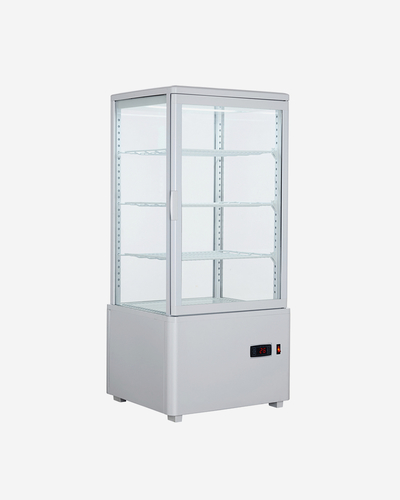
.jpg?imageView2/2/w/500/h/500/format/jp2/q/100 "Refrigerated Display Cake Countertop Four Sides Glasses Display Cooler")
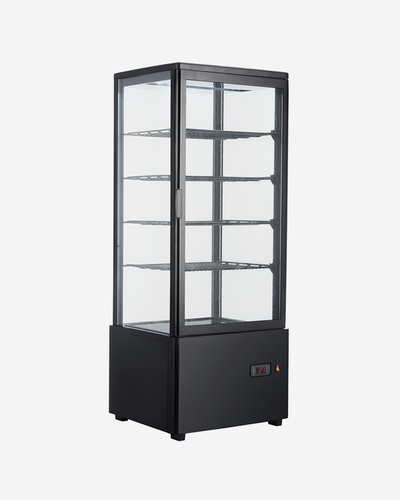
.jpg?imageView2/2/w/500/h/500/format/jp2/q/100 "Four Sides Glasses Display Cooler")

-
- Navigation
- Home
- About Us
- Products
- News
- Contact Us
 East Zone, Guanhaiwei Industrial Park, Cixi City, Ningbo, Zhejiang, China
 +86-574-63668678
 +86-574-63668108
Copyright © Ningbo XiangChi Electrical Co.,Ltd All Rights Reserved.
