
 简体中文
简体中文 English
 Español
News
What Is a Countertop Merchandiser Refrigerator?
A countertop merchandiser refrigerator sits at the intersection of food safety and impulse purchase psychology. Compact enough to rest on a service counter yet engineered to maintain precise temperatures around the clock, these purpose-built display units are one of the highest-return equipment investments available to convenience retailers, cafés, delis, and foodservice operators.
A countertop merchandiser refrigerator is a self-contained, electrically operated refrigerated display unit designed to sit on an existing counter, bar top, or shelf surface within a retail or foodservice environment. Unlike reach-in back-bar coolers or walk-in cold rooms, countertop models are engineered specifically for customer-facing visibility — their primary function is to display chilled products attractively at the point of purchase, prompting unplanned buying decisions while simultaneously maintaining food-safe temperatures.
The category spans a wide range of formats: glass-fronted upright cabinets, open-front refrigerated display cases, curved-glass deli-style units, and flat-top chest-format models. What unifies them is the combination of visible product display, controlled temperature maintenance, and footprint compact enough for counter installation. They are found in convenience stores, petrol station forecourts, hotel lobbies, airport concessions, café counters, delicatessens, bakeries, and anywhere else that pre-packaged or prepared food is sold chilled.
"Visibility is the silent salesperson. A chilled beverage or sandwich placed at eye level in a glass-front merchandiser converts browsing customers into buyers at a rate no shelf placement strategy can match."
Types of Countertop Merchandiser Refrigerators
Understanding the distinctions between unit types is essential before specifying or purchasing. Each format serves a different merchandising priority and product category:
| Type | Front Style | Best For | Typical Capacity |
|---|---|---|---|
| Glass-door upright | Single hinged glass door | Bottled drinks, dairy, packaged snacks | 80–200 L |
| Open-front / grab-and-go | No door, open face | Sandwiches, sushi, pastries, impulse items | 40–120 L |
| Curved glass display | Curved panoramic glass | Cakes, prepared foods, premium products | 30–100 L |
| Sliding-door chest | Horizontal top-sliding glass | Canned beverages, ice cream, impulse cans | 50–180 L |
| Multideck countertop | Open shelving, tiered | Yoghurts, chilled ready meals, dairy SKUs | 100–300 L |
Glass-Door Upright Units
The glass-door upright is the most widely specified countertop merchandiser format. A hinged single-pane or double-glazed glass door provides a clear view of the entire product range from ambient to eye level, with interior LED lighting illuminating products without generating the heat of older fluorescent systems. Forced-air refrigeration systems circulate cold air evenly across all shelves, maintaining uniform temperatures even when the door is opened repeatedly during busy service periods.
Key purchasing considerations for this format include door seal quality (poor seals are the primary cause of both energy waste and temperature excursions), shelf adjustability (to accommodate varying product heights, from cans to tall juice bottles), and night blind compatibility — whether the unit accepts a roll-down insulating blind for use during closed hours to reduce energy consumption.
Open-Front Grab-and-Go Cases
Open-front countertop merchandisers sacrifice some energy efficiency for maximum accessibility and impulse-purchase performance. With no door barrier between the customer and the product, these units are particularly effective for food-to-go operations where speed of access is critical — a customer reaching for a chilled sandwich on their way to pay incurs no friction from a door. They rely on a carefully designed air curtain — a laminar flow of refrigerated air descending across the open face — to maintain internal temperature while the front remains unobstructed.
Open-front units require careful siting: they should not be placed in high-traffic draught paths, near heating vents, or in direct sunlight, all of which can disrupt the air curtain and cause temperature compliance failures. Health authority requirements for ambient temperature in the surrounding environment should also be confirmed — most open-front units are rated to ambient conditions of +18°C to +25°C maximum.
Curved Glass Display Refrigerators
Curved glass countertop merchandisers are the premium display option, most commonly found in patisseries, hotel lobbies, and artisan food retailers. The panoramic curved glass provides a theatre-quality view of the product interior, making them particularly effective for high-value items — celebration cakes, premium desserts, charcuterie, and prepared deli foods — where product presentation quality directly influences purchase price perception.
Key Features to Evaluate When Buying
Static (natural convection) or forced-air (fan-assisted) systems each suit different products. Fan-assisted is faster to recover temperature but can dry out uncovered food products.
Interior LED arrays enhance product colour rendering and attractiveness without heat emission. Look for CRI ≥80 for accurate food colour presentation.
Digital thermostats with real-time display and audible alarms for out-of-range events are essential for HACCP compliance in regulated food retail environments.
Countertop units operate directly in customer interaction zones. Compressor noise levels below 42 dB(A) are recommended for quiet café and hospitality settings.
Running 24/7, energy costs accumulate rapidly. EU energy label A or B rated units typically consume 30–50% less energy than D-rated equivalents of the same capacity.
Removable shelves, smooth interior surfaces, and accessible condenser coils are critical for maintaining food hygiene standards and reducing deep-clean labour time.
Refrigerant Type and Environmental Compliance
Modern countertop merchandiser refrigerators use one of several refrigerant systems, each with different environmental and operational implications. R290 (propane) is now the dominant refrigerant in European-manufactured units — it is a natural refrigerant with a Global Warming Potential (GWP) of just 3, compared to over 1,400 for the older R134a. R290 systems are highly energy-efficient and comply with the EU F-Gas Regulation without restriction. R600a (isobutane) is used in some smaller units and shares similarly low GWP characteristics.
Operators purchasing secondhand units should verify the refrigerant type, as units using older high-GWP refrigerants (R404A, R507, R134a in larger charge quantities) may face service restrictions and refrigerant availability issues under tightening F-Gas regulations. For new purchases in the EU and UK, specifying R290 or R600a units is both the environmentally responsible and commercially prudent choice.
HACCP alignment: Select units with a digital temperature display visible from outside the cabinet and a minimum/maximum temperature memory function. This simplifies daily temperature log compliance — a legal requirement for chilled food retailers in most jurisdictions — and provides documented evidence in the event of an environmental health inspection.
Placement Strategy for Maximum Sales Impact
Counter Positioning Principles
The physical placement of a countertop merchandiser refrigerator within the service environment has a more measurable impact on sales performance than almost any other operational variable. Decades of retail science have established that eye-level product placement — typically 140–165 cm from finished floor level for adult shoppers — generates the highest conversion rates. Positioning the top shelves of a countertop unit at or just below eye level means placing the unit on a counter of approximately 80–90 cm height, which aligns with standard service counter specifications.
For queue-line or till-point placement — one of the highest-performing positions in any retail format — the unit should be visible and reachable from the payment queue without requiring the customer to leave the queue line. Research consistently shows that chilled impulse items (water, soft drinks, confectionery, energy bars) placed within arm's reach of the till zone generate significantly higher attachment rates than identical products placed even two metres further from the point of payment.
Product Zoning Within the Unit
The interior of a countertop merchandiser should be treated as a micro-planogram, with deliberate decisions made about shelf allocation and facing positions. Best-practice product zoning for a standard multi-shelf glass-door unit follows a predictable hierarchy:
- Eye-level shelf (primary position): Highest-margin products and current promotional items. This shelf generates disproportionate sales regardless of category.
- Upper-reach shelf: Premium or aspirational products — artisan drinks, branded health items — where the slightly more effortful reach aligns with deliberate, considered purchases.
- Mid-level shelves: Core range and volume sellers — standard soft drinks, water, dairy — where consistent sales velocity matters more than margin per unit.
- Lower shelf: Multipacks, larger formats, and price-led products where customers are willing to stoop for value.
- Door pockets (where present): Fast-moving, thin-format items — slim cans, small bottles, snack portions — that benefit from extreme visibility when the door is open.
Lighting and Visual Appeal
The quality and colour temperature of interior lighting has a direct and measurable effect on product desirability. Beverages, particularly those in clear or amber glass, are enhanced by warm-white lighting (2700–3000K), which amplifies their colour saturation. Chilled food products — sandwiches, sushi, fresh fruit — are better served by neutral white lighting (3500–4000K), which renders greens and reds accurately without the yellow cast that makes food appear older. Confirm the LED specification of any unit under consideration, and wherever possible assess the unit with representative stock loaded and illuminated before committing to purchase.
Energy Consumption and Running Costs
A countertop merchandiser refrigerator operates continuously — typically 8,760 hours per year — making energy efficiency a commercially significant consideration rather than a secondary specification point. The gap between the most and least efficient units in comparable capacity classes is substantial: an A-rated 100-litre glass-door unit may consume 0.5–0.8 kWh/day, while a D-rated unit of equivalent size might draw 1.4–2.2 kWh/day. At typical commercial electricity tariffs, this difference amounts to £100–£200 per unit per year in the UK, or €120–€250 across most of the EU — a meaningful operating cost differential that should inform total cost of ownership calculations.
Several operational practices can meaningfully reduce energy consumption beyond the baseline set by the unit's efficiency class. Night blinds or insulating strips on open-front units reduce refrigeration duty by up to 30% during closed hours. Ensuring condenser coils are cleaned of dust at monthly or quarterly intervals maintains heat rejection efficiency — a blocked condenser forces the compressor to work harder, increasing both energy consumption and wear. Avoiding placement adjacent to ovens, coffee machines, or direct sunlight reduces the ambient heat load the refrigeration system must overcome.
Electricity cost modelling tip: When comparing units, calculate annual energy cost = daily kWh × 365 × local kWh rate. A unit costing £200 more upfront but consuming 1 kWh/day less will recover its price premium in under 12 months at current UK commercial electricity rates. Always model 3–5 year total cost of ownership, not purchase price alone.
Temperature Compliance and Food Safety Regulations
Legal Temperature Requirements
In the UK, the Food Safety (Temperature Control) Regulations require that chilled foods which are likely to support the growth of pathogenic microorganisms or the formation of toxins must be kept at 8°C or below, though best practice — and the standard adopted by most responsible retailers — is to maintain chilled display at 5°C or below. The EU Food Hygiene Regulation (EC) 852/2004 establishes equivalent requirements across member states. In the United States, the FDA Food Code requires most potentially hazardous chilled foods to be held at 41°F (5°C) or below.
For countertop open-front units, maintaining these temperatures requires not only a capable refrigeration system but also appropriate ambient conditions in the surrounding environment. Most open-front merchandiser specifications define maximum ambient temperature ratings — typically +18°C to +25°C — and operating the unit above this threshold can result in consistent temperature non-compliance even on a nominally functional machine. Summer trading conditions in poorly ventilated retail environments regularly cause compliance failures that operators incorrectly attribute to machine malfunction.
HACCP and Temperature Logging
Hazard Analysis and Critical Control Points (HACCP) food safety management systems, which are legally required for most commercial food businesses in the EU and UK, treat chilled display temperature as a critical control point. This requires systematic monitoring, recording, and corrective action procedures. The practical minimum for compliance is twice-daily temperature checks recorded in a dated log. More sophisticated operations implement continuous electronic temperature monitoring with cloud-based logging and automated alerts — many modern countertop merchandisers offer this capability either natively or through third-party probe integrations.
Countertop vs. Floor-Standing Merchandiser: Which Is Right for You?
- Higher capacity (200–1,000+ L)
- Greater product range per unit
- Higher upfront and running cost
- Requires dedicated floor footprint
- Better for high-volume operators
- Less flexible — harder to relocate
- Compact — no dedicated floor space
- Lower capital and operating cost
- Ideal for impulse and add-on sales
- Easily repositioned as needs change
- Till-point and counter deployment
- Stackable in multi-unit configurations
The decision is rarely binary — most successful operators run both formats, using floor-standing multideck units for core product range and countertop merchandisers for targeted impulse deployment at the till, the counter, and any other high-dwell zone within the footprint. The countertop unit's competitive advantage is always its proximity to the point of decision — it intercepts the customer at the moment they are committing to a transaction, rather than requiring a separate journey to a chiller aisle.
Leading Manufacturers and Brands
The countertop merchandiser refrigerator market is served by a mixture of specialist commercial refrigeration manufacturers and broader foodservice equipment brands. Understanding the principal manufacturers helps buyers identify units with appropriate service support, spare part availability, and warranty terms:
| Brand | Origin | Known For | Typical Price Tier |
|---|---|---|---|
| Tefcold | Denmark | Wide range, strong value, good EU coverage | Mid |
| Polar Refrigeration | UK | Catering-focused, strong hospitality sector presence | Entry–Mid |
| Liebherr | Germany | Engineering quality, energy efficiency, durability | Premium |
| True Manufacturing | USA | Heavy-duty construction, N. American market leader | Premium |
| Vestfrost | Denmark | Beverage-focused, open-front specialists | Mid |
| Turbo Air | South Korea / USA | Strong value, wide range, US foodservice focus | Mid |
| Smeg | Italy | Premium aesthetics, hospitality and boutique retail | Premium |
For buyers prioritising service network and local spare part availability above all else, selecting a brand with a strong regional distributor presence is advisable. A unit from a premium manufacturer with no local service agent can become a liability when the compressor fails during a busy trading period — repair waiting times of two to four weeks are not uncommon for less-supported brands.
Cleaning, Maintenance, and Extending Unit Lifespan
Daily and Weekly Cleaning Routines
Countertop merchandiser refrigerators used in food retail environments require structured cleaning routines to maintain both hygiene compliance and operational efficiency. Daily tasks should include wiping down interior surfaces with a food-safe, non-abrasive sanitiser solution, checking that drain channels are clear (particularly in forced-air units where condensation accumulates), and inspecting door seals for food debris that can compromise seal integrity and cause frost accumulation on the evaporator.
Weekly deep-clean procedures should include removing and washing all shelves, checking and tightening any loose shelf clips (which can create noise and instability under product load), and inspecting the door gasket for tears or hardening — a damaged gasket is both an energy waste and a food safety risk that should trigger immediate replacement rather than monitoring.
Condenser Coil Maintenance
The condenser coil — typically located at the rear or base of the unit — is the component most commonly neglected in operational maintenance schedules, and its neglect is the single most common cause of premature compressor failure. In environments with significant dust, hair, or flour particulates (common in bakery and café environments), the condenser can become occluded in as little as four to six weeks of operation. A blocked condenser raises condensing temperature, forces higher compressor discharge pressure, and dramatically increases power consumption.
- Clean condenser coils with a soft brush or low-pressure compressed air every 4–8 weeks in high-dust environments, or every 3 months in cleaner settings.
- Ensure at least 100–150 mm of clear space behind and above the unit for adequate air circulation over the condenser.
- Never block condenser ventilation with marketing materials, menus, or stock — a common operational error that significantly shortens compressor life.
- Schedule an annual professional service for refrigerant pressure check, electrical inspection, and deep condenser cleaning to maintain warranty validity and optimise performance.
Gasket replacement is inexpensive and high-impact. Door gaskets on countertop units typically cost £10–£40 and can be replaced by an operator without specialist tools. A well-sealed door can reduce energy consumption by 10–20% compared to a unit with a worn gasket. Check seal integrity by closing the door on a thin piece of paper — if it pulls out without resistance, the gasket needs replacement.
Purchasing Checklist: What to Confirm Before Buying
- Capacity vs. footprint: Measure the available counter space precisely, including clearance requirements for ventilation, before shortlisting models.
- Temperature classification: Confirm the unit's climate class (SN, N, ST, T) and verify it matches your site's typical ambient temperature range — particularly for summer trading.
- Refrigerant type: Specify R290 or R600a for EU/UK regulatory compliance and long-term service support.
- Electrical supply: Confirm single-phase 230V supply is available at the counter position. Check the unit's startup current (inrush) if the circuit is shared with other equipment.
- Door configuration: Left-hand or right-hand hinging should match the customer approach direction from your specific counter layout.
- Warranty and service coverage: Confirm the parts-and-labour warranty period (typically 1–2 years) and the manufacturer's or distributor's service response time guarantee.
- HACCP documentation: Request the unit's temperature performance data sheet for your HACCP file — reputable manufacturers provide this as standard documentation.
- Energy label: Obtain the EU energy label rating and daily kWh consumption figure for running cost calculations.
The countertop merchandiser refrigerator is one of the most commercially efficient pieces of equipment available to food and drink retailers. Its combination of precise temperature control, maximum product visibility, compact footprint, and direct placement at the customer decision point makes it a category of commercial equipment where specification quality and placement strategy translate directly and measurably into revenue. Whether deploying a single open-front unit beside a café till or building a coordinated multi-unit merchandising strategy across a convenience format, the principles remain consistent: keep products visible, accessible, properly chilled, and positioned where customers are already committed to spending.
Invest time in specifying the right unit for the environment — matching climate class to site conditions, refrigerant to regulatory requirements, energy rating to operating cost targets — and the countertop merchandiser will repay that diligence with years of reliable, compliant, and revenue-generating performance.
You May Also Like
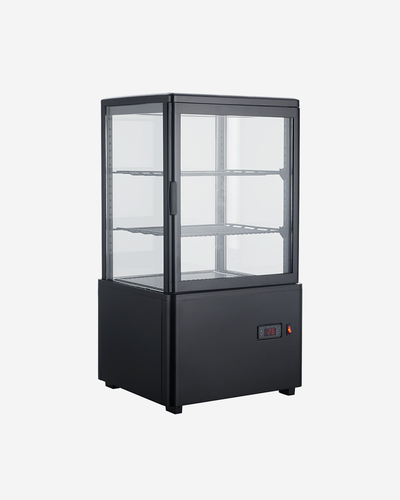
.jpg?imageView2/2/w/500/h/500/format/jp2/q/100 "Four Sides Glasses Display Cooler")
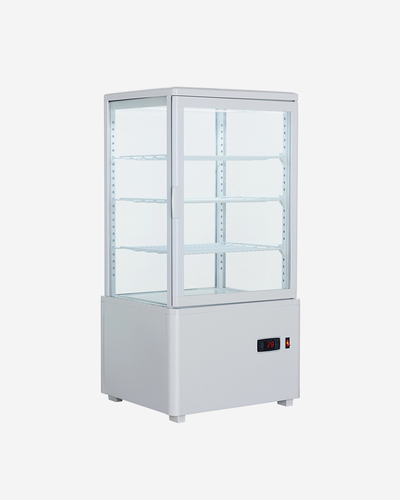
.jpg?imageView2/2/w/500/h/500/format/jp2/q/100 "White 4-Sided Glass Refrigerated Display Case")
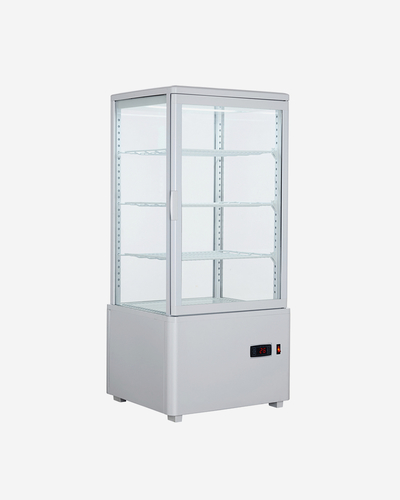
.jpg?imageView2/2/w/500/h/500/format/jp2/q/100 "Refrigerated Display Cake Countertop Four Sides Glasses Display Cooler")
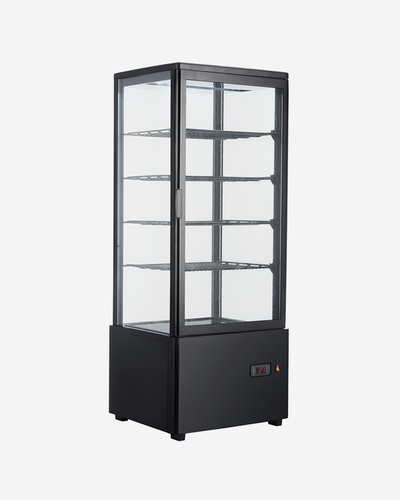
.jpg?imageView2/2/w/500/h/500/format/jp2/q/100 "Four Sides Glasses Display Cooler")

-
- Navigation
- Home
- About Us
- Products
- News
- Contact Us
 East Zone, Guanhaiwei Industrial Park, Cixi City, Ningbo, Zhejiang, China
 +86-574-63668678
 +86-574-63668108
Copyright © Ningbo XiangChi Electrical Co.,Ltd All Rights Reserved.
