
 简体中文
 English
 Español

News
Commercial Fridge Organizer: Smart Layout Ideas That Work for Display Coolers
Walk into a busy café at seven in the morning and you can learn a lot from the display fridge. If the pastries are easy to find, the milk sits where the barista expects it and nothing hides behind yesterday's stock, service flows. If not, every order turns into a small search party. That is why a commercial fridge organizer is less about tidy shelves and more about building a system your team can follow when the queue is out the door.
We have spent years building commercial display coolers for bakeries, cafés, sushi shops and convenience stores, and we have seen the same pattern again and again: the fridges that stay organised are the ones with a simple, written layout and a routine that takes minutes, not hours.
Why a Commercial Fridge Organizer Matters More Than You Think
Organisation affects three things that rarely appear on a spec sheet: speed, waste and temperature. When stock is grouped by use, staff spend less time hunting and more time serving. When older items sit at the front and newer ones go behind, less food expires unnoticed. And when air can move freely between shelves, the fridge recovers temperature faster after the door opens.
A good commercial refrigerator organization plan also makes cleaning easier. Empty shelves wipe down quickly, spills are spotted before they spread, and a missing product is obvious at a glance. In a small shop, that visibility is worth as much as an extra shelf.
Start With the Layout, Then Buy the Bins
It is tempting to order a set of containers first and figure out the layout later. We recommend the opposite. Walk through a normal service day in your head, then decide which items need to be within arm's reach, which are used less often, and which must stay separated for food safety.
Temperature zones matter more than most people expect. The top and middle shelves of a reach-in or display fridge are usually the most stable, while the door and lower areas can run warmer. Use that natural variation instead of fighting it.
| Shelf zone | Good for | Keep away | Why it works |
|---|---|---|---|
| Top shelf | Ready-to-eat foods, desserts, open drinks | Raw meat, fish, unwashed produce | Prevents drips onto food below |
| Middle shelves | Dairy, deli items, packaged sandwiches | Tall stock that blocks vents | Keeps everyday items at eye level |
| Bottom shelf | Raw meat and fish in sealed containers | Loose produce and open containers | Contains any leakage |
| Door bins | Condiments, small bottles, butter | Milk, eggs, highly perishable items | The door is the warmest zone |
| Drawers or lower bins | Produce, wrapped bakery items | Cleaning supplies or chemicals | Separates fragile items and odours |
The Tools That Earn Their Space
A commercial fridge organizer does not need to be complicated. Clear bins, tiered organisers, under-shelf baskets and simple label rolls solve most problems. Clear containers are especially useful because staff can see what is inside without opening them, which keeps the door closed and the temperature steady.
Essential organisation tools
- Clear stackable bins for small packets, sauces and garnishes.
- Tiered or stepped organisers for bottles and jars at the back of shelves.
- Under-shelf baskets for cling film, labels and small utensils.
- Pan racks or tray slides where sheet pans and bakery trays need to slide in and out.
- Date labels, day dots and a marker that stays clipped to the fridge.
- A small magnetic whiteboard for prep lists and stock reminders.
Labeling and stock rotation
Label the shelf, not just the product. A simple strip of tape with “dairy”, “ready to eat” or “raw fish” keeps everyone aligned, including new staff. For rotation, use first in, first out: new deliveries go behind existing stock, and anything opened gets a date. This one habit prevents most of the quiet waste we see in busy kitchens.
Organising Glass Display Coolers for Sales, Not Just Storage
Glass-door merchandisers are a different challenge. Customers see everything, so the layout has to sell as well as store. Group products by category, keep labels facing outward and leave a little breathing room between rows. A packed shelf may look generous, but it hides products and blocks the airflow that keeps them cold.
Use the height of the case. Tall bottles belong at the back or on lower shelves, smaller items at eye level, and promotional products where the LED light hits them best. If your display has adjustable shelves, set them once around your best-selling items and resist the urge to move them every week.
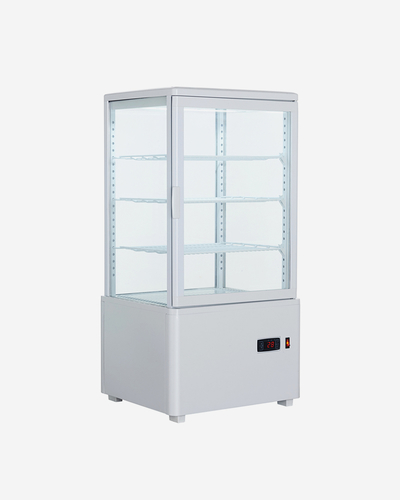
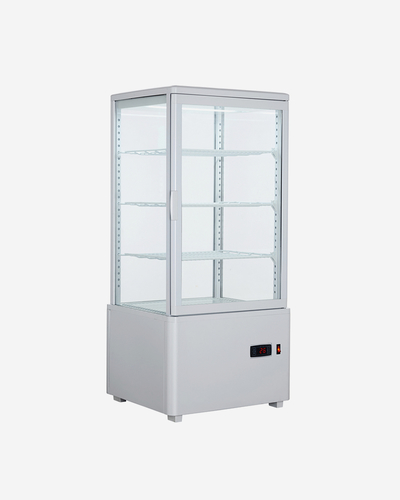
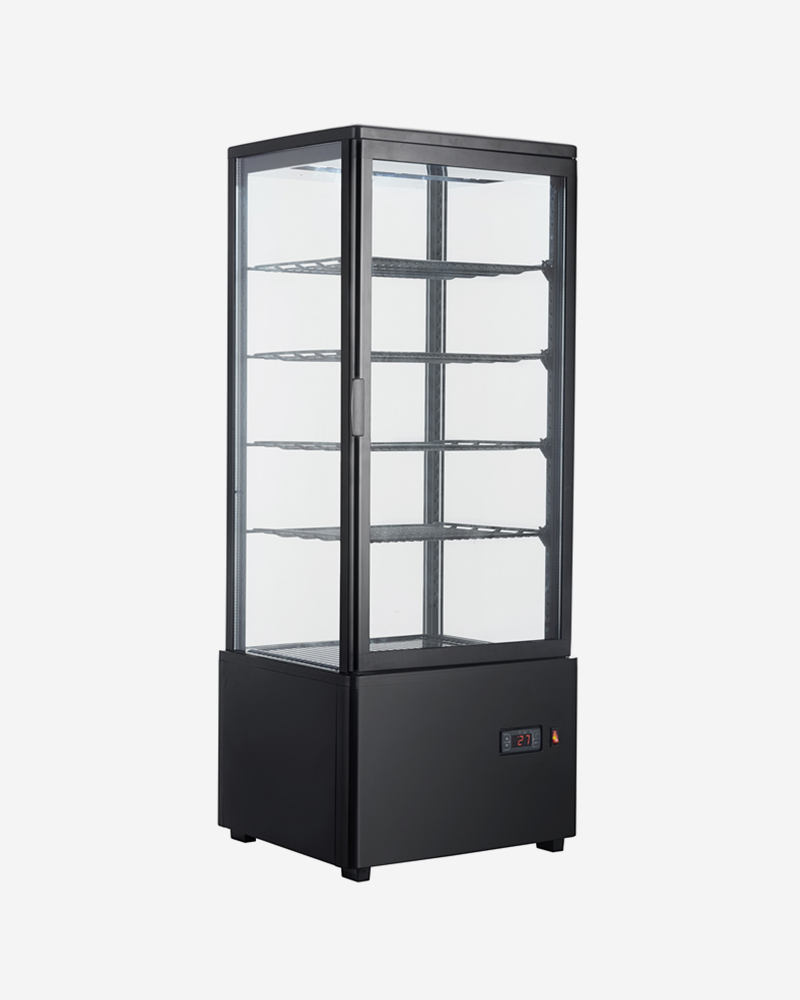 Four-Sided Glass Refrigerated Standing Display Cooler XC-98LWith four-sided double glass, top LED lighting and adjustable shelves, this 98 L cooler supports multi-angle browsing and a consistent, visible shelf layout.View Product →
Four-sided glass coolers are particularly good for this because customers can browse from more than one angle. That also means there is nowhere to hide a messy shelf, so a consistent facing routine pays off quickly.
Keeping Bakery and Cake Displays Tidy
Bakery cases are their own world. Cakes and pastries bruise, dry out and lose their shine when they are stacked too tightly or moved too often. Organise by shelf height and cake size, use gentle shelf liners, and keep a small gap between items so staff can lift a tray without touching its neighbour.
Humidity matters as much as tidiness. A case with steam humidification helps keep exposed cakes and breads from drying out, but it still needs a clean layout so air can circulate. Avoid overloading the shelves, and rotate the front items after each service so nothing sits in the same spot for days.
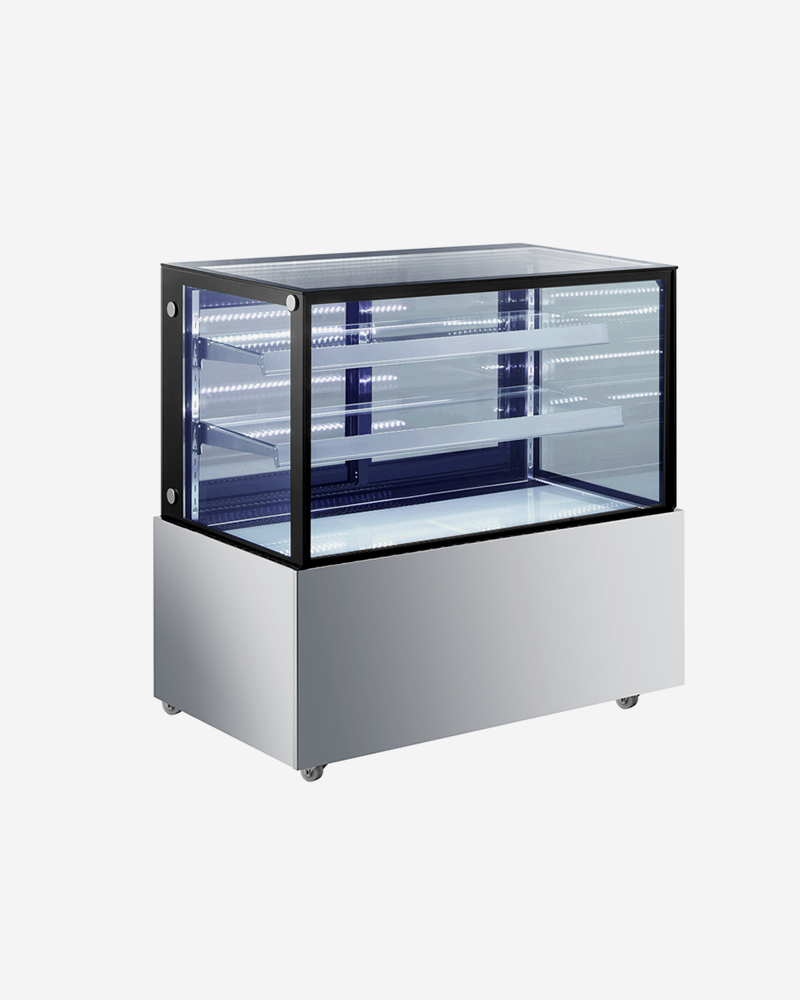 Commercial Refrigerated Cake Display Cabinet with Steam HumidificationFan cooling and steam humidification help keep exposed cakes from drying out, while a clean layout supports air circulation and easy viewing.View Product →
Sushi and Countertop Displays Need a Lighter Touch
Countertop sushi cases reward restraint. Arrange pieces in neat rows, keep the most popular combinations at eye level and avoid stacking trays on top of each other. The goal is a clear view of the food and a quick pick for the customer, not a puzzle.
Because these cases are small, every item has to earn its place. Keep only the day's production inside, use shallow trays and check the case between service periods. A quick wipe of the glass and a re-face of the front row takes less time than answering questions about what is available.
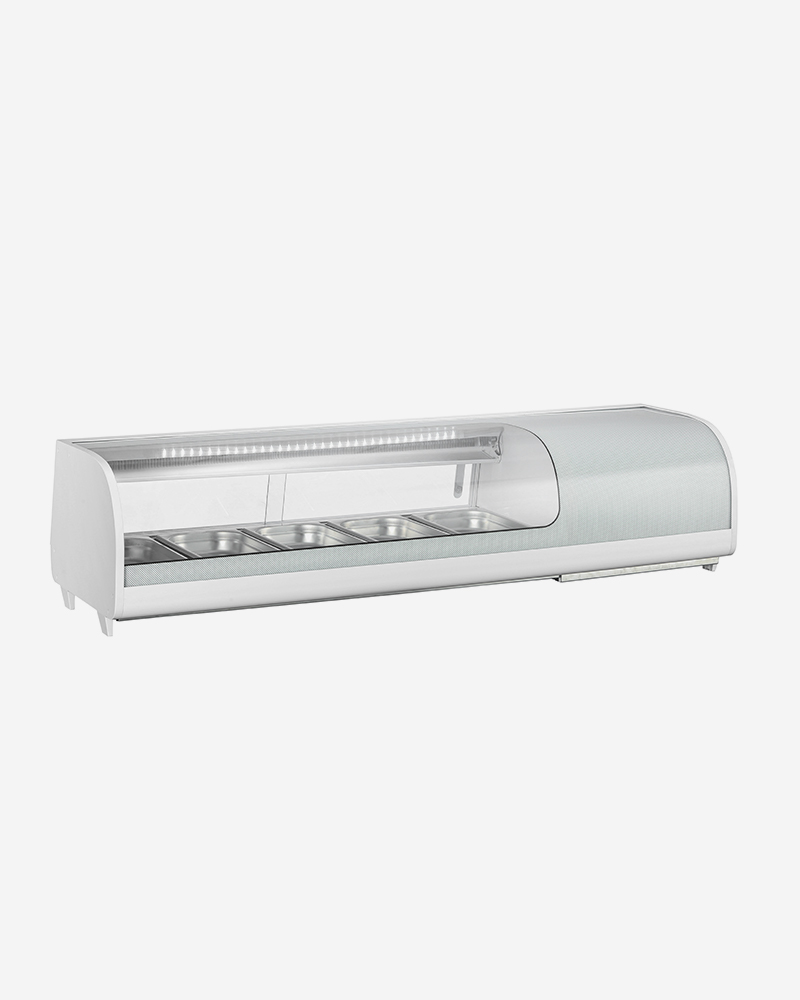 Countertop Refrigerated Sushi Showcase with LED LightingTop and bottom evaporators, internal LED lighting and a digital thermostat support a clear sushi display that fits a simple daily routine.View Product →
A Simple Weekly Routine That Sticks
The best commercial fridge organizer is the one your team actually maintains. A short routine is more effective than a deep clean that happens once a month. Try this sequence at the end of each day or before the morning rush:
- Clear out anything past its date and note what was wasted.
- Wipe spills immediately and check the door seals for crumbs.
- Re-stock from the back, bringing older items to the front.
- Re-face labels and group items that belong together.
- Check that vents and fans are not blocked by trays or bins.
- Write a short note for the next shift about missing stock or repairs.
If you follow simple maintenance steps alongside this routine, you will also catch small issues before they turn into warm cabinets or service calls.
Common Organising Mistakes to Avoid
- Overfilling shelves until cold air cannot move.
- Storing raw meat above ready-to-eat food.
- Using unlabeled containers that nobody wants to open.
- Treating the door bins as extra cold storage.
- Buying organisers before measuring the shelf depth.
- Letting every shift invent its own layout.
Most of these are easy to fix once they are named. The harder part is consistency, which is why a simple shelf map and a short daily check matter more than a perfect one-off reorganisation.
We build commercial display coolers with adjustable shelves, clear layouts and practical details because we know that organisation starts with the cabinet, not with a label maker. If you are planning a new fit-out or replacing a case that has stopped working for your team, it helps to choose a fridge that matches the way you actually sell and store food. A little thought at the start saves a lot of searching later.
You May Also Like





-
- Navigation
- Home
- About Us
- Products
- News
- Contact Us
 East Zone, Guanhaiwei Industrial Park, Cixi City, Ningbo, Zhejiang, China
 +86-574-63668678
 +86-574-63668108

Copyright © Ningbo XiangChi Electrical Co.,Ltd All Rights Reserved.
