
 简体中文
简体中文 English
 Español
News
Could a Four Sided Glass Display Cooler Be the Key to Boosting Retail Sales and Product Visibility?
In today's competitive retail landscape, product visibility is currency. A four sided glass display cooler — offering unobstructed views from every angle — has emerged as one of the most powerful tools for turning browsers into buyers, particularly in convenience stores, specialty grocers, and high-traffic foodservice settings.
What Is a Four Sided Glass Display Cooler?
A four sided glass display cooler is a refrigerated merchandising unit enclosed by glass panels on all four vertical sides, often paired with a glass top. Unlike conventional reach-in coolers positioned flush against a wall, these freestanding units are designed for island or central-floor placement, allowing shoppers and staff to view and access refrigerated products from any direction.
Common in florist departments, premium beverage sections, grab-and-go deli cases, and confectionery displays, these coolers prioritize 360-degree product visibility without sacrificing precise temperature control. Their dual role — functional refrigeration unit and visual merchandising tool — sets them apart from traditional refrigerated cabinets.
Core Advantages of Four Sided Glass Display Coolers
1. Maximum Product Visibility from All Angles
The defining advantage of a four sided glass cooler is its ability to showcase merchandise without visual obstruction. Shoppers approaching from any aisle can see the full product assortment, color, branding, and labeling at a glance. This is especially valuable for impulse-purchase categories — beverages, premium desserts, fresh flowers, and specialty snacks — where eye contact with the product is often the critical trigger for a buying decision.
Studies in retail merchandising consistently show that visibility directly correlates with purchase likelihood. A unit that communicates "look at me" from every direction naturally draws more foot traffic than a back-of-wall cooler that shoppers must seek out intentionally.
2. Flexible Floor Placement and Store Layout Options
Because a four sided glass display cooler is not dependent on a wall, it can be placed virtually anywhere within a retail floor plan — at the end of an aisle, in the center of the store, near a checkout zone, or as an anchor in an open beverage area. This spatial flexibility gives retailers powerful tools for strategic product placement and seasonal reconfiguration.
Retailers can relocate these units to respond to customer flow data, seasonal demand shifts, or promotional campaigns — something impossible with built-in wall cases. The ability to reposition a major display unit without construction is a genuine operational advantage for lease-based retail environments.
3. Enhanced Impulse Buying Behavior
Impulse purchases account for a meaningful proportion of total grocery and convenience retail revenue. Four sided coolers placed at natural customer decision points — near checkout, at aisle intersections, or at the entrance — act as silent salespeople, presenting chilled products in their most appealing form.
The glass-on-all-sides format ensures that customers who are not actively seeking a refrigerated product are still exposed to the display as they navigate the store. This passive exposure is a well-documented driver of unplanned purchases, particularly for premium beverages, specialty cheeses, and grab-and-go items.
4. Superior Aesthetic Appeal and Brand Presentation
Modern four sided glass display coolers are available in sleek, low-profile designs that elevate the overall store aesthetic. For premium retail environments — wine boutiques, upscale delis, specialty grocery stores — the unit itself communicates quality and care. The clean, illuminated interior highlights product packaging and color in a way that opaque or partially obstructed cases cannot.
LED interior lighting, which is standard in most contemporary models, enhances the visual appeal of the product assortment and contributes to a bright, inviting shopping environment. Well-lit refrigerated displays have been shown to increase perceived product freshness and quality — a critical perception in food and beverage retail.
Unobstructed sightlines from every approach angle, maximizing passive product exposure across the entire store floor.
Energy-efficient lighting enhances product color accuracy and perceived freshness, contributing to a premium in-store experience.
Commercial refrigeration systems maintain consistent cold zones throughout the cabinet, protecting product integrity and shelf life.
No wall anchoring required — units can be repositioned seasonally or for promotional resets without store construction.
5. Efficient Staff Access and Restocking
The open, multi-sided configuration of these coolers provides staff with multiple access points for restocking, cleaning, and inventory management. Rather than requiring staff to reach across a deep case from a single front opening, employees can access shelves from multiple sides — reducing restocking time and minimizing disruption to customers during peak hours.
This operational efficiency can have a meaningful impact in high-volume environments such as convenience stores, airport retail, and supermarket grab-and-go sections, where speed and availability are directly linked to customer satisfaction and revenue.
6. Versatility Across Product Categories
While four sided glass coolers are frequently associated with beverages and fresh food, their versatility extends across numerous retail categories:
- Floral retail: Maximizes the visual impact of cut flowers and arrangements, preserving freshness while presenting a striking display.
- Cosmetics and skincare: Premium beauty retailers use refrigerated glass coolers to store and display temperature-sensitive serums, sheet masks, and probiotic formulations.
- Specialty confectionery: Artisan chocolates, macarons, and fresh-cream pastries benefit from both the visibility and the controlled humidity environment.
- Wine and craft beverages: Independent wine shops and taprooms use these coolers to display by-the-bottle selections with maximum visual elegance.
- Pharmaceutical and nutraceutical retail: Probiotics, refrigerated supplements, and specialty health products gain credibility and discoverability through a dedicated glass cooler display.
How Four Sided Glass Coolers Compare to Traditional Refrigerated Display Units
| Feature | Four Sided Glass Cooler | Standard Wall Reach-In | Open-Air Merchandiser |
|---|---|---|---|
| 360° product visibility | Yes | No | No |
| Freestanding floor placement | Yes | Wall-only | Yes |
| Sealed temperature control | Yes | Yes | Open, less efficient |
| Energy efficiency | High (sealed glass) | High | Low |
| Impulse purchase impact | Very High | Moderate | High |
| Aesthetic premium | High | Standard | Moderate |
| Multi-side staff access | Yes | Front-only | Yes |
Energy Efficiency Considerations
A common concern with glass-heavy refrigeration units is energy consumption. Modern four sided glass display coolers address this with double or triple-pane low-emissivity (Low-E) glass, which significantly reduces thermal transfer compared to older single-pane designs. Combined with high-efficiency compressors, hydrocarbon or HFC-free refrigerants, and LED lighting with low heat output, contemporary models meet or exceed current energy efficiency standards in most commercial markets.
Retailers operating in regions with strict energy compliance requirements — including California's Title 24 or European CE standards — should verify unit certifications before purchase. That said, the energy profile of a well-specified four sided cooler is generally competitive with comparable reach-in cabinets, especially when the glass seals and door gaskets are properly maintained.
Choosing the Right Four Sided Glass Cooler for Your Retail Space
When evaluating four sided glass display coolers, retailers should consider several practical factors beyond aesthetics:
- Internal capacity and shelf configuration: Assess whether adjustable shelving accommodates your product mix — tall bottles, stackable trays, or delicate floral arrangements each have different spatial requirements.
- Temperature range: Confirm the unit's operating range covers your products. Floral coolers typically operate at 34–38°F, while beverage cases may target 36–42°F.
- Refrigerant type: Sustainability-conscious retailers increasingly prefer natural refrigerant options (CO₂, R290 propane) over legacy HFC systems.
- Condensation management: High-traffic environments expose cooler glass to repeated temperature differentials. Look for anti-fog glass coatings or heated glass panels in high-humidity climates.
- Lighting quality and color rendering: For food and beverage, a high Color Rendering Index (CRI ≥ 90) ensures product colors appear natural and appetizing under LED illumination.
- Manufacturer support and warranty: Commercial refrigeration units require periodic maintenance. Evaluate the manufacturer's service network, parts availability, and warranty duration before purchase.
The Role of Four Sided Coolers in Visual Merchandising Strategy
Effective visual merchandising uses physical placement, height, lighting, and adjacency to guide customer behavior. A four sided glass display cooler is uniquely suited to serve as a focal point within a merchandising layout — a destination that draws customers in from a distance and rewards closer inspection with a well-curated, clearly visible product assortment.
Retailers who achieve the best results with these units treat them as display assets rather than simple storage solutions. Strategic considerations include: placing the cooler perpendicular to primary traffic flow (maximizing two-sided visibility), grouping complementary categories nearby to encourage basket-building, and rotating product placement seasonally to maintain visual freshness and encourage repeat exploration.
In environments where experiential retail is a priority — such as artisan food markets, specialty beverage destinations, or premium convenience formats — a well-positioned and thoughtfully stocked four sided glass cooler becomes part of the store's identity, communicating quality and curated selection from the moment a customer walks through the door.
A four sided glass display cooler represents a convergence of refrigeration technology and retail merchandising science. Its ability to expose product to shoppers from every angle, adapt to flexible floor layouts, and elevate store aesthetics makes it a compelling investment for retailers in any segment where visibility, freshness, and impulse purchase capture are strategic priorities. When selected and positioned thoughtfully, these units do far more than keep products cold — they actively sell.
You May Also Like
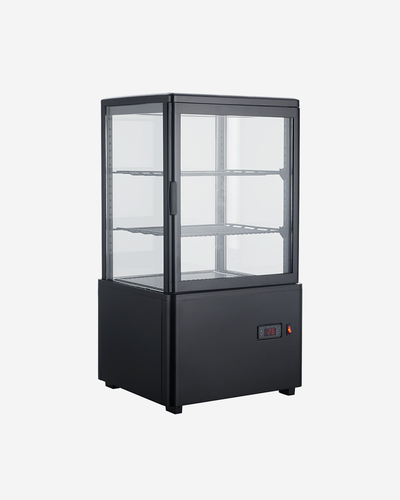
.jpg?imageView2/2/w/500/h/500/format/jp2/q/100 "Four Sides Glasses Display Cooler")
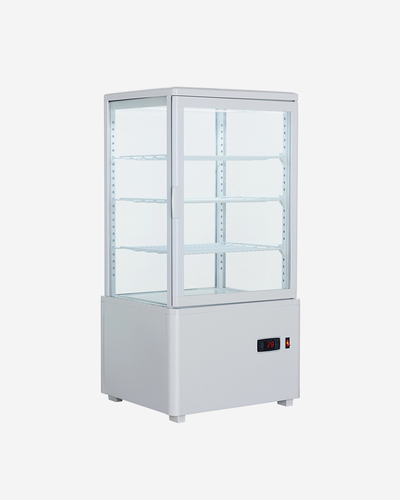
.jpg?imageView2/2/w/500/h/500/format/jp2/q/100 "White 4-Sided Glass Refrigerated Display Case")
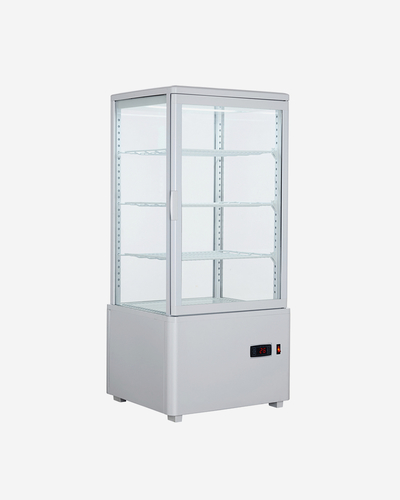
.jpg?imageView2/2/w/500/h/500/format/jp2/q/100 "Refrigerated Display Cake Countertop Four Sides Glasses Display Cooler")
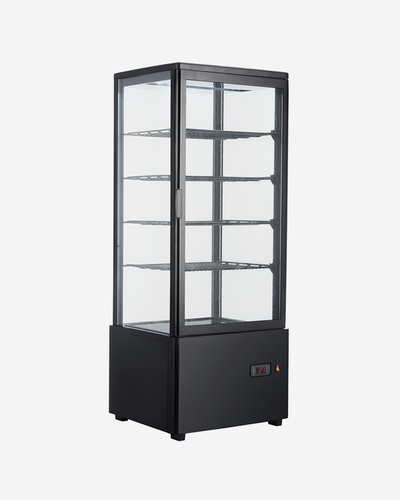
.jpg?imageView2/2/w/500/h/500/format/jp2/q/100 "Four Sides Glasses Display Cooler")

-
- Navigation
- Home
- About Us
- Products
- News
- Contact Us
 East Zone, Guanhaiwei Industrial Park, Cixi City, Ningbo, Zhejiang, China
 +86-574-63668678
 +86-574-63668108
Copyright © Ningbo XiangChi Electrical Co.,Ltd All Rights Reserved.
