

 简体中文
简体中文 English
 Español
In commercial food service and retail refrigeration, the margin between safe and hazardous is often measured in fractions of a degree. Display units — open-front refrigerated cases heated holding cabinets, deli counters, and buffet wells — sit at the intersection of visual merchandising and food safety compliance. Understanding temperature precision within these systems is not merely a regulatory formality; it is a direct line of defence against foodborne illness, product spoilage, and brand liability.
The Role of Display Units in Cold Chain Integrity
Refrigerated and heated display units represent the final, most visible stage of the cold chain. Unlike walk-in coolers or blast freezers — equipment that operates behind closed doors in controlled environments — display units are deliberately exposed to ambient retail conditions. Customers open doors, linger at cases, and interact with products in ways that constantly challenge thermal stability.
This exposure creates a uniquely demanding operational context. A high-traffic supermarket deli case may see dozens of door openings per hour, each event introducing warm ambient air and raising interior temperature momentarily. Without precise temperature control and rapid thermal recovery, this cumulative heat load can push food into unsafe territory without triggering obvious alarms.
Understanding the Temperature Danger Zone
Food safety science defines the temperature danger zone as the range within which pathogenic bacteria — including Salmonella, Listeria monocytogenes, Staphylococcus aureus, and Campylobacter — can multiply at rates sufficient to cause illness. Regulatory bodies worldwide converge on broadly similar parameters.
Why Precise Display Unit Temperatures Matter More Than Averages
A common misconception is that an average temperature within safe parameters is sufficient. In reality, microbial food safety is governed by time-temperature integration — the cumulative thermal history of a product, not a single snapshot reading. A display case that oscillates between 3°C and 9°C may have an average of 6°C, but the repeated excursions above 5°C represent genuine pathogen growth windows. Precision temperature control minimises these excursions, keeping actual product temperatures — not just air temperatures — within safe parameters throughout the retail cycle.
Types of Display Units and Their Thermal Challenges
Different display configurations carry distinct thermal management profiles. Selecting appropriate equipment and understanding the inherent limitations of each type is foundational to a robust food safety programme.
| Display Unit Type | Target Temp. Range | Primary Risk Factors | Precision Requirement |
|---|---|---|---|
| Open-front multideck refrigerator | 1°C – 5°C | High ambient air infiltration; customer proximity; lighting heat | High — ±1°C |
| Closed-door upright display fridge | 1°C – 7°C | Door seal degradation; defrost cycle management | Medium — ±2°C |
| Refrigerated deli/service counter | 0°C – 4°C | Product loading patterns; staff access frequency; surface contact | High — ±1°C |
| Hot holding / bain-marie | 63°C – 75°C | Uneven heat distribution; partial product loading | Medium — ±3°C |
| Heated display cabinet | 60°C – 70°C | Surface cooling; door opening cycles; radiant loss | High — ±2°C |
| Island/gondola frozen display | -18°C – -22°C | Frost accumulation; defrost frequency; product stacking above load line | Moderate — ±2°C |
Temperature Precision Technology in Modern Display Units
The evolution of commercial refrigeration technology has transformed what is achievable in food display temperature management. Where older systems relied on simple on/off compressor cycling with analogue thermostats, contemporary display units integrate sophisticated control architectures that respond dynamically to real-world conditions.
Electronic Temperature Controllers (ETCs)
Modern ETCs use NTC (negative temperature coefficient) thermistors or PT100/PT1000 resistance temperature detectors (RTDs) placed strategically within the cabinet — typically at the return air grille, product zone, and evaporator coil. These sensors provide continuous, accurate readings to within ±0.3°C, enabling precise modulating control rather than binary on/off switching. The result is a significantly reduced temperature differential between compressor cycles, minimising the amplitude of thermal fluctuations experienced by displayed food.
Variable Speed Compressor and Fan Technology
Inverter-driven compressors adjust their output capacity continuously to match real-time heat load, rather than operating at a single fixed speed. In display refrigeration, this means the compressor can sustain a lower, more consistent cooling output during high-traffic periods rather than cycling off-and-on at full capacity. Variable-speed evaporator fans further refine air distribution, reducing temperature stratification within the cabinet — a critical concern in tall multideck units where upper shelves routinely run warmer than lower shelves.
Airflow Curtain Management in Open-Front Units
Open-front refrigerated cases use precisely engineered air curtains — vertical jets of conditioned air flowing across the case opening — to create a thermal barrier between refrigerated interior air and warm shop-floor ambient. The efficacy of this curtain is highly sensitive to air velocity, temperature differential, and store ambient conditions. Advanced units employ dual-discharge air curtains with individually controlled temperature profiles, maintaining more reliable containment even under high-traffic or elevated ambient conditions such as summer trading.
Regulatory Frameworks Governing Display Unit Temperatures
Food safety legislation consistently mandates specific temperature thresholds for food on display, though the precise values and enforcement mechanisms vary by jurisdiction. Understanding the regulatory landscape is essential for operators managing multi-site or international food retail operations.
In the European Union, Regulation (EC) No 853/2004 and associated national legislation generally require chilled foods of animal origin to be held at no more than 8°C, with products like raw fish, minced meat, and ready-to-eat products subject to tighter requirements, typically 4°C. The UK Food Safety (Temperature Control) Regulations mandate that foods likely to support bacterial growth must be held at 8°C or below, with a best-practice standard of 5°C widely adopted in the industry. In the United States, the FDA Food Code specifies a 41°F (5°C) cold holding standard for potentially hazardous foods, with a time-temperature abuse monitoring obligation placed on food handlers.
Critically, these regulations typically specify food temperatures — not equipment air temperatures. This distinction is significant: a display case operating at 3°C air temperature may still expose food near the front or top of an open case to substantially higher temperatures due to ambient air infiltration. Compliance, therefore, requires a holistic approach that accounts for airflow dynamics and product placement, not merely equipment setpoint calibration.
Continuous Temperature Monitoring and Digital Logging
Historically, temperature verification in display units relied on manual probe checks — point-in-time measurements that provide no insight into temperature behaviour between checks. This approach is fundamentally inadequate for food safety assurance, as dangerous temperature excursions can occur and resolve within the intervals between manual readings.
Continuous electronic temperature monitoring systems address this gap by recording temperature data at configurable intervals — commonly every 10 to 15 minutes — across all monitored display units. These systems generate the time-temperature integration data necessary to assess genuine food safety risk rather than simply confirming that a unit is cold at the moment of inspection. Modern IoT-enabled monitoring platforms transmit data wirelessly to centralised dashboards, triggering automated alerts when temperature thresholds are breached, enabling real-time corrective action before food safety is compromised.
From a legal and due-diligence perspective, continuous temperature logs also provide the documented evidence chain necessary to demonstrate compliance during regulatory inspections and to substantiate product safety decisions in the event of a food safety incident.
Operational Best Practices for Temperature Precision in Display Units
Technology alone cannot guarantee safe food display temperatures. Operational discipline — covering installation, calibration, loading, maintenance, and staff training — is equally determinative of real-world performance.
- Position display units away from heat sources — direct sunlight, cooking equipment, heating vents, and high-traffic doorways all elevate ambient load and degrade thermal performance.
- Never overload display cases beyond the indicated maximum load line. Product stacked above this line is outside the air curtain protection zone and will inevitably drift toward ambient temperature.
- Allow adequate spacing between products to permit air circulation. Dense, tightly packed displays impede cold air distribution and create warm pockets that can sustain bacterial growth.
- Pre-chill products before loading into display units. Display refrigeration is designed to maintain temperature — not to chill warm products. Loading warm items raises case temperatures and compromises the food safety of adjacent products.
- Calibrate temperature sensors against a certified reference thermometer at least quarterly, and recalibrate following any equipment service, gasket replacement, or physical disturbance to sensor positioning.
- Implement and document scheduled preventive maintenance programmes covering condenser coil cleaning, door gasket inspection, evaporator defrost verification, and fan operation checks.
- Train all food handling staff on the relationship between temperature precision and food safety, covering door closure discipline, correct product rotation, and the mandatory escalation procedure for any suspected temperature excursion.
- Review continuous temperature logs at defined intervals — daily for high-risk categories, weekly as a minimum — and act on any patterns suggesting equipment performance degradation before acute failure occurs.
Defrost Cycles and Temporary Temperature Excursions
One of the most frequently misunderstood aspects of display unit temperature management is the defrost cycle. All refrigerated cases operating below approximately 7°C will accumulate frost on the evaporator coil over time, degrading thermal efficiency until the frost is periodically removed through a defrost cycle. During a defrost event — typically initiated by a time clock or intelligent adaptive controller — heating elements or hot gas is directed to the evaporator, and case temperatures will rise, sometimes significantly.
Modern display case controllers manage defrost duration and frequency to minimise the temperature impact on displayed food, and most quality units are designed so that product temperatures remain within safe parameters throughout the defrost cycle under normal loading conditions. However, poorly programmed defrost timers, overlong defrost durations, and equipment operating in warm ambient environments can all produce defrost-related temperature excursions that genuinely compromise product safety and shelf life.
Intelligent adaptive defrost technology — now standard on premium commercial display equipment — monitors evaporator conditions and initiates defrost only when genuinely necessary, reducing defrost frequency, duration, and the associated thermal disruption compared with traditional time-clock-based systems.
Precision as a Food Safety Imperative
Food safety in display units is inseparable from temperature precision. The gap between a well-functioning display case and one that allows pathogen proliferation can be measured in single-digit degrees and minutes — variables that are entirely within the control of equipment designers, maintenance professionals, and food retail operators.
As food retail increasingly operates under heightened public scrutiny and regulatory rigour, investment in precise, monitored, and well-maintained display temperature management is not discretionary. It is the foundation upon which consumer trust, regulatory compliance, and genuine public health protection are built. The commitment to temperature precision in display units is, ultimately, a commitment to the safety of every person who eats the food on those shelves.
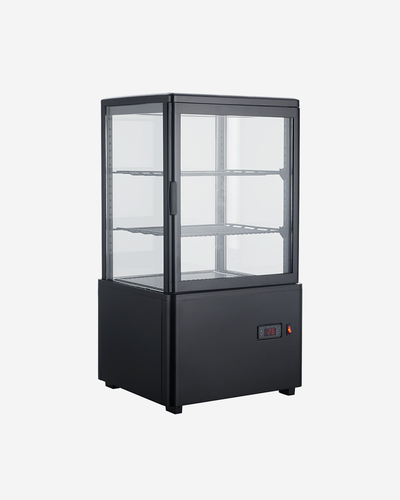
.jpg?imageView2/2/w/500/h/500/format/jp2/q/100 "Four Sides Glasses Display Cooler")
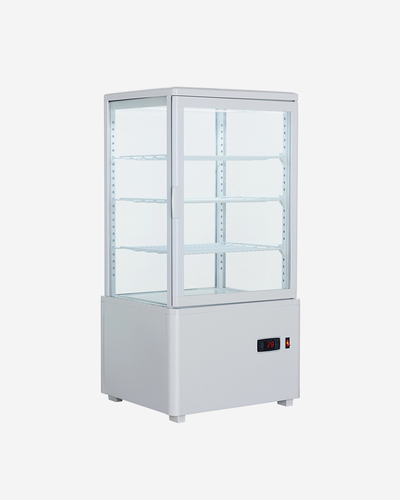
.jpg?imageView2/2/w/500/h/500/format/jp2/q/100 "White 4-Sided Glass Refrigerated Display Case")
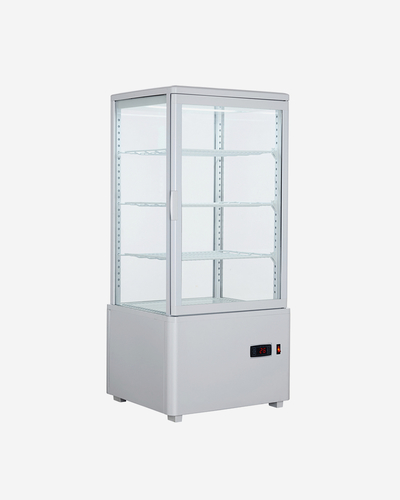
.jpg?imageView2/2/w/500/h/500/format/jp2/q/100 "Refrigerated Display Cake Countertop Four Sides Glasses Display Cooler")
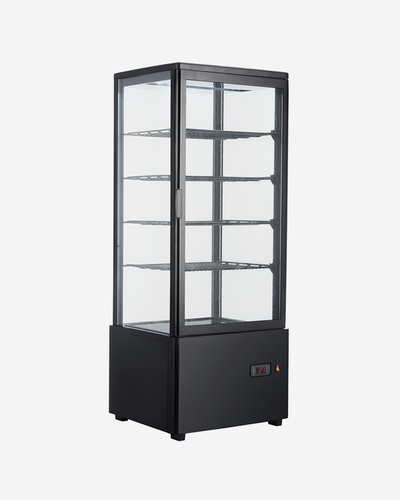
.jpg?imageView2/2/w/500/h/500/format/jp2/q/100 "Four Sides Glasses Display Cooler")
 East Zone, Guanhaiwei Industrial Park, Cixi City, Ningbo, Zhejiang, China
 +86-574-63668678
 +86-574-63668108
