

 简体中文
简体中文 English
 Español
What Is a 360 Panoramic Display Cooler
A 360-degree panoramic display cooler is a refrigerated display unit engineered to provide unobstructed visibility of its contents from every viewing angle. Unlike conventional single-door or multi-door refrigerators where products are visible only from the front, panoramic coolers feature glass panels on all four sides, or in cylindrical and curved-glass formats, continuous glazing around the full circumference of the cabinet. This design allows shoppers, event attendees, or venue guests to view available products without repositioning themselves relative to the unit.
The defining characteristic is not simply the presence of glass on multiple sides but the deliberate engineering of the refrigeration system, structural frame, lighting, and interior layout to support full-perimeter visibility while maintaining the thermal performance required for commercial refrigeration. Achieving this balance requires different engineering decisions than those made in conventional display refrigeration, and the best panoramic coolers reflect those decisions in every component of their construction.
Core Engineering of Panoramic Glass Refrigeration
The engineering challenge at the heart of a 360-degree panoramic display cooler is the apparent conflict between maximum glass surface area and effective refrigeration. Glass is a poor thermal insulator, and a cabinet surrounded by glass panels must work significantly harder to maintain its internal temperature than a conventional insulated cabinet with a single glazed door. Leading manufacturers address this through several integrated engineering strategies.
Low-E Double or Triple Glazing
Low-emissivity glass coatings reflect infrared radiation back into the cabinet interior, reducing heat gain from ambient lighting and warm store environments. Double or triple glazing creates air gaps that provide additional thermal resistance, reducing the refrigeration load without compromising optical clarity.
Heated Glass Technology
To prevent condensation that would obscure product visibility, panoramic cooler glass panels incorporate resistive heating elements within the glass layers or along the frame perimeter. These heaters maintain glass surface temperatures above the dew point of the ambient air, keeping panels clear at all times.
Forced-Air Circulation Design
Interior fan systems in panoramic coolers are engineered to distribute cold air uniformly around the full cabinet perimeter, counteracting the higher thermal load of the extended glass surface and ensuring consistent temperature across all shelf positions regardless of proximity to the cooling source.
High-Efficiency Compressor Systems
The increased refrigeration demand of all-glass construction is met through variable-speed compressor technology, which modulates cooling output in real time based on internal temperature sensors. This approach maintains setpoint temperatures efficiently without the energy waste of fixed-speed compressors cycling on and off.
Structural Formats and Configuration Options
360-degree panoramic display coolers are available in several structural configurations, each suited to different deployment contexts and space constraints.
Cylindrical Freestanding Coolers
The cylindrical format is the most visually distinctive configuration in the panoramic cooler category. A curved or faceted glass exterior wraps continuously around the cabinet, providing truly uninterrupted 360-degree visibility with no corner interruptions. Cylindrical units are well suited to freestanding placement in open floor areas, promotional displays, and high-traffic event spaces where visibility from multiple directions simultaneously is a priority. Their visual impact is high and their footprint is relatively compact relative to the display area they offer.
Square and Rectangular Four-Sided Glass Units
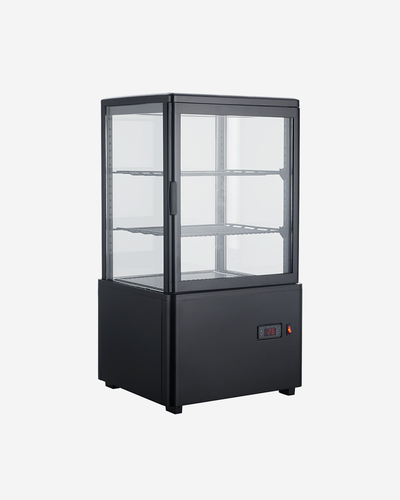
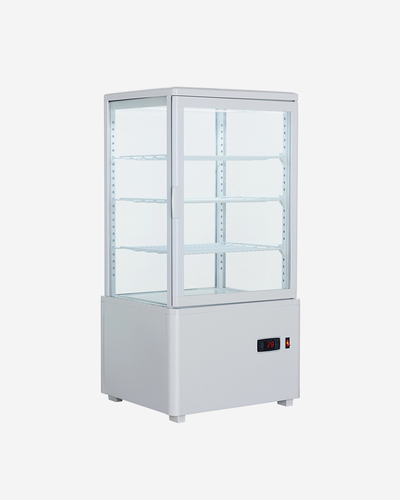
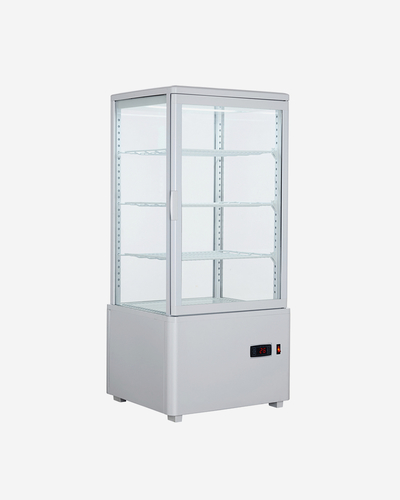
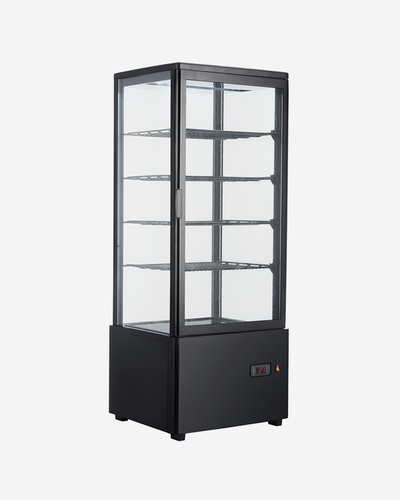
Four-sided rectangular panoramic coolers use flat glass panels on all four exterior faces, connected at corners with minimal framing. This configuration is more space-efficient than cylindrical formats and easier to load from a fixed access point, typically the rear or top. Rectangular panoramic coolers are widely used in convenience retail, hotel lobbies, airport lounges, and premium supermarket floor displays where a clean, architectural aesthetic is desirable alongside full product visibility.
Island and Gondola Configurations
Larger panoramic display cooler systems are designed as island or gondola units intended for supermarket or warehouse club environments. These units feature panoramic glass on the long sides and ends, with internal shelving accessible from multiple aisles. Their scale makes them effective for high-volume beverage, dairy, or prepared food merchandising where the product range is broad and customer browsing from multiple approach directions is expected.
Countertop and Compact Formats
Countertop panoramic coolers scaled for bar tops, checkout counters, and service desks offer the same all-around visibility in a footprint sized for limited surface areas. These units are particularly effective for impulse purchase categories including premium beverages, specialty drinks, and bottled water, where visibility at point of purchase directly correlates with sales conversion.
Interior Lighting and Visual Merchandising
The merchandising power of a 360-degree panoramic display cooler is realized most fully when its interior lighting is engineered to complement the all-around glass construction. LED lighting systems in panoramic coolers serve a dual function: they illuminate products for identification and appeal, and they create the luminous quality that makes the cabinet visible and attractive from a distance in a busy retail environment.
Top-mounted LED arrays in panoramic coolers are typically configured to provide even illumination across all shelf tiers from above, minimizing shadows that would reduce product appeal when viewed through side glass panels. Some configurations supplement top lighting with shelf-edge LED strips that create a tiered glow effect, increasing the perceived depth and fullness of the product display.
Color temperature selection matters significantly in a panoramic cooler context. Beverage products, particularly those in colored glass or translucent packaging, are most effectively displayed under lighting in the 3,000 to 4,000 Kelvin range, which renders label colors accurately and enhances the visual appeal of amber, green, and clear glass bottles. Lighting systems that allow color temperature adjustment give operators flexibility to optimize for different product categories or brand guidelines.
Merchandising Insight: Studies in retail environment design consistently show that chilled beverage products displayed in illuminated glass-front coolers achieve higher sales velocities than equivalent products in opaque or non-illuminated cabinets. The lift in sales conversion is amplified in panoramic formats because product visibility is maintained from approach angles that a front-only display would miss entirely.
Refrigeration Performance Specifications
Commercial deployment of a 360-degree panoramic display cooler requires confidence in the unit's ability to maintain consistent internal temperatures under real operating conditions including door openings, ambient temperature variation, and full product loading. The following performance parameters are the primary benchmarks for evaluating panoramic cooler refrigeration quality.
| Parameter | Standard Range | Premium Grade | Notes |
|---|---|---|---|
| Temperature Setpoint Range | 2 to 10 degrees C | 1 to 12 degrees C adjustable | Wider range supports multiple product categories |
| Temperature Uniformity | Plus or minus 3 degrees C | Plus or minus 1.5 degrees C | Critical for compliance in food-service applications |
| Pull-Down Time (ambient to setpoint) | 45 to 90 minutes | Under 40 minutes | Affects readiness time after restocking |
| Energy Consumption | 3 to 6 kWh per day | Under 3 kWh per day | Variable-speed compressors achieve lower consumption |
| Ambient Operating Range | 16 to 32 degrees C | 10 to 38 degrees C | Wider range required for outdoor or non-climate-controlled venues |
| Noise Level | 48 to 55 dB | Under 45 dB | Relevant for upscale hospitality and quiet retail environments |
Energy Efficiency and Sustainability Considerations
The all-glass construction of a panoramic display cooler carries an inherent energy cost compared to insulated-wall cabinets of equivalent volume. For operators with sustainability commitments or operating in markets with commercial refrigeration energy regulations, this makes the efficiency credentials of a panoramic cooler an important procurement factor rather than a secondary consideration.
Modern panoramic coolers designed with energy efficiency as a priority incorporate several technologies that substantially reduce the gap between panoramic and conventional display refrigeration:
- Variable-speed inverter compressors that match refrigeration output to actual thermal load in real time, eliminating the energy waste of fixed-speed on/off cycling
- EC (electronically commutated) fan motors for interior air circulation, which use 50 to 70 percent less energy than conventional shaded-pole motors
- LED lighting with occupancy-based dimming that reduces lighting power when no customers are present in the immediate vicinity of the unit
- High-performance low-E glass that reduces solar and infrared heat gain, directly lowering the refrigeration load imposed by the extended glass surface
- Natural refrigerant compatibility, with leading manufacturers now offering CO2 (R-744) and hydrocarbon refrigerant variants that eliminate the global warming potential associated with HFC refrigerants
Deployment Environments and Use Cases
The versatility of the 360-degree panoramic display cooler format has driven adoption across a wide range of commercial and event contexts. Each deployment environment imposes different requirements on the unit's design, durability, and operational features.
Premium Beverage Retail
Specialty bottle shops, premium supermarket beverage sections, and craft beer retailers use panoramic coolers to create destination displays that allow customers to browse the full product range without opening multiple doors or repositioning. The all-around visibility is particularly effective for products whose packaging design is part of the brand experience, including craft spirits, artisan soft drinks, and limited-edition beverages.
Convenience and Forecourt Retail
In high-footfall convenience environments where customer dwell time is short and impulse purchase decisions are made in seconds, panoramic coolers positioned at key traffic intersections maximize product exposure to customers approaching from multiple directions. The immediate visibility of chilled product without the need to approach and open a door reduces the friction between impulse and purchase.
Hotels, Lounges, and Hospitality
In hotel lobbies, executive lounges, spa environments, and premium hospitality settings, the panoramic cooler functions as a self-service mini-bar or beverage station that is both functional and aesthetically aligned with the venue's design language. The architectural quality of well-designed panoramic coolers, particularly cylindrical formats in stainless and glass finishes, complements contemporary interior design in ways that conventional refrigerators cannot.
Events, Exhibitions, and Brand Activations
At trade shows, product launches, pop-up retail events, and sponsorship activations, a branded panoramic cooler is simultaneously a refrigeration unit, a display system, and a brand communication tool. Custom-printed graphics applied to the base, top panel, or interior back wall of a panoramic cooler convert the unit into a three-dimensional branded environment visible from across a venue floor.
Foodservice and Quick-Service Restaurants
In counter service and quick-service environments, panoramic grab-and-go coolers positioned at the point of order or payment allow customers to select beverages and chilled snacks without staff assistance, reducing queue times and increasing average transaction value. The clear, full-perimeter visibility ensures that product availability is immediately apparent, reducing customer hesitation and the incidence of out-of-stock surprises.
Key Operational Advantages of 360 Panoramic Display Coolers vs Conventional Display Refrigeration
- Product visibility from all approach angles without requiring customers to open doors or reposition
- Higher sales conversion rates for impulse and premium beverage categories
- Reduced door-opening frequency lowers energy consumption and temperature fluctuation compared to traditional multi-door units
- Interior lighting visible from all sides increases the unit's effectiveness as an in-store beacon from a distance
- Distinctive visual format differentiates display from standard refrigeration, communicating premium positioning
- Freestanding placement flexibility allows positioning at optimal traffic flow points rather than wall or perimeter locations only
- Brand graphic integration on non-glass surfaces creates a cohesive promotional environment around the product display
Connectivity and Smart Features
The integration of IoT connectivity and digital management features into commercial display refrigeration has advanced rapidly, and 360-degree panoramic coolers from leading manufacturers increasingly offer connected functionality that improves operational efficiency and asset management across multi-unit deployments.
Remote temperature monitoring via cloud-connected sensor systems allows operators to verify that all units in a fleet are maintaining setpoint temperatures without physical inspection. Alarm notifications sent to designated personnel when temperature deviations occur reduce the risk of product loss from refrigeration failures that might otherwise go undetected between service intervals.
Energy consumption telemetry transmitted to fleet management dashboards allows procurement and facilities teams to identify units consuming above-baseline energy, which often indicates refrigerant issues, compressor wear, or glass seal degradation before these problems cause visible symptoms. Predictive maintenance based on energy consumption patterns reduces unplanned downtime and extends unit service life.
Digital signage integration in some panoramic cooler formats embeds display screens in the top panel or non-glass faces of the cabinet, allowing dynamic promotional content to be displayed alongside the product. Screen content can be managed remotely and updated instantly across a retail network, combining the physical refrigeration and display function of the cooler with the flexibility of digital point-of-sale communication.
Selection Criteria for Commercial Buyers
Selecting the right 360-degree panoramic display cooler for a commercial application requires systematic evaluation of the unit's physical specifications, performance credentials, operational features, and total cost of ownership. The following factors should guide the selection process:
- Capacity and footprint: Match the internal volume and shelf configuration to the product range and stocking frequency of the deployment location. Panoramic coolers that require restocking multiple times per shift create labor costs that offset their sales conversion advantages.
- Ambient temperature rating: Verify that the unit's operating specifications cover the full range of ambient temperatures it will encounter, including peak summer conditions in non-climate-controlled environments.
- Energy certification: Prioritize units with third-party energy efficiency certifications relevant to the deployment market, including Energy Star in North America and EU Energy Label ratings in European markets.
- Glass quality and anti-fog performance: Request documentation of the glass specification, including Low-E coating grade and heated glass performance data, and verify that anti-condensation performance is guaranteed across the unit's rated ambient operating range.
- Service network and parts availability: Commercial refrigeration requires responsive service support. Confirm that the manufacturer or distributor maintains a qualified service network in the deployment region and that replacement compressors, glass panels, and control boards are available with acceptable lead times.
- Warranty terms: Compare compressor warranty duration, which typically ranges from two to five years in commercial-grade units, and the scope of parts and labor coverage to assess the true cost commitment beyond the purchase price.
Maintenance Best Practices
Maintaining a 360-degree panoramic display cooler in optimal operating condition requires consistent attention to both the refrigeration system and the glass and lighting components that define its display function. The following maintenance schedule reflects industry best practices for commercial deployments:
- Daily: Wipe glass panels with a lint-free microfiber cloth to remove fingerprints, splashes, and dust accumulation that reduce visual clarity. Check interior temperature on the unit display and compare against the management system reading to verify sensor accuracy.
- Weekly: Clean interior shelves and drip trays, check door seals or access panel gaskets for integrity, and verify that lighting is functioning uniformly across all LED strips or arrays.
- Monthly: Clean condenser coils and fan grilles to remove dust accumulation that restricts airflow and increases compressor load. Inspect glass frame seals for signs of moisture infiltration or degradation that could compromise thermal performance.
- Annually: Commission a qualified refrigeration technician to inspect the refrigerant charge, compressor performance, fan motor condition, and electrical connections. Review energy consumption data against baseline to identify gradual performance degradation before it becomes a failure.
Conclusion
The 360-degree panoramic display cooler represents one of the most significant advances in commercial refrigeration display technology of the past two decades. By solving the engineering challenge of maintaining effective refrigeration within an all-glass structure, these units deliver a combination of merchandising impact, operational flexibility, and premium positioning that conventional display refrigeration cannot match. For retailers, hospitality operators, and brand activators seeking to maximize the commercial potential of chilled product displays while creating a memorable visual presence, the panoramic display cooler is not simply a refrigeration appliance. It is a strategic investment in how products are seen, selected, and sold.
.jpg?imageView2/2/w/500/h/500/format/jp2/q/100 "Four Sides Glasses Display Cooler")
.jpg?imageView2/2/w/500/h/500/format/jp2/q/100 "White 4-Sided Glass Refrigerated Display Case")
.jpg?imageView2/2/w/500/h/500/format/jp2/q/100 "Refrigerated Display Cake Countertop Four Sides Glasses Display Cooler")
.jpg?imageView2/2/w/500/h/500/format/jp2/q/100 "Four Sides Glasses Display Cooler")
 East Zone, Guanhaiwei Industrial Park, Cixi City, Ningbo, Zhejiang, China
 +86-574-63668678
 +86-574-63668108
