

 简体中文
简体中文 English
 Español
Silent salesman displays are retail merchandising fixtures designed to communicate product value, guide purchasing decisions, and drive sales without any direct involvement from store staff. The term captures a fundamental truth of physical retail: in the absence of a human salesperson, the display itself must do the selling. From the counter card beside a cash register to a full floor-standing unit anchoring a gondola end, every element of a silent salesman display, its structure, graphics, lighting, and placement, functions as a persuasion tool operating at the precise moment a consumer is most receptive to influence.
The Origins and Evolution of the Concept
The phrase silent salesman entered retail vocabulary in the early twentieth century as self-service grocery formats began replacing the counter-service model where a store assistant fetched goods from behind a counter. When products moved to open shelving and customers began selecting items themselves, the packaging and surrounding display became the primary sales interface. Early silent salesman theory focused on packaging design, particularly the use of color, typography, and imagery to convey quality and purpose at a glance.
By the mid-century, freestanding point-of-purchase (POP) displays had become a distinct discipline within retail marketing. Manufacturers recognized that controlling the presentation environment around their products, rather than leaving that environment to the retailer, delivered measurable lifts in unit sales. Trade bodies such as the Point of Purchase Advertising International (now POPAI, rebranded as the Global Association for Marketing at Retail) emerged to study, standardize, and promote best practices in display effectiveness.
Today, silent salesman displays have evolved to incorporate digital screens, motion sensors, augmented reality triggers, and connected inventory systems, but the underlying principle remains unchanged: the display communicates, demonstrates, and persuades in the place and at the moment of purchase.
Why Silent Salesman Displays Work: The Psychology of In-Store Persuasion
The effectiveness of silent salesman displays is grounded in several well-documented psychological mechanisms that operate in retail environments.
Interruption and Pattern Break
Shoppers navigating a store operate largely on autopilot, following habitual routes and scanning familiar shelf layouts with minimal cognitive engagement. A well-designed display interrupts that automated behavior by presenting something visually distinct from its surroundings. Research in visual merchandising consistently shows that the first challenge of any display is simply being seen; structural originality, unexpected color, or motion are the primary tools for achieving this.
Decision Simplification
The paradox of choice, the phenomenon where excessive options reduce purchase likelihood, is well established in consumer psychology. Silent salesman displays combat this by curating a small selection, presenting a clear hero product or a logical good-better-best hierarchy, and communicating the primary purchase rationale concisely. A display that answers the question why this product in three seconds or fewer is performing its central function.
Social Proof and Endorsement Signals
Award badges, bestseller callouts, press quotes, and user review statistics displayed on point-of-purchase materials activate social proof heuristics. When a shopper cannot independently evaluate a product in the seconds available, signals that others have evaluated and approved it reduce perceived purchase risk. These endorsement devices are among the highest-returning graphic elements available to display designers.
Tactile and Sensory Engagement
Displays that invite physical interaction, through product testers, textured surfaces, or interactive demo mechanisms, extend dwell time and create a sense of ownership that precedes purchase. The endowment effect, the tendency to value something more once one has touched or handled it, is a powerful force in categories such as cosmetics, electronics, and home goods where trial is part of the purchase logic.
Contextual Framing and Use Suggestion
Displays that show a product in use rather than merely presenting it as an object trigger what behavioral economists call the availability heuristic: the consumer can readily imagine the product functioning in their own life. A skincare display positioned beside bathroom accessories, a coffee accessory display adjacent to whole-bean coffees, or a tool display in a dedicated project-solution context all leverage this framing effect to increase purchase relevance and urgency.
Types of Silent Salesman Displays
Counter Displays and Countertop Units
Positioned at the point of transaction, counter displays occupy the highest-value real estate in any store. The cash wrap or checkout counter captures a captive audience in a waiting state, which is precisely the moment when impulse purchase susceptibility peaks. Counter displays are typically compact, holding between four and twenty-four units, and rely on bold headline copy and price clarity rather than elaborate structure. Categories that perform exceptionally well in counter format include confectionery, travel-size consumables, batteries, lighters, and small accessories.
Floor-Standing Display Units (FSDUs)
Freestanding floor units, also called FSDUs or PDQs (pretty darn quick, referring to their rapid assembly from flat-pack format), are the workhorses of promotional display. Positioned at gondola ends, aisle entrances, or high-traffic cross-aisles, FSDUs allow brands to break out of the standard shelf bay and create a branded environment at floor level. Well-designed FSDUs communicate a complete brand narrative: category entry, product hierarchy, key benefit claims, and a call to action, all within a structure that a shopper can approach from multiple angles.
Power Wings and Side Kickers
Attached to the side of existing gondola shelving, power wings extend the merchandising footprint of a fixture without requiring a freestanding position. They are effective for impulse-adjacent products that benefit from association with a parent category: a wing carrying energy gel sachets beside a sports nutrition bay, or a wing holding cocktail garnishes beside spirits. The side position catches shoppers who have already committed to a category aisle and are in an active consideration state.
Shelf Talkers, Wobblers, and Shelf Edge Strips
These smaller-format displays operate at the shelf level, attaching directly to the fixture rail to draw attention to specific products within a standard planogram. Wobblers, so named for the flexible arm that creates movement and attracts the eye, are among the most cost-effective silent salesman tools available. Shelf edge strips running the full width of a product bay create a consistent visual identity across a range and are particularly effective for own-label or exclusive product lines where shelf adjacency is fixed but differentiation from national brands is needed.
Header Boards and Aisle Fins
Operating at eye level and above, header boards and aisle fins provide navigation and brand awareness signage that shoppers read from a distance before they reach the product. Their primary function is directing footfall rather than closing a sale, but in cluttered retail environments where a shopper may not know where to look for a category, directional display can be the first link in the purchase chain. Aisle fins suspended from ceiling tracks are increasingly used in grocery to communicate promotional themes and seasonal priorities at a category level.
Digital and Interactive Displays
LCD and LED screen-based displays embedded in retail fixtures represent the current frontier of silent salesman design. Motion-triggered content that activates as a shopper approaches, touchscreen interfaces that allow product configuration or shade matching, and QR-linked displays that extend the in-store experience to a mobile device all collapse the historical distinction between physical retail and digital commerce. Digital displays allow content to be updated centrally and scheduled by day, time, or promotional period, eliminating the lead time and print cost associated with updating physical graphics.
Design Principles That Separate Effective Displays from Expensive Waste
The retail environment is saturated with display materials, the majority of which fail to deliver a return on investment. The following principles distinguish displays that consistently perform from those that occupy floor space without moving product.
The Three-Second Rule
A shopper moving at normal pace past a display has approximately three seconds of peripheral visual engagement before the display is behind them. Every design decision, headline hierarchy, color contrast, and structural silhouette must be evaluated against the question: does this communicate the category and the primary purchase rationale within three seconds of glancing at it? Displays that require reading to understand are displays that will not be read.
Single Dominant Message
The instinct to pack every available surface with product benefits, price points, promotional mechanics, brand history, and social media handles is one of the most common and costly failures in display design. Every additional message reduces the impact of the primary message. The most effective silent salesman displays are ruthlessly edited to communicate one thing with maximum clarity: this product solves this problem at this price.
Brand Consistency and Retail Fit
A display must simultaneously represent the brand with fidelity and fit coherently within the retail environment it occupies. A display designed for a premium department store and then deployed in a discount grocery channel will look wrong in both. Brand guidelines must flex to accommodate the visual language of the retail partner without losing the core identity signals that make the brand recognizable. This balance between brand consistency and channel sensitivity is one of the harder craft challenges in point-of-purchase design.
Product Accessibility and Replenishment Logic
A display that shoppers cannot physically reach the product from, that tips or sways when a unit is removed, or that requires a store associate to restock in a way that causes the display to look depleted within hours of setup is a design failure regardless of its graphic quality. Structural engineers working on display units must model the access angle, the structural load distribution as stock reduces, and the replenishment workflow that store staff will actually follow under real operational conditions.
Fit for Purpose Material Specification
Corrugated cardboard remains the dominant material for temporary promotional displays because of its low cost, low weight, ease of printing, and recyclability. However, corrugated units deployed in refrigerated environments, food service areas, or high-traffic zones where cart strikes are common will fail prematurely. Semi-permanent and permanent displays warrant investment in injection-molded plastics, powder-coated steel, formed acrylic, or aluminum extrusion depending on the required lifespan and load-bearing requirements. Specifying a material that cannot survive the deployment environment is one of the most avoidable and expensive mistakes in display procurement.
Measuring Display Effectiveness
Silent salesman displays represent a marketing investment, and like any investment, they require measurement to justify and optimize. The metrics that matter most operate at three levels.
The percentage of planned display positions that are actually set up, correctly located, and fully stocked at the time of audit. Industry research consistently shows that compliance rates for temporary displays average between 50 and 65 percent in major grocery channels, meaning a significant proportion of display investment never reaches the consumer. Field sales audit programs, retail execution software platforms, and photo-based compliance reporting are the primary tools for closing this gap.
Measured by comparing sales velocity at display locations against matched control stores without the display during the same promotional period. A properly constructed test-and-control design isolates the display effect from coincident promotions, pricing changes, and seasonal demand fluctuations. Incremental lift figures for well-designed displays in appropriate categories and locations typically range from 15 to 40 percent above baseline, with category, retailer, and product maturity all influencing the outcome.
The net incremental margin generated by display-driven sales relative to the total cost of the display program, including design, production, logistics, and installation. This metric is more demanding than sales lift alone because it accounts for the full cost of delivery. Display programs that generate strong lift numbers but carry high production and logistics costs relative to the margin per unit can still return a negative ROI, particularly for lower-priced products in categories with compressed margins.
Sustainability and the Future of Display Materials
The environmental footprint of point-of-purchase display manufacturing has come under increasing scrutiny from both retailers and brand owners. Major grocery and mass-market retailers have introduced supplier sustainability requirements that include targets for recycled content in display materials, restrictions on mixed-material constructions that cannot be easily separated for recycling, and preferences for displays designed for return and reuse programs.
The corrugated display sector has responded with board grades incorporating high percentages of post-consumer recycled fiber, water-based inks and coatings that do not contaminate the recycling stream, and flat-pack designs that minimize transport volume and associated carbon emissions. Semi-permanent display manufacturers are exploring modular systems where structural components are retained and only graphic panels are replaced between promotional cycles, reducing the material volume that reaches end-of-life after each campaign.
Digital displays, while eliminating printed graphics entirely, carry their own sustainability considerations: energy consumption over the operational life of the screen, the embedded carbon in display hardware, and the challenge of responsible disposal at end of life. A full lifecycle assessment comparing digital and print display formats produces a more nuanced environmental picture than the simple absence of paper suggests.
The Silent Salesman in an Omnichannel Context
The rise of online shopping has not diminished the relevance of silent salesman displays; it has changed their strategic role. In an environment where a consumer can research and purchase any product online before entering a store, the physical display's job is less about communicating basic product information, which the shopper may already have, and more about creating an experience that justifies the physical store visit and converts browsing behavior into immediate purchase.
QR codes on display units bridge the physical and digital environments, linking to extended product content, video demonstrations, user reviews, and direct-to-consumer purchase options that the store itself may not carry. Retailers deploying digital display screens are beginning to integrate real-time inventory data so that displays promote only products currently in stock, eliminating one of the most frustrating consumer experiences in physical retail: a display promoting a product that cannot be found on the shelf.
The brands investing most effectively in silent salesman displays in the current environment are those that treat the display not as a production cost but as a media channel with its own audience, measurement framework, and creative brief, one that happens to operate at the most commercially valuable moment in the purchase journey: the instant before the decision is made.
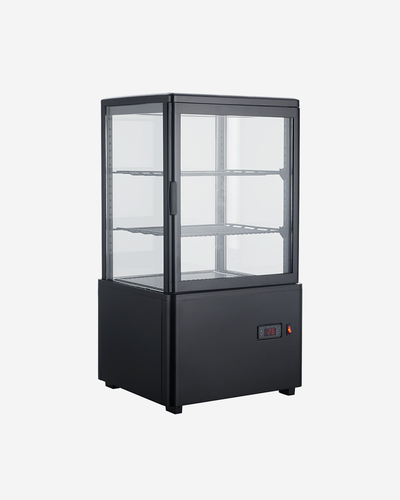
.jpg?imageView2/2/w/500/h/500/format/jp2/q/100 "Four Sides Glasses Display Cooler")
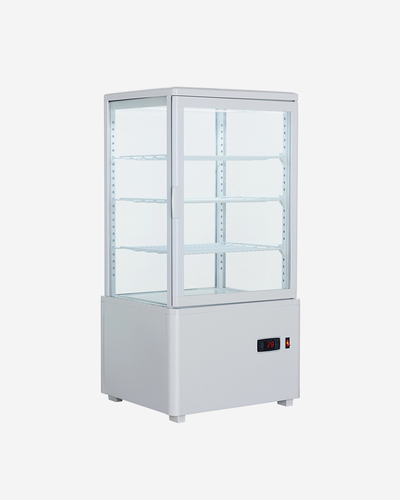
.jpg?imageView2/2/w/500/h/500/format/jp2/q/100 "White 4-Sided Glass Refrigerated Display Case")
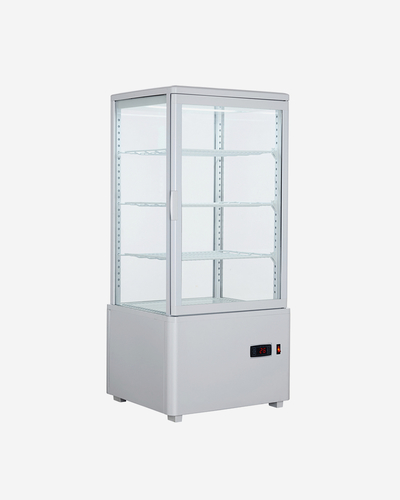
.jpg?imageView2/2/w/500/h/500/format/jp2/q/100 "Refrigerated Display Cake Countertop Four Sides Glasses Display Cooler")
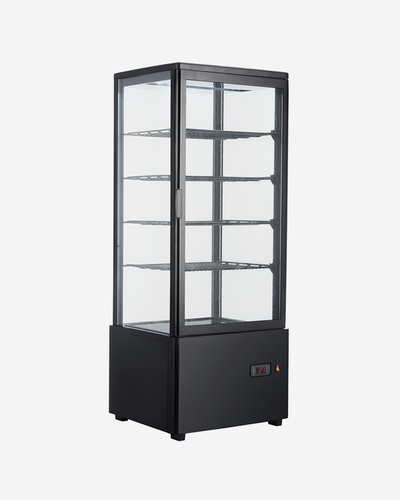
.jpg?imageView2/2/w/500/h/500/format/jp2/q/100 "Four Sides Glasses Display Cooler")
 East Zone, Guanhaiwei Industrial Park, Cixi City, Ningbo, Zhejiang, China
 +86-574-63668678
 +86-574-63668108
