
 简体中文
简体中文 English
 Español
News
What temp should Four Sided Glass Display Coolersr be set?
1. Recommended Temperature Range
A four sided glass display cooler is generally set between 34°F and 41°F (roughly 1°C to 5°C), which keeps beverages, dairy items, and prepared foods within a safe chilled range while remaining cold enough to prevent bacterial growth on perishable products displayed behind the glass panels. The specific setting within that range depends on what the unit is holding, since packaged drinks tolerate a slightly warmer setting than dairy or deli items that carry stricter food safety expectations.
Because a four sided glass cooler has viewing panels on every side rather than a single door front, heat gain through glass surfaces is a larger factor than in a cooler with an insulated back or sides, and this is part of why manufacturers generally recommend staying toward the middle of the range, around 37°F to 38°F, rather than pushing the thermostat to its warmest allowable setting.
Quick Fact: Why Glass on All Sides Changes the Equation
A cooler surrounded by glass on four sides absorbs more radiant heat from surrounding lighting and ambient room temperature than a solid-panel unit, since glass conducts heat far more readily than insulated metal or foam-backed walls. This added heat load means the refrigeration system works somewhat harder to hold the same internal temperature, which is one reason these units often rely on multi-pane or low-emissivity glass to reduce the burden on the compressor.
2. Matching Temperature to Product Type
Different products stored in a four sided display cooler carry different ideal temperature bands, and setting the unit too warm or too cold for what it actually holds can either shorten shelf life or waste energy cooling beyond what is necessary.
| Product Category | Suggested Range | Reasoning |
|---|---|---|
| Bottled and canned beverages | 38°F to 41°F | Sealed packaging tolerates a slightly warmer range |
| Dairy products and milk-based drinks | 34°F to 37°F | Lower temperatures slow spoilage in dairy items |
| Prepared or grab-and-go foods | 34°F to 36°F | Ready-to-eat items carry stricter food safety margins |
| Desserts and bakery items | 36°F to 40°F | Balances texture preservation with food safety |
3. Why Glass Construction Affects the Ideal Setting
3.1 Radiant Heat Through Multiple Panels
A four sided glass cooler has viewing panels facing every direction, which means heat can enter from any side depending on where the unit sits relative to windows, overhead lighting, or nearby cooking equipment. This differs from a standard reach-in cooler with a single glass door and insulated sides, where heat gain is largely confined to one face. Because of this broader exposure, many four sided units incorporate double-pane or triple-pane glass with a sealed air gap between layers, which slows heat transfer in a manner similar to how double-glazed windows reduce heat exchange in a building.
3.2 Anti-Fog and Low-Emissivity Coatings
Some glass panels also carry a low-emissivity coating, a thin metallic layer applied during manufacturing that reflects a portion of radiant heat away from the glass surface while still allowing visible light through for merchandising purposes. This coating reduces the rate at which the interior warms from external heat sources, allowing the thermostat to hold a stable set point with less frequent compressor cycling than an uncoated panel would require.
4. Airflow Design and Temperature Consistency
A four sided display cooler generally relies on a forced-air circulation system rather than passive convection, since gravity coils alone would struggle to maintain even temperatures across a cabinet exposed to heat from all directions. Fans mounted near the evaporator coil pull air across the cooling surface and distribute it through internal ducts along the shelving, which helps prevent warm pockets from forming near the corners or top shelves where glass panels meet.
Uneven airflow is one of the more common reasons a cooler set to a correct thermostat number still shows inconsistent product temperatures when checked with a probe thermometer. Shelves positioned close to the airflow discharge vents can run several degrees colder than shelves near the door seal, so placement of temperature-sensitive items such as dairy toward the colder zones and more heat-tolerant packaged goods toward the warmer zones is a practical way to work with this variation rather than against it.
5. Common Settings Adjustments and Monitoring Practices
Door and side gasket seals deserve regular inspection, since a worn or cracked seal on any of the four glass faces allows warm room air to seep in continuously, forcing the compressor to run longer to compensate and making it harder to hold the intended set point. Checking gaskets for gaps by closing a piece of paper in the door and testing whether it slides out easily is a simple way to catch a failing seal before it affects product temperature.
Placing a separate thermometer inside the cabinet, rather than relying solely on the built-in thermostat display, gives a more accurate picture of actual product-level temperature, since the thermostat sensor is often positioned near the evaporator coil rather than at shelf height where food and drinks actually sit. Checking this reading at different times of day, particularly during periods when nearby lighting or foot traffic increases heat exposure around the glass, helps confirm that the set point is holding steady rather than drifting upward during busier hours.
Overloading shelves also affects temperature consistency, since packing products too tightly blocks the internal airflow paths that circulate cold air evenly through the cabinet. Leaving modest spacing between items, particularly near vent openings, allows the forced-air system to maintain a more uniform temperature across all shelves rather than concentrating cold air near the discharge point while warmer air lingers elsewhere in the cabinet.
6. Where These Coolers Are Commonly Used
Convenience stores and cafes frequently place four sided glass display coolers near checkout counters or in open floor areas, since the all-around visibility lets customers view products from any approach angle, which supports impulse purchases of beverages, desserts, and grab-and-go snacks. Bakeries and delis use similar units for pastries, sandwiches, and prepared salads, where keeping food visible while maintaining a food-safe temperature matters for both merchandising and health code compliance.
Floral departments within grocery settings sometimes adapt four sided coolers for cut flowers, though the target temperature in that application shifts considerably higher than food storage ranges, since flowers generally stay fresher for longer in a cooler environment that still avoids the near-freezing settings used for perishable food items.
You May Also Like
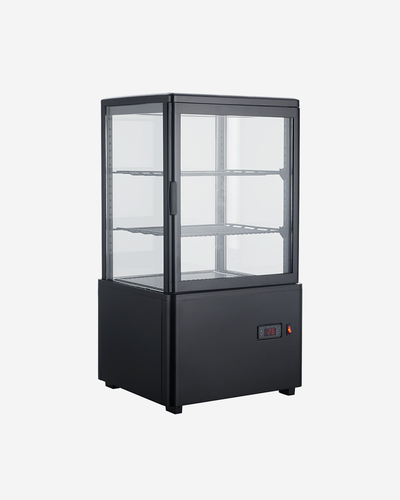
.jpg?imageView2/2/w/500/h/500/format/jp2/q/100 "Four Sides Glasses Display Cooler")
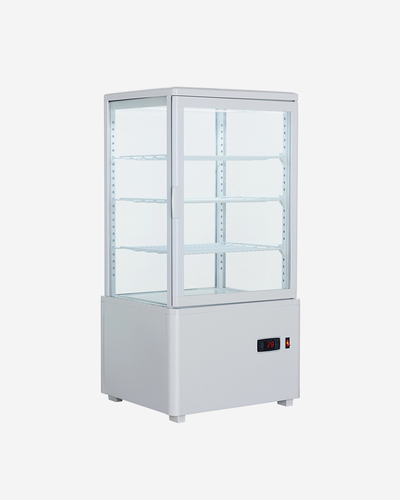
.jpg?imageView2/2/w/500/h/500/format/jp2/q/100 "White 4-Sided Glass Refrigerated Display Case")
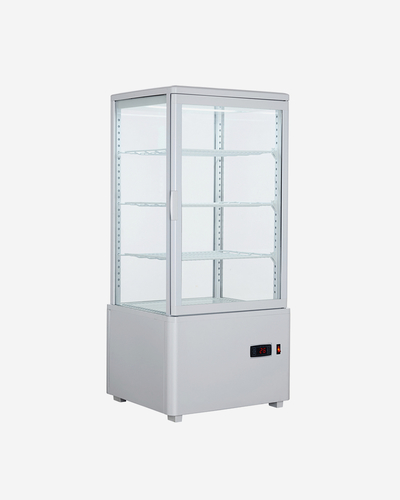
.jpg?imageView2/2/w/500/h/500/format/jp2/q/100 "Refrigerated Display Cake Countertop Four Sides Glasses Display Cooler")
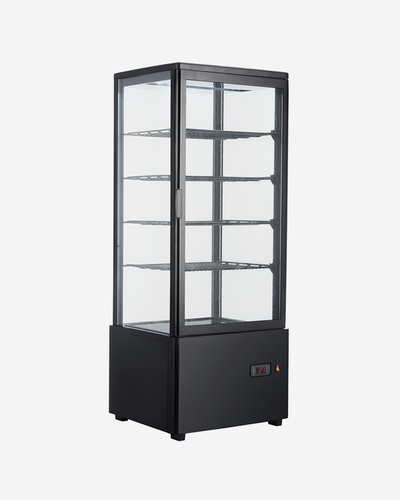
.jpg?imageView2/2/w/500/h/500/format/jp2/q/100 "Four Sides Glasses Display Cooler")

-
- Navigation
- Home
- About Us
- Products
- News
- Contact Us
 East Zone, Guanhaiwei Industrial Park, Cixi City, Ningbo, Zhejiang, China
 +86-574-63668678
 +86-574-63668108
Copyright © Ningbo XiangChi Electrical Co.,Ltd All Rights Reserved.
